Thank you for visiting SNEWPapers!
Sign up free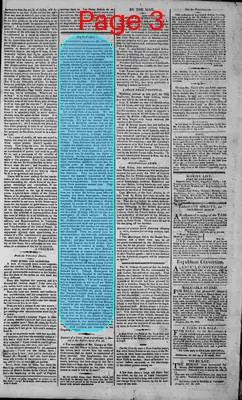
Editorial
February 28, 1810
The Rhode Island Republican
Newport, Newport County, Rhode Island
What is this article about?
An editorial sarcastically criticizes the Massachusetts Legislature's resolutions denying cause for dismissing diplomat Jackson, accusing them of hypocrisy or ignorance in foreign affairs, mocking their excuses amid fears of war with England and French intrigue. (214 characters)
Clipping
OCR Quality
95%
Excellent
Full Text
NEWPORT:
WEDNESDAY, FEBRUARY 28, 1810.
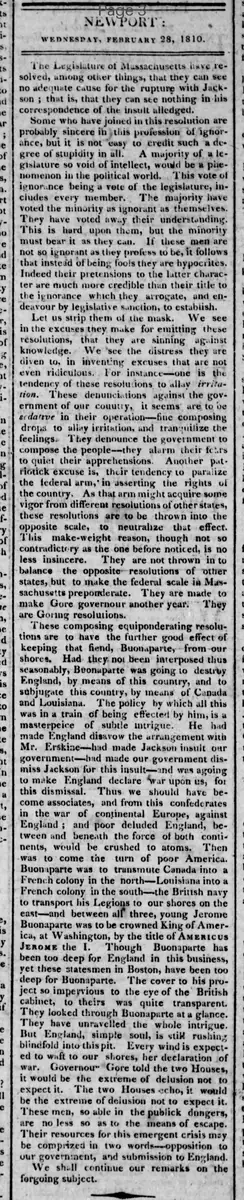
The Legislature of Massachusetts have resolved, among other things, that they can see no adequate Cause for the rupture with Jackson; that is, that they can see nothing in his correspondence of the insult alledged. Some who have joined in this resolution are probably sincere in this profession of ignorance, but it is not easy to credit such a degree of stupidity in all. A majority of a legislature so void of intellect, would be a phenomenon in the political world. This vote of ignorance being a vote of the legislature, includes every member. The majority have voted the minority as ignorant as themselves. They have voted away their understanding. This is hard upon them, but the minority must bear it as they can. If these men are not so ignorant as they profess to be, it follows that instead of being fools they are hypocrites. Indeed their pretensions to the latter character are much more credible than their title to the ignorance which they arrogate, and endeavour by legislative Sanction, to establish.
Let us strip them of the mask. We see in the excuses they make for emitting these resolutions, that they are sinning against knowledge. We see the distress they are driven to, in inventing excuses that are not even ridiculous. For instance one is the tendency of these resolutions to allay irritation. These denunciations against the government of our country, it seems are to be sedative in their operation—fine composing drops to allay irritation, and tranquilize the feelings. They denounce the government to compose the people—they alarm their fears to quiet their apprehensions. Another patriotic excuse is, their tendency to paralyze the federal arm, in asserting the rights of the country. As that arm might acquire some vigor from different resolutions of other states, these resolutions are to be thrown into the opposite scale, to neutralize that effect. This make-weight reason, though not so contradictory as the one before noticed, is no less insincere. They are not thrown in to balance the opposite-resolutions of other states, but to make the federal scale in Massachusetts preponderate. They are made to make Gore governor another year: They are Goring resolutions.
These composing equiponderating resolutions are to have the further good effect of keeping that fiend, Buonaparte from our shores. Had they not been interposed thus seasonably, Buonaparte was going to destroy England, by means of this country, and to subjugate this country, by means of Canada and Louisiana. The policy by which all this was in a train of being effected by him, is a masterpiece of subtle intrigue. He had made England disavow the arrangement with Mr. Erskine—had made Jackson insult our government—had made our government dismiss Jackson for this insult—and was going to make England declare war upon us, for this dismissal. Thus we should have become associates, and from this confederates in the war of continental Europe, against England; and poor deluded England, between and beneath the force of both continents, would be crushed to atoms. Then was to come the turn of poor America. Buonaparte was to transmute Canada into a French colony in the north—Louisiana into a French colony in the south—the British navy to transport his Legions to our shores on the east—and between all three, young Jerome Buonaparte was to be crowned King of America, at Washington, by the title of Amenicus Jerome the I. Though Buonaparte has been too deep for England in this business, yet these statesmen in Boston, have been too deep for Buonaparte. The cover to his project so impervious to the eye of the British cabinet, to theirs was quite transparent. They looked through Buonaparte at a glance. They have unravelled the whole intrigue. But England, simple soul, is still rushing blindfold into this pit. Every wind is expected to waft to our shores, her declaration of war. Governor Gore told the two Houses, it would be the extreme of delusion not to expect it. The two Houses echo, it would be the extreme of delusion not to expect it. These men, so able in the public dangers, are no less so as to the means of escape. Their resources for this emergent crisis may be comprized in two words—opposition to our government, and submission to England. We shall continue our remarks on the foregoing subject.
WEDNESDAY, FEBRUARY 28, 1810.
The Legislature of Massachusetts have resolved, among other things, that they can see no adequate Cause for the rupture with Jackson; that is, that they can see nothing in his correspondence of the insult alledged. Some who have joined in this resolution are probably sincere in this profession of ignorance, but it is not easy to credit such a degree of stupidity in all. A majority of a legislature so void of intellect, would be a phenomenon in the political world. This vote of ignorance being a vote of the legislature, includes every member. The majority have voted the minority as ignorant as themselves. They have voted away their understanding. This is hard upon them, but the minority must bear it as they can. If these men are not so ignorant as they profess to be, it follows that instead of being fools they are hypocrites. Indeed their pretensions to the latter character are much more credible than their title to the ignorance which they arrogate, and endeavour by legislative Sanction, to establish.
Let us strip them of the mask. We see in the excuses they make for emitting these resolutions, that they are sinning against knowledge. We see the distress they are driven to, in inventing excuses that are not even ridiculous. For instance one is the tendency of these resolutions to allay irritation. These denunciations against the government of our country, it seems are to be sedative in their operation—fine composing drops to allay irritation, and tranquilize the feelings. They denounce the government to compose the people—they alarm their fears to quiet their apprehensions. Another patriotic excuse is, their tendency to paralyze the federal arm, in asserting the rights of the country. As that arm might acquire some vigor from different resolutions of other states, these resolutions are to be thrown into the opposite scale, to neutralize that effect. This make-weight reason, though not so contradictory as the one before noticed, is no less insincere. They are not thrown in to balance the opposite-resolutions of other states, but to make the federal scale in Massachusetts preponderate. They are made to make Gore governor another year: They are Goring resolutions.
These composing equiponderating resolutions are to have the further good effect of keeping that fiend, Buonaparte from our shores. Had they not been interposed thus seasonably, Buonaparte was going to destroy England, by means of this country, and to subjugate this country, by means of Canada and Louisiana. The policy by which all this was in a train of being effected by him, is a masterpiece of subtle intrigue. He had made England disavow the arrangement with Mr. Erskine—had made Jackson insult our government—had made our government dismiss Jackson for this insult—and was going to make England declare war upon us, for this dismissal. Thus we should have become associates, and from this confederates in the war of continental Europe, against England; and poor deluded England, between and beneath the force of both continents, would be crushed to atoms. Then was to come the turn of poor America. Buonaparte was to transmute Canada into a French colony in the north—Louisiana into a French colony in the south—the British navy to transport his Legions to our shores on the east—and between all three, young Jerome Buonaparte was to be crowned King of America, at Washington, by the title of Amenicus Jerome the I. Though Buonaparte has been too deep for England in this business, yet these statesmen in Boston, have been too deep for Buonaparte. The cover to his project so impervious to the eye of the British cabinet, to theirs was quite transparent. They looked through Buonaparte at a glance. They have unravelled the whole intrigue. But England, simple soul, is still rushing blindfold into this pit. Every wind is expected to waft to our shores, her declaration of war. Governor Gore told the two Houses, it would be the extreme of delusion not to expect it. The two Houses echo, it would be the extreme of delusion not to expect it. These men, so able in the public dangers, are no less so as to the means of escape. Their resources for this emergent crisis may be comprized in two words—opposition to our government, and submission to England. We shall continue our remarks on the foregoing subject.
What sub-type of article is it?
Partisan Politics
Foreign Affairs
War Or Peace
What keywords are associated?
Massachusetts Legislature
Jackson Correspondence
Gore Resolutions
Buonaparte Intrigue
Anglo American Relations
Federal Opposition
What entities or persons were involved?
Massachusetts Legislature
Jackson
Governor Gore
Buonaparte
England
Mr. Erskine
Editorial Details
Primary Topic
Critique Of Massachusetts Legislature's Resolutions On The Jackson Affair
Stance / Tone
Sarcastic And Critical Of The Legislature's Ignorance Or Hypocrisy
Key Figures
Massachusetts Legislature
Jackson
Governor Gore
Buonaparte
England
Mr. Erskine
Key Arguments
The Legislature Claims No Adequate Cause For Rupture With Jackson, Professing Ignorance Of Any Insult In His Correspondence.
This Profession Is Doubted, Suggesting Either Stupidity Or Hypocrisy Among Members.
Resolutions Are Excuses To Allay Irritation, But Actually Denounce The Government.
They Aim To Paralyze Federal Efforts In Asserting Rights, To Favor Gore's Re Election.
Satirical Claim That Resolutions Prevent Buonaparte's Plot To Conquer America Via Intrigue Involving England And The Us.
Opposition To Government And Submission To England Proposed As Means Of Escape From Crisis.