Thank you for visiting SNEWPapers!
Sign up free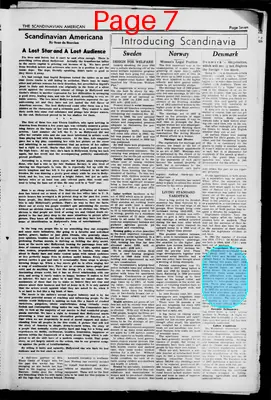
Scandinavian American
Seattle, King County, Washington
What is this article about?
Historical overview of Norway's temperance movement starting around 1840, leading to prohibition of liquor and strong wines from 1917-1923, causing export issues and smuggling. Prohibition ended in 1923 for wines and 1926 for spirits via plebiscite; now managed by Vinmonopolet.
Clipping
OCR Quality
Full Text
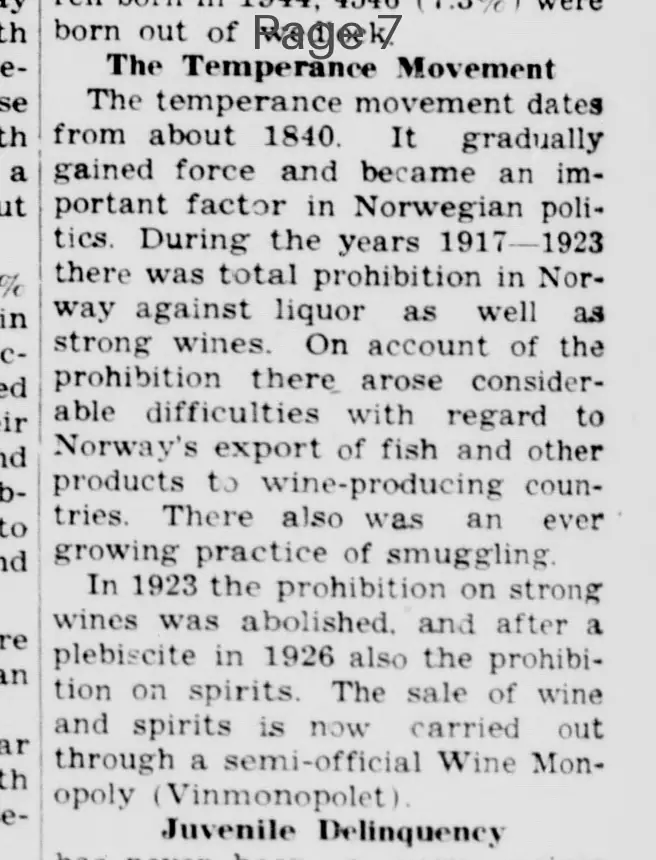
The temperance movement dates from about 1840. It gradually gained force and became an important factor in Norwegian politics. During the years 1917-1923 there was total prohibition in Norway against liquor as well as strong wines. On account of the prohibition there arose considerable difficulties with regard to Norway's export of fish and other products to wine-producing countries. There also was an ever growing practice of smuggling.
In 1923 the prohibition on strong wines was abolished, and after a plebiscite in 1926 also the prohibition on spirits. The sale of wine and spirits is now carried out through a semi-official Wine Monopoly (Vinmonopolet).
What sub-type of article is it?
What keywords are associated?
Where did it happen?
Foreign News Details
Primary Location
Norway
Event Date
From About 1840 To 1926
Outcome
prohibition abolished in 1923 for strong wines and in 1926 for spirits after plebiscite; sale now through semi-official wine monopoly (vinmonopolet). export difficulties to wine-producing countries and increased smuggling during prohibition.
Event Details
The temperance movement dates from about 1840 and became important in Norwegian politics. Total prohibition against liquor and strong wines existed 1917-1923, leading to export issues for fish and other products to wine-producing countries and growing smuggling.