Thank you for visiting SNEWPapers!
Sign up free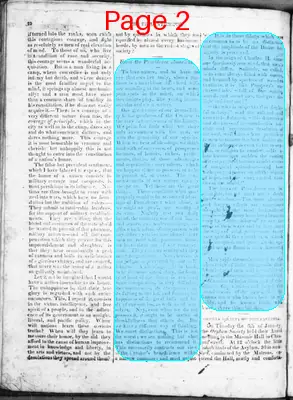
Literary
March 21, 1818
Philanthropist
Mount Pleasant, Jefferson County, Ohio
What is this article about?
Philosophical essay from the Providence American reflecting on the moral appreciation of nature and the Creator's common bounties, critiquing human insensibility to universal blessings like rest, senses, and daily bread, while favoring distinctions. Touches on solitude, melancholy, and noble action.
Clipping
OCR Quality
72%
Good
Full Text
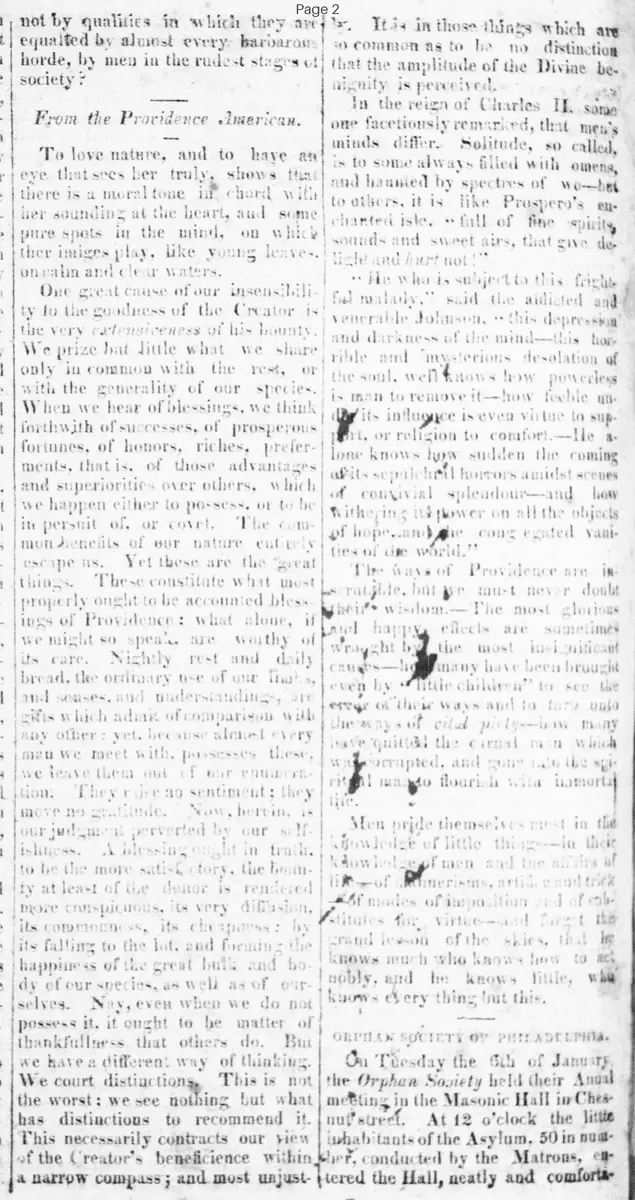
From the Providence American.
To love nature, and to have an eye that sees her truly, shows that there is a moral tone in chord with her sounding at the heart, and some pure spots in the mind, on which her images play, like young leaves on clear waters.
One great cause of our insensibility to the goodness of the Creator is the very extensiveness of his bounty. We prize but little what we share only in common with the rest, or with the generality of our species. When we hear of blessings, we think forthwith of successes, of prosperous fortunes, of honors, riches, preferments, that is, of those advantages and superiorities over others which we happen either to possess, or to be in pursuit of, or covet. The common benefits of our nature can only escape us. Yet these are the great things. These constitute what most impresses of Providence: what alone, if properly ought to be accounted bless, we might so speak, are worthy of its care. Nightly rest and daily bread, the ordinary use of our limbs and senses, and understandings, are gifts which admit of comparison with any other: yet, because almost every man we meet with possesses these, we leave them out of our communion. They rise no sentiment: they move no gratitude. Now, herein our judgment perverted by our selfishness. A blessing ought in truth to be the more satisfactory, the more the lustre at least of the donor is rendered more conspicuous, its very division, its commonness, its dispersion: by its falling to the lot and forming the happiness of the great bulk and body of our species, as well as of ourselves. Nay, even when we do not possess it, it ought to be matter of thankfulness that others do. But we have a different way of thinking. We court distinctions. This is not the worst; we see nothing but what has distinctions to recommend it. This necessarily contracts our view of the Creator's beneficence within a narrow compass; and most unjustly.
It is in those things which are so common as to be no distinction that the amplitude of the Divine benignity is perceived.
In the reign of Charles II. some one facetiously remarked, that men's minds differ. Solitude, so called, is to some always filled with omens, and haunted by spectres of woe—but to others it is like Prospero's enchanted isle—full of fine spirits sounds and sweet airs, that give delight and hurt not!
He who is subject to this frightful malady, said the animated and venerable Johnson, this depression and darkness of the mind—this horrible and mysterious desolation of the soul, well knows how powerless is man to remove it—how feeble under its influence is even virtue to support, or religion to comfort. He alone knows how sudden the coming of its sepulchral horrors amidst scenes of convivial splendour—and how blighting its power on all the objects of hope, and the congregated vanities of this dire world.
The ways of Providence are inscrutable, but ye must never doubt their wisdom. The most glorious and happy effects are sometimes wrought by the most insignificant cause—how many have been brought even by little children to see the error of their ways and to turn unto the ways of cited glory—how many have guiltless the criminal man which was tempted, and gone to de si ritual ma rdo flouri h wia iomort ie.
Men pride themselves over in the knowledge of little things—in their knowledge of men and the affairs of life—of manners, arts and tricks of modes of imposition and of ob attitudes for virtue—and great the grand lesson of the schools, that he knows much who knows how to act nobly, and he knows little, who knows everything but this.
To love nature, and to have an eye that sees her truly, shows that there is a moral tone in chord with her sounding at the heart, and some pure spots in the mind, on which her images play, like young leaves on clear waters.
One great cause of our insensibility to the goodness of the Creator is the very extensiveness of his bounty. We prize but little what we share only in common with the rest, or with the generality of our species. When we hear of blessings, we think forthwith of successes, of prosperous fortunes, of honors, riches, preferments, that is, of those advantages and superiorities over others which we happen either to possess, or to be in pursuit of, or covet. The common benefits of our nature can only escape us. Yet these are the great things. These constitute what most impresses of Providence: what alone, if properly ought to be accounted bless, we might so speak, are worthy of its care. Nightly rest and daily bread, the ordinary use of our limbs and senses, and understandings, are gifts which admit of comparison with any other: yet, because almost every man we meet with possesses these, we leave them out of our communion. They rise no sentiment: they move no gratitude. Now, herein our judgment perverted by our selfishness. A blessing ought in truth to be the more satisfactory, the more the lustre at least of the donor is rendered more conspicuous, its very division, its commonness, its dispersion: by its falling to the lot and forming the happiness of the great bulk and body of our species, as well as of ourselves. Nay, even when we do not possess it, it ought to be matter of thankfulness that others do. But we have a different way of thinking. We court distinctions. This is not the worst; we see nothing but what has distinctions to recommend it. This necessarily contracts our view of the Creator's beneficence within a narrow compass; and most unjustly.
It is in those things which are so common as to be no distinction that the amplitude of the Divine benignity is perceived.
In the reign of Charles II. some one facetiously remarked, that men's minds differ. Solitude, so called, is to some always filled with omens, and haunted by spectres of woe—but to others it is like Prospero's enchanted isle—full of fine spirits sounds and sweet airs, that give delight and hurt not!
He who is subject to this frightful malady, said the animated and venerable Johnson, this depression and darkness of the mind—this horrible and mysterious desolation of the soul, well knows how powerless is man to remove it—how feeble under its influence is even virtue to support, or religion to comfort. He alone knows how sudden the coming of its sepulchral horrors amidst scenes of convivial splendour—and how blighting its power on all the objects of hope, and the congregated vanities of this dire world.
The ways of Providence are inscrutable, but ye must never doubt their wisdom. The most glorious and happy effects are sometimes wrought by the most insignificant cause—how many have been brought even by little children to see the error of their ways and to turn unto the ways of cited glory—how many have guiltless the criminal man which was tempted, and gone to de si ritual ma rdo flouri h wia iomort ie.
Men pride themselves over in the knowledge of little things—in their knowledge of men and the affairs of life—of manners, arts and tricks of modes of imposition and of ob attitudes for virtue—and great the grand lesson of the schools, that he knows much who knows how to act nobly, and he knows little, who knows everything but this.
What sub-type of article is it?
Essay
What themes does it cover?
Religious
Moral Virtue
Nature
What keywords are associated?
Nature
Providence
Blessings
Gratitude
Morality
Solitude
Melancholy
Literary Details
Key Lines
To Love Nature, And To Have An Eye That Sees Her Truly, Shows That There Is A Moral Tone In Chord With Her Sounding At The Heart, And Some Pure Spots In The Mind, On Which Her Images Play, Like Young Leaves On Clear Waters.
It Is In Those Things Which Are So Common As To Be No Distinction That The Amplitude Of The Divine Benignity Is Perceived.
The Ways Of Providence Are Inscrutable, But Ye Must Never Doubt Their Wisdom.