Thank you for visiting SNEWPapers!
Sign up free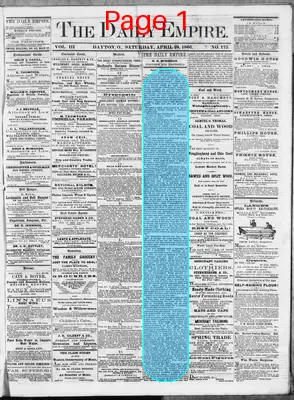
Literary
April 28, 1866
The Daily Empire
Dayton, Montgomery County, Ohio
What is this article about?
The narrator warns his friend Agnes against marrying a spendthrift gambler and debauchee, but she dismisses his concerns and insults his friendship. Years later, he finds her in a shabby home, aged by grief from her abusive, alcoholic husband who married her for her fortune.
Clipping

OCR Quality
88%
Good
Full Text
Agnes and Her Choice.
[Concluded.]
Unannounced, and trusting to the freedom of which the old familiarity used to allow, I went upstairs to the door of the little blue-silk hung boudoir, which once was always open to me. I wanted a tête-à-tête, a luxury which the large parlors wholly denied, for I think small rooms especially adapted for private interviews. Grateful indeed I felt that her lover was not with her. She was sitting in an ottoman beside the open window, her chin resting upon the palm of one hand, and her upturned eyes absorbing the moonlight. "Agnes," I said, after I had announced myself, "I hear that you are going to marry." She gave a quick start, looked at me for a moment, as though trying to read me, and then said: "When I do you shall know." "I want to know before," I answered. "Tell me, is it true?" "Yes; is it anything so singular?" "I only wanted to know from your own lips whether it was true," I answered. "I know the man to whom report said you were engaged, and, knowing what I do of him, I must say, in answer to your question, that tho fact that you are to be married to him seems to me very singular indeed." There was silence for about half a minute, and then Agnes replied: "Frank, is it to be with you and me as it has been with so many of my friends and me already? I gave you credit for better feeling and better sense. You are no longer a boy whose opinions, like his character, have yet to be formed. When you were a boy I used to be very fond of you, and now that you are a young man I do not want to have any reason to respect you less than I do now. But I shall-I know I shall-if you talk to me longer on this subject. Let no more be said upon it." "Agnes," I answered, quite aware that I was touching a very sensitive spot, "all the knowledge of the world, and all the wisdom of etiquette, which I ought to have, will not prevent my speaking to you as I feel I ought to speak. Being a man, I know-I must know-it is inevitable-more of the world than you. I have known and esteemed you too long to feel sure, as I do now, that your happiness is in a fair way of being ruined forever, without doing what I can to keep you as you are. I am too much your friend not to be willing to run the risk, for your good, of being treated by you henceforth as an enemy. And you must excuse me if I say that the one thing in all my life that I am amazed at is how you can find it in your heart to marry such a man as that." (And I remember the involuntary shudder that came over me as I thought of the kind of man to whom this pure-minded woman had pledged her faith.) I know that you estranged yourself from some of your dearest friends, because you conceive they have insulted you by pleading with you against the man of your choice. And I know there are ten chances to one but that I will rise from this seat to be treated and regarded by you henceforth as a stranger, if not a foe; but speak I must and will. If you do take the step you meditate, it shall not be because you have not had faithful friends to point the danger out." The moonlight showed her lips closed tight, as though her teeth were set. She did not look at me, but her features wore the look of one who endures an insult from an object upon which it would be pitiful to visit resentment. "Can you imagine such a marriage as this?" I proceeded. "A marriage of a pure-minded, noble-hearted woman with a man who can have no interest or thought in common with her. Such a marriage yours will be, Agnes. Have you ever taken the trouble to find out the truth about this man? Do you not know that he is a spendthrift, a gambler, a debauchee-a man addicted to vices that I can not name to you? Does not all his past career prove it? Does his present give the faintest prospect of reformation? What possible interest, beyond your own good, do you conceive your friends can have in telling you the truth of the man who is unworthy to touch the hem of your robe, to approach with his lips the ground you just have trod upon? Agnes, if you will believe me, I find it as impossible to reconcile with each other two contradictory doctrines, each of which appears to be true, as to account for the blind devotion with which you allow yourself to be led by that man." Agnes now turned her eyes upon me for the first time, and looked steadily into mine, interlocking her hands in her lap. And so, steadfastly gazing, she sat very still, composed and quiet, for a moment. Then she said, in tones of ice: "You can not account for it, and it is unnecessary that you should. For what I do, I am responsible, not you nor any friend who favors me with unsolicited advice. You have spoken words which would be an insult, were I capable of being insulted by such as you. It is enough that I have listened to you. You will never have the chance of having me do so again. Now, you must leave me. You will have the goodness to remember that all the shame and suffering you predict for me--if indeed it come--I am to bear, not you. I have listened to you as calmly as I have because I wished to satisfy myself whether you were indeed like the rest of the world, so short-sighted, so ill-discerning, so uncharitable, so backbiting. I have been mistaken. You are. You have only added one more to the number of my painful duties. My love and faith are given to that gentleman--the only man worthy of the name of man I ever knew--and I am as unmoved by the falsehoods and vituperations of friends as though they had not spoken! It is useless you to attempt to answer. You will permit me to say good-night." She arose and left the room, and I saw her no more until years after; and then, visiting a distant city, where I knew she was residing with the worthless wretch who became her husband, I passed, in one of my business walks, a shabby old two-story house, at the lower window of which I recognized the face of her who had once been Agnes Culbert. Five years only had passed, but the grief and trials of 20 years were written on her face. Her experience, as indeed I guessed by intuition, and afterwards learned, was the same old one repeated. She had married for love, a husband who had married her for the fortune he had imagined would go with her. By quick degrees he had sunk lower and lower, from the intermittent drunkard to the confirmed toper, and her life was one long abuse. How it will end for her and for him God only knows; but she has learned enough thus far, to feel how utterly blind is that infatuation which rejects all counsel, and insults the friendship that would shield and save.
[Concluded.]
Unannounced, and trusting to the freedom of which the old familiarity used to allow, I went upstairs to the door of the little blue-silk hung boudoir, which once was always open to me. I wanted a tête-à-tête, a luxury which the large parlors wholly denied, for I think small rooms especially adapted for private interviews. Grateful indeed I felt that her lover was not with her. She was sitting in an ottoman beside the open window, her chin resting upon the palm of one hand, and her upturned eyes absorbing the moonlight. "Agnes," I said, after I had announced myself, "I hear that you are going to marry." She gave a quick start, looked at me for a moment, as though trying to read me, and then said: "When I do you shall know." "I want to know before," I answered. "Tell me, is it true?" "Yes; is it anything so singular?" "I only wanted to know from your own lips whether it was true," I answered. "I know the man to whom report said you were engaged, and, knowing what I do of him, I must say, in answer to your question, that tho fact that you are to be married to him seems to me very singular indeed." There was silence for about half a minute, and then Agnes replied: "Frank, is it to be with you and me as it has been with so many of my friends and me already? I gave you credit for better feeling and better sense. You are no longer a boy whose opinions, like his character, have yet to be formed. When you were a boy I used to be very fond of you, and now that you are a young man I do not want to have any reason to respect you less than I do now. But I shall-I know I shall-if you talk to me longer on this subject. Let no more be said upon it." "Agnes," I answered, quite aware that I was touching a very sensitive spot, "all the knowledge of the world, and all the wisdom of etiquette, which I ought to have, will not prevent my speaking to you as I feel I ought to speak. Being a man, I know-I must know-it is inevitable-more of the world than you. I have known and esteemed you too long to feel sure, as I do now, that your happiness is in a fair way of being ruined forever, without doing what I can to keep you as you are. I am too much your friend not to be willing to run the risk, for your good, of being treated by you henceforth as an enemy. And you must excuse me if I say that the one thing in all my life that I am amazed at is how you can find it in your heart to marry such a man as that." (And I remember the involuntary shudder that came over me as I thought of the kind of man to whom this pure-minded woman had pledged her faith.) I know that you estranged yourself from some of your dearest friends, because you conceive they have insulted you by pleading with you against the man of your choice. And I know there are ten chances to one but that I will rise from this seat to be treated and regarded by you henceforth as a stranger, if not a foe; but speak I must and will. If you do take the step you meditate, it shall not be because you have not had faithful friends to point the danger out." The moonlight showed her lips closed tight, as though her teeth were set. She did not look at me, but her features wore the look of one who endures an insult from an object upon which it would be pitiful to visit resentment. "Can you imagine such a marriage as this?" I proceeded. "A marriage of a pure-minded, noble-hearted woman with a man who can have no interest or thought in common with her. Such a marriage yours will be, Agnes. Have you ever taken the trouble to find out the truth about this man? Do you not know that he is a spendthrift, a gambler, a debauchee-a man addicted to vices that I can not name to you? Does not all his past career prove it? Does his present give the faintest prospect of reformation? What possible interest, beyond your own good, do you conceive your friends can have in telling you the truth of the man who is unworthy to touch the hem of your robe, to approach with his lips the ground you just have trod upon? Agnes, if you will believe me, I find it as impossible to reconcile with each other two contradictory doctrines, each of which appears to be true, as to account for the blind devotion with which you allow yourself to be led by that man." Agnes now turned her eyes upon me for the first time, and looked steadily into mine, interlocking her hands in her lap. And so, steadfastly gazing, she sat very still, composed and quiet, for a moment. Then she said, in tones of ice: "You can not account for it, and it is unnecessary that you should. For what I do, I am responsible, not you nor any friend who favors me with unsolicited advice. You have spoken words which would be an insult, were I capable of being insulted by such as you. It is enough that I have listened to you. You will never have the chance of having me do so again. Now, you must leave me. You will have the goodness to remember that all the shame and suffering you predict for me--if indeed it come--I am to bear, not you. I have listened to you as calmly as I have because I wished to satisfy myself whether you were indeed like the rest of the world, so short-sighted, so ill-discerning, so uncharitable, so backbiting. I have been mistaken. You are. You have only added one more to the number of my painful duties. My love and faith are given to that gentleman--the only man worthy of the name of man I ever knew--and I am as unmoved by the falsehoods and vituperations of friends as though they had not spoken! It is useless you to attempt to answer. You will permit me to say good-night." She arose and left the room, and I saw her no more until years after; and then, visiting a distant city, where I knew she was residing with the worthless wretch who became her husband, I passed, in one of my business walks, a shabby old two-story house, at the lower window of which I recognized the face of her who had once been Agnes Culbert. Five years only had passed, but the grief and trials of 20 years were written on her face. Her experience, as indeed I guessed by intuition, and afterwards learned, was the same old one repeated. She had married for love, a husband who had married her for the fortune he had imagined would go with her. By quick degrees he had sunk lower and lower, from the intermittent drunkard to the confirmed toper, and her life was one long abuse. How it will end for her and for him God only knows; but she has learned enough thus far, to feel how utterly blind is that infatuation which rejects all counsel, and insults the friendship that would shield and save.
What sub-type of article is it?
Prose Fiction
Dialogue
What themes does it cover?
Love Romance
Moral Virtue
Friendship
What keywords are associated?
Misguided Marriage
Infatuation
Friendship Warning
Abusive Husband
Moral Tale
Literary Details
Title
Agnes And Her Choice.
Key Lines
"Agnes," I Said, After I Had Announced Myself, "I Hear That You Are Going To Marry."
"Frank, Is It To Be With You And Me As It Has Been With So Many Of My Friends And Me Already? I Gave You Credit For Better Feeling And Better Sense."
"Can You Imagine Such A Marriage As This?" I Proceeded. "A Marriage Of A Pure Minded, Noble Hearted Woman With A Man Who Can Have No Interest Or Thought In Common With Her."
"You Can Not Account For It, And It Is Unnecessary That You Should. For What I Do, I Am Responsible, Not You Nor Any Friend Who Favors Me With Unsolicited Advice."
She Had Married For Love, A Husband Who Had Married Her For The Fortune He Had Imagined Would Go With Her.