Thank you for visiting SNEWPapers!
Sign up free
Literary
March 21, 1851
Arkansas State Gazette And Democrat
Little Rock, Pulaski County, Arkansas
What is this article about?
Article praises Phillip James Bailey's poem 'Festus' as the greatest since Milton's 'Paradise Lost' for its imagination and originality. Describes Bailey as editor of the Nottingham Mercury, his appearance, and pride in the work's greater success in America (8-9 editions) versus England (3 editions), based on a New York Tribune letter.
Clipping
OCR Quality
92%
Excellent
Full Text
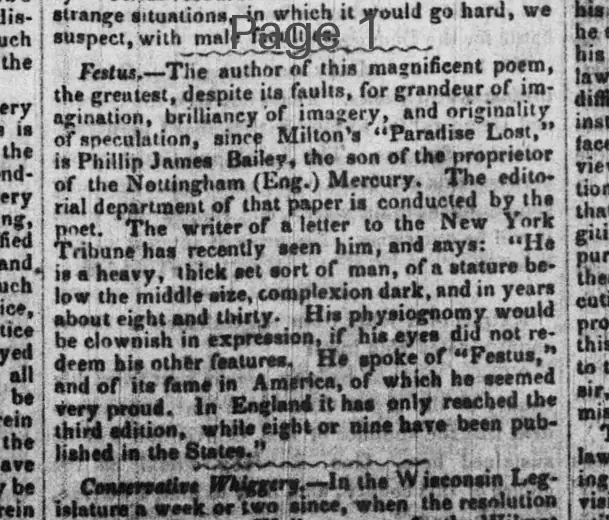
Festus.—The author of this magnificent poem, the greatest, despite its faults, in grandeur of imagination, brilliancy of imagery, and originality of speculation, since Milton's “Paradise Lost,” is Phillip James Bailey, the son of the proprietor of the Nottingham (Eng.) Mercury. The editorial department of that paper is conducted by the poet. The writer of a letter to the New York Tribune has recently seen him, and says: “He is a heavy, thick set sort of man, of a stature below the middle size, complexion dark, and in years about eight and thirty. His physiognomy would be clownish in expression, if his eyes did not redeem his other features. He spoke of “Festus,” and of its fame in America, of which he seemed very proud. In England it has only reached the third edition, while eight or nine have been published in the States.”
What sub-type of article is it?
Essay
What keywords are associated?
Festus
Phillip James Bailey
Paradise Lost
Nottingham Mercury
New York Tribune
Poet Description
Literary Fame
Literary Details
Title
Festus.
Subject
Description Of Phillip James Bailey And His Poem Festus
Form / Style
Prose Biographical Sketch With Quoted Description
Key Lines
The Greatest, Despite Its Faults, In Grandeur Of Imagination, Brilliancy Of Imagery, And Originality Of Speculation, Since Milton's "Paradise Lost,"
"He Is A Heavy, Thick Set Sort Of Man, Of A Stature Below The Middle Size, Complexion Dark, And In Years About Eight And Thirty. His Physiognomy Would Be Clownish In Expression, If His Eyes Did Not Redeem His Other Features."
He Spoke Of "Festus," And Of Its Fame In America, Of Which He Seemed Very Proud. In England It Has Only Reached The Third Edition, While Eight Or Nine Have Been Published In The States.