Thank you for visiting SNEWPapers!
Sign up free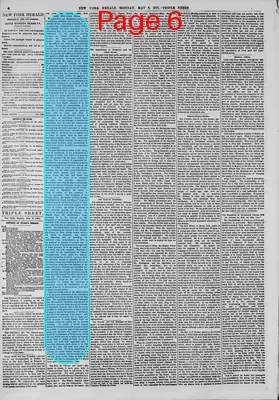
Editorial
May 8, 1871
The New York Herald
New York, New York County, New York
What is this article about?
Editorial discusses the impending signing of a US-British treaty by the Joint High Commission to settle disputes like Alabama claims, fisheries, and boundaries. Congratulates parties but urges Senate and public approval, criticizes secrecy, and outlines key provisions including an international court and retroactive neutrality principle.
Clipping

OCR Quality
98%
Excellent
Full Text
The New Treaty with Great Britain.
We learn from our Washington special correspondence, published this morning, that the members of the Joint High Commission, having practically concluded their labors, will to-day formally affix their signatures to the convention they have agreed upon for the adjustment of the questions pending between the United States and Great Britain.
We congratulate the Commissioners upon the speedy termination of the difficult and delicate task committed to them. We congratulate the people of the United States, as well as the Canadians and our friends across the ocean, upon the prospect of a speedy and satisfactory settlement of all questions which are calculated to cause continued irritation. It remains, however, for the Senate and the people of the United States to confirm or condemn the basis of settlement proposed by the Commission. In England the action of the Ministry is final, but in this country the genius of our institutions requires that the convention, in order to have effect, shall receive the approval of the people. Unless the conclusions the Commissioners have come to are satisfactory to the general sentiment of our citizens, all the discussions and deliberations of this Joint High Commission will be futile.
The Senate will meet in executive session on Wednesday next to receive the report in the form of a treaty, that will then be submitted for its action. The custom is to keep the terms of treaties confidential until they shall have been finally disposed of by the Senate. During the consideration of the questions before the Commission we have, from time to time, presented the points at issue, and we have now what is understood to be the essential features of the style of settlement agreed upon. However, we are not disposed to criticise this convention until we have the complete text before us, which we hope soon to have, notwithstanding the strict injunction of secrecy imposed upon every person who has anything to do with it. So far as we are enabled now to judge we repeat what we have said heretofore—namely, that this commission has actually settled nothing, but rather provides a plan by which other commissions or courts to be created hereafter may conclude a final settlement.
The most important provision in the treaty, as it is understood, is the enunciation as a principle of public law, which it is expected will be accepted by the great Powers of Europe, that a country is responsible for depredations committed on a friendly power by vessels equipped in the ports of a neutral nation. In order to cover the case of the Alabama and the other Anglo-Confederate vessels which preyed upon our commerce during the war, and which are alluded to by name, it is proposed to make this principle retroactive. This is much more than England condescended to do in the Johnson-Clarendon Treaty, which was so unanimously rejected by the Senate.
In order to adjudicate the claims a court, to consist of five members, is to be appointed. The President of the United States, the Queen of Great Britain, the Emperor of Brazil, the King of Italy and the President of the Federal Council of Switzerland are each to select one member of this Court of Claims. All claims of citizens of both countries growing out of the war are to be submitted to this tribunal. The dispute about the Northwestern water boundary is to be referred to the President of Switzerland, who is to decide distinctly which channel shall be the boundary line; and from this decision there is to be no appeal. The fishery matter has been adjusted by re-establishing the clauses in the Reciprocity Treaty of 1854, giving certain reciprocal rights to Canadian and American fishermen, and by providing for restricted trade arrangements, as well as the payment to Canada of a round sum of money, in place of the more general reciprocity of trade provided for in the treaty of 1854, and which has been repealed. Provision is also made for the appointment of Fishery Commissioners, whose duties are defined.
The free navigation of the St. Lawrence river by American vessels is conceded, and as a necessary consequence freedom is given to use the Canadian canals upon the payment of the same tolls as are imposed upon Canadian vessels. Heretofore a cause of complaint has been the high rate charged American vessels, while the tolls charged Canadian vessels were very low. This invidious distinction was a short-sighted policy on the part of the Canadians, for without the patronage of American vessels the construction of the canals of the St. Lawrence would have been a disastrous speculation.
These are briefly some of the salient points of the proposed adjustment of the outstanding questions between the United States and England. The impression prevails in Washington that the required two-thirds majority will be secured to carry the treaty through the Senate. It is probable, however, that it will have to be amended in some particulars before it will be in shape to receive the sanction of the Senate and the cordial approval of the people. Any propositions that provide for or imply payment of money to Great Britain, while our Alabama claims are unpaid, will be severely criticised. The claims of British subjects against the United States, a list of some of which we publish in another page of this morning's paper, and especially the claims for cotton seized by commanders of Union troops during the war, will be brought up before the international court of claims provided for in the treaty, and, while their aggregate value is variously estimated, there seems to be little doubt that they will more than offset the Alabama claims. We think, considering the interest this whole subject creates on both sides of the Atlantic, that the treaty should be officially given to the public by order of the Senate, and that the discussion upon it should be in open instead of secret session.
We learn from our Washington special correspondence, published this morning, that the members of the Joint High Commission, having practically concluded their labors, will to-day formally affix their signatures to the convention they have agreed upon for the adjustment of the questions pending between the United States and Great Britain.
We congratulate the Commissioners upon the speedy termination of the difficult and delicate task committed to them. We congratulate the people of the United States, as well as the Canadians and our friends across the ocean, upon the prospect of a speedy and satisfactory settlement of all questions which are calculated to cause continued irritation. It remains, however, for the Senate and the people of the United States to confirm or condemn the basis of settlement proposed by the Commission. In England the action of the Ministry is final, but in this country the genius of our institutions requires that the convention, in order to have effect, shall receive the approval of the people. Unless the conclusions the Commissioners have come to are satisfactory to the general sentiment of our citizens, all the discussions and deliberations of this Joint High Commission will be futile.
The Senate will meet in executive session on Wednesday next to receive the report in the form of a treaty, that will then be submitted for its action. The custom is to keep the terms of treaties confidential until they shall have been finally disposed of by the Senate. During the consideration of the questions before the Commission we have, from time to time, presented the points at issue, and we have now what is understood to be the essential features of the style of settlement agreed upon. However, we are not disposed to criticise this convention until we have the complete text before us, which we hope soon to have, notwithstanding the strict injunction of secrecy imposed upon every person who has anything to do with it. So far as we are enabled now to judge we repeat what we have said heretofore—namely, that this commission has actually settled nothing, but rather provides a plan by which other commissions or courts to be created hereafter may conclude a final settlement.
The most important provision in the treaty, as it is understood, is the enunciation as a principle of public law, which it is expected will be accepted by the great Powers of Europe, that a country is responsible for depredations committed on a friendly power by vessels equipped in the ports of a neutral nation. In order to cover the case of the Alabama and the other Anglo-Confederate vessels which preyed upon our commerce during the war, and which are alluded to by name, it is proposed to make this principle retroactive. This is much more than England condescended to do in the Johnson-Clarendon Treaty, which was so unanimously rejected by the Senate.
In order to adjudicate the claims a court, to consist of five members, is to be appointed. The President of the United States, the Queen of Great Britain, the Emperor of Brazil, the King of Italy and the President of the Federal Council of Switzerland are each to select one member of this Court of Claims. All claims of citizens of both countries growing out of the war are to be submitted to this tribunal. The dispute about the Northwestern water boundary is to be referred to the President of Switzerland, who is to decide distinctly which channel shall be the boundary line; and from this decision there is to be no appeal. The fishery matter has been adjusted by re-establishing the clauses in the Reciprocity Treaty of 1854, giving certain reciprocal rights to Canadian and American fishermen, and by providing for restricted trade arrangements, as well as the payment to Canada of a round sum of money, in place of the more general reciprocity of trade provided for in the treaty of 1854, and which has been repealed. Provision is also made for the appointment of Fishery Commissioners, whose duties are defined.
The free navigation of the St. Lawrence river by American vessels is conceded, and as a necessary consequence freedom is given to use the Canadian canals upon the payment of the same tolls as are imposed upon Canadian vessels. Heretofore a cause of complaint has been the high rate charged American vessels, while the tolls charged Canadian vessels were very low. This invidious distinction was a short-sighted policy on the part of the Canadians, for without the patronage of American vessels the construction of the canals of the St. Lawrence would have been a disastrous speculation.
These are briefly some of the salient points of the proposed adjustment of the outstanding questions between the United States and England. The impression prevails in Washington that the required two-thirds majority will be secured to carry the treaty through the Senate. It is probable, however, that it will have to be amended in some particulars before it will be in shape to receive the sanction of the Senate and the cordial approval of the people. Any propositions that provide for or imply payment of money to Great Britain, while our Alabama claims are unpaid, will be severely criticised. The claims of British subjects against the United States, a list of some of which we publish in another page of this morning's paper, and especially the claims for cotton seized by commanders of Union troops during the war, will be brought up before the international court of claims provided for in the treaty, and, while their aggregate value is variously estimated, there seems to be little doubt that they will more than offset the Alabama claims. We think, considering the interest this whole subject creates on both sides of the Atlantic, that the treaty should be officially given to the public by order of the Senate, and that the discussion upon it should be in open instead of secret session.
What sub-type of article is it?
Foreign Affairs
War Or Peace
What keywords are associated?
Us British Treaty
Alabama Claims
Fishery Rights
Northwestern Boundary
St Lawrence Navigation
International Court
Senate Approval
What entities or persons were involved?
Joint High Commission
United States Senate
Great Britain
Alabama
Canada
President Of Switzerland
Editorial Details
Primary Topic
Proposed Treaty Settling Us British Disputes Including Alabama Claims And Fisheries
Stance / Tone
Congratulatory Yet Cautious, Advocating Public Disclosure And Senate Approval
Key Figures
Joint High Commission
United States Senate
Great Britain
Alabama
Canada
President Of Switzerland
Key Arguments
Commissioners To Sign Convention For Adjusting Us Gb Questions
Principle Of Neutral Nation Responsibility For Depredations Made Retroactive For Alabama Claims
International Court Of Five Members To Adjudicate War Claims
Northwestern Water Boundary Referred To President Of Switzerland
Fishery Rights Restored With Payments And Commissioners
Free Navigation Of St. Lawrence And Equal Canal Tolls
Treaty Terms Should Be Public, Not Secret Senate Session