Thank you for visiting SNEWPapers!
Sign up free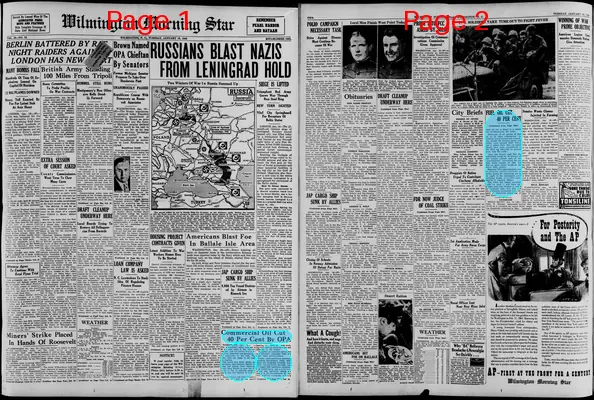
The Wilmington Morning Star
Wilmington, New Hanover County, North Carolina
What is this article about?
On Jan. 18, the U.S. government, via Harold L. Ickes and John Hamm, ordered a 40% cut in non-essential fuel oil rations for commercial, industrial, and governmental users in 17 eastern states and D.C. to address the oil crisis. Heating exempt; expires April 1, 1943.
Merged-components note: Continuation of commercial oil cut story from page 1 to page 2.
Clippings
1 of 2
OCR Quality
Full Text
Cut
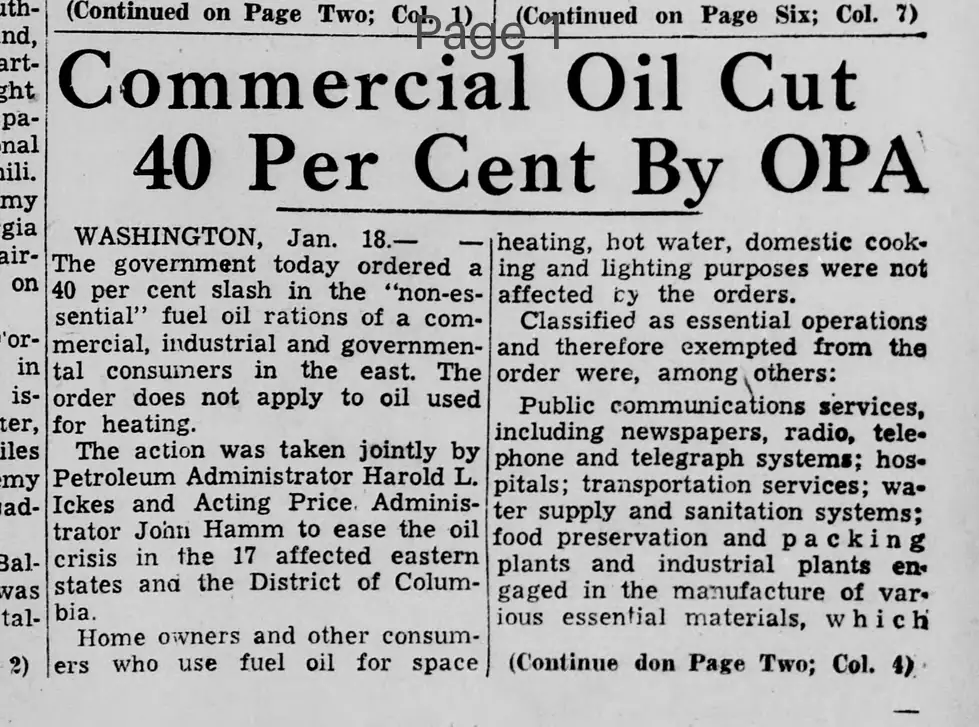
40 Per Cent
By
OPA
WASHINGTON, Jan. 18.-
The government today ordered a
40 per cent slash in the "non-essential" fuel oil rations of commercial, industrial and governmental consumers in the east. The
order does not apply to oil used
for heating.
The action was taken jointly by
Petroleum Administrator Harold L.
Ickes and Acting Price Administrator John Hamm to ease the oil
crisis in the 17 affected eastern
states and the District of Columbia.
Home owners and other consumers who use fuel oil for space
heating, hot water, domestic cooking and lighting purposes were not
affected by the orders.
Classified as essential operations
and therefore exempted from the
order were, among others:
Public communications services,
including newspapers, radio, telephone and telegraph systems; hospitals; transportation services; water supply and sanitation systems;
food preservation and packing
plants and industrial plants engaged in the manufacture of various essential materials, which
(Continue on Page Two; Col. 4)
FUEL OIL CUT 40 PER CENT
(Continued from Page One)
Were set out in detail in a schedule accompanying the order.
Deliveries of all grades of fuel oil to all other commercial, industrial and governmental consumers, except for heating space and water, were banned after February 2 unless their fuel oil ration sheets have been surrendered to the OPA for reduction in accordance with the order.
Ickes and Hamm said that the reductions would be 40 percent of the amount allotted each of the "non-essential" consumers, for the first three months of 1943, but that no one's ration would be cut below 9,000 gallons.
Regional OPA administrators are to announce whether surrender of ration sheets for reductions are to be made to the consumer's local rationing board, or to OPA state, district or regional offices.
The order will expire automatically on April 1, and Ickes and Hamm said that whether it would be extended after that date and the allotments readjusted would depend on conditions prevailing at that time.
What sub-type of article is it?
What keywords are associated?
What entities or persons were involved?
Where did it happen?
Domestic News Details
Primary Location
17 Affected Eastern States And The District Of Columbia
Event Date
Jan. 18
Key Persons
Outcome
40 percent reduction in non-essential fuel oil rations for commercial, industrial, and governmental consumers; no ration cut below 9,000 gallons; order expires april 1
Event Details
The government ordered a 40 percent slash in non-essential fuel oil rations for commercial, industrial, and governmental consumers in the east, excluding heating oil. The action was taken by Petroleum Administrator Harold L. Ickes and Acting Price Administrator John Hamm to ease the oil crisis. Essential operations such as public communications, hospitals, transportation, water supply, sanitation, food preservation, packing plants, and industrial plants manufacturing essential materials are exempted. Deliveries banned after February 2 unless ration sheets surrendered for reduction. Reductions apply to first three months of 1943. Regional OPA administrators to announce surrender procedures.