Thank you for visiting SNEWPapers!
Sign up free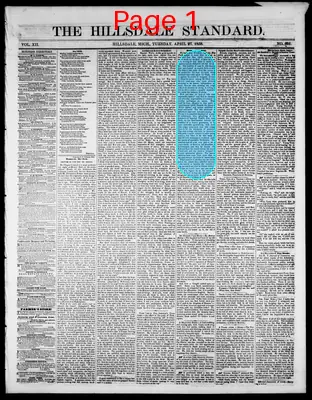
Story
April 27, 1858
The Hillsdale Standard
Hillsdale, Hillsdale County, Michigan
What is this article about?
An editorial from the New York Ledger argues that a man's worth is determined by the spirit of his honest labor, not by profession, wealth, or birth. It criticizes class distinctions and pseudo-aristocracy, urging working men to take pride in their toil over corrupt idleness.
Clipping
OCR Quality
95%
Excellent
Full Text
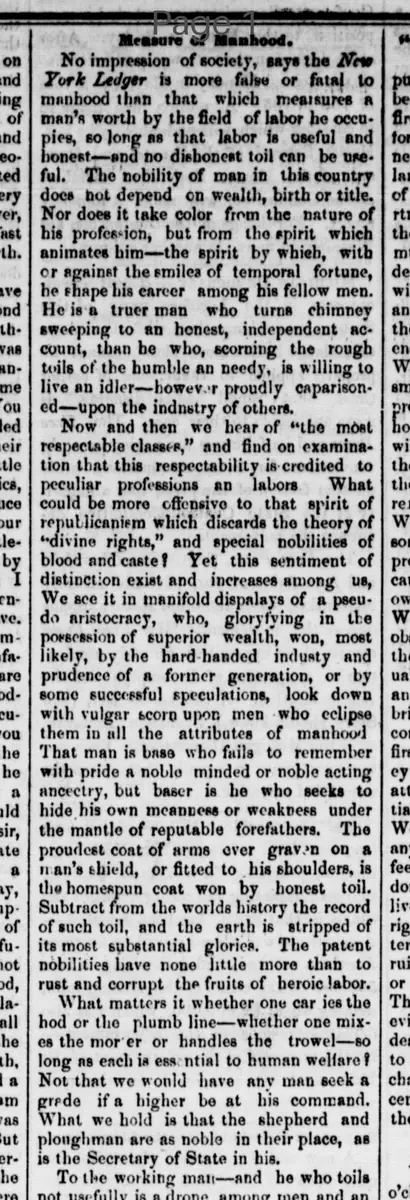
No impression of society, says the New York Ledger, is more false or fatal to manhood than that which measures a man's worth by the field of labor he occupies, so long as that labor is useful and honest—and no dishonest toil can be useful. The nobility of man in this country does not depend on wealth, birth or title. Nor does it take color from the nature of his profession, but from the spirit which animates him—the spirit by which, with or against the smiles of temporal fortune, he shapes his career among his fellow men.
He is a truer man who turns chimney sweeping to an honest, independent account, than he who, scorning the rough toils of the humble and needy, is willing to live an idler—however proudly caparisoned—upon the industry of others.
Now and then we hear of "the most respectable classes," and find on examination that this respectability is credited to peculiar professions and labors. What could be more offensive to that spirit of republicanism which discards the theory of "divine rights," and special nobilities of blood and caste! Yet this sentiment of distinction exists and increases among us. We see it in manifold displays of a pseudo aristocracy, who, glorifying in the possession of superior wealth, won, most likely, by the hard-handed industry and prudence of a former generation, or by some successful speculations, look down with vulgar scorn upon men who eclipse them in all the attributes of manhood.
That man is base who fails to remember with pride a noble minded or noble acting ancestry, but baser is he who seeks to hide his own meanness or weakness under the mantle of reputable forefathers. The proudest coat of arms ever graven on a man's shield, or fitted to his shoulders, is the homespun coat won by honest toil. Subtract from the world's history the record of such toil, and the earth is stripped of its most substantial glories. The patent nobilities have done little more than to rust and corrupt the fruits of heroic labor.
What matters it whether one carries the hod or the plumb line—whether one mixes the mortar or handles the trowel—so long as each is essential to human welfare? Not that we would have any man seek a grade if a higher be at his command. What we hold is that the shepherd and ploughman are as noble in their place, as is the Secretary of State in his.
To the working man—and he who toils not usefully is a drone among men and an abomination in the sight of God—we have but few words of advice. Heed not the false sentiment that would deny you dignity or respectability, because your labor soils your hands and swarths your brow. Better have soiled hands and swarth brow than the corrupt heart and vicious brain of the two extremes of society who prey on your labor—the vagabonds of the gutter, shameless in their mendicity and crime, and the vaunted aristocracy, whose wealth hides their corruption from the public sight. Aim high with honest purpose, holding a true soul better than gold, and the approval of conscience sweeter than the world's flattery, and you will triumph even in the humblest vocation. Your daily labor shall not be the gauge of your manhood, for you will have over and above that, for self communion and for society, a heart and brain which are not tied to, nor bound up in, the toil of your hands.
He is a truer man who turns chimney sweeping to an honest, independent account, than he who, scorning the rough toils of the humble and needy, is willing to live an idler—however proudly caparisoned—upon the industry of others.
Now and then we hear of "the most respectable classes," and find on examination that this respectability is credited to peculiar professions and labors. What could be more offensive to that spirit of republicanism which discards the theory of "divine rights," and special nobilities of blood and caste! Yet this sentiment of distinction exists and increases among us. We see it in manifold displays of a pseudo aristocracy, who, glorifying in the possession of superior wealth, won, most likely, by the hard-handed industry and prudence of a former generation, or by some successful speculations, look down with vulgar scorn upon men who eclipse them in all the attributes of manhood.
That man is base who fails to remember with pride a noble minded or noble acting ancestry, but baser is he who seeks to hide his own meanness or weakness under the mantle of reputable forefathers. The proudest coat of arms ever graven on a man's shield, or fitted to his shoulders, is the homespun coat won by honest toil. Subtract from the world's history the record of such toil, and the earth is stripped of its most substantial glories. The patent nobilities have done little more than to rust and corrupt the fruits of heroic labor.
What matters it whether one carries the hod or the plumb line—whether one mixes the mortar or handles the trowel—so long as each is essential to human welfare? Not that we would have any man seek a grade if a higher be at his command. What we hold is that the shepherd and ploughman are as noble in their place, as is the Secretary of State in his.
To the working man—and he who toils not usefully is a drone among men and an abomination in the sight of God—we have but few words of advice. Heed not the false sentiment that would deny you dignity or respectability, because your labor soils your hands and swarths your brow. Better have soiled hands and swarth brow than the corrupt heart and vicious brain of the two extremes of society who prey on your labor—the vagabonds of the gutter, shameless in their mendicity and crime, and the vaunted aristocracy, whose wealth hides their corruption from the public sight. Aim high with honest purpose, holding a true soul better than gold, and the approval of conscience sweeter than the world's flattery, and you will triumph even in the humblest vocation. Your daily labor shall not be the gauge of your manhood, for you will have over and above that, for self communion and for society, a heart and brain which are not tied to, nor bound up in, the toil of your hands.
What sub-type of article is it?
Opinion Editorial
Moral Essay
What themes does it cover?
Moral Virtue
Social Manners
Justice
What keywords are associated?
Honest Labor
Social Equality
Class Distinction
Working Class Dignity
Republican Values
Moral Integrity
Story Details
Story Details
The piece extols the dignity of honest labor regardless of profession, condemns class-based prejudices and pseudo-aristocracy, and advises working men to value integrity over societal flattery.