Thank you for visiting SNEWPapers!
Sign up free
Editorial
November 18, 1868
Smyrna Times
Smyrna, Kent County, Delaware
What is this article about?
This satirical piece observes that intellectually brilliant men tend to marry dull or less refined women, relying on their own abilities to navigate society, avoiding intellectual rivals, and prioritizing personal comfort over social expectations.
Clipping
OCR Quality
98%
Excellent
Full Text
MISCELLANEOUS.
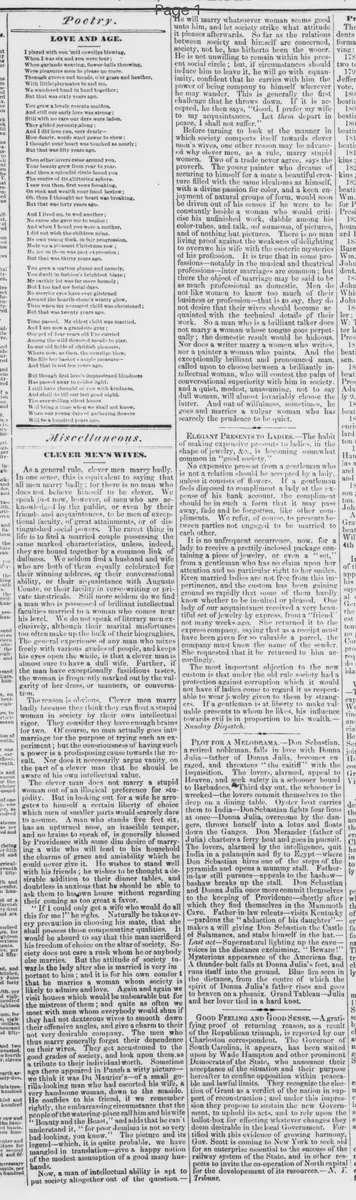
CLEVER MEN'S WIVES.
As a general rule, clever men marry badly.
In one sense, this is equivalent to saying that
all men marry badly: for there is no man who
does not believe himself to be clever. We
speak just now, however, of men who are acknowledged by the public, or even by their
friends and acquaintances, to be men of exceptional faculty, of great attainments, or of distinguished social powers. The rarest thing in
life is to find a married couple possessing the
same marked characteristics, unless, indeed,
they are bound together by a common link of
dullness. We seldom find a husband and wife
who are both of them equally celebrated for
their winning address, or their conversational
ability, or their acquaintance with Auguste
Comte, or their facility in verse-writing or private theatricals. Still more seldom do we find
a man who is possessed of brilliant intellectual faculties married to a woman who comes near
his level. We do not speak of literary men exclusively, although their marital misfortunes
too often make up the bulk of their biographies.
The general experience of any man who mixes
freely with various grades of people, and keeps
his eyes open the while, is that a clever man is
almost sure to have a dull wife. Further, if
the man have exceptionally fastidious tastes,
the woman is frequently marked out by the vulgarity of her dress, or manners, or conversation.
The reason is obvious. Clever men marry
badly because they think they can float a stupid
woman in society by their own intellectual
vigor. They consider they have enough brains
for two. Of course, no man actually goes into
marriage for the purpose of trying such an experiment; but the consciousness of having such
a power is a predisposing cause towards the result. Nor does it necessarily argue vanity, on
the part of a clever man that he should be
aware of his own intellectual value.
The clever man does not marry a stupid
woman out of an illogical preference for stupidity. But in looking out for a wife he arrogates to himself a certain liberty of choice
which men of smaller parts would scarcely dare
to assume. A man who stands five feet six,
has an upturned nose, an irascible temper,
and no brains to speak of, is generally blessed
by Providence with some dim desire of marrying a wife who will lend to his household
the charms of grace and amiability which he
could never give it. He wishes to stand well
with his friends; he wishes to be thought a desirable addition to their dinner tables, and
doubtless is anxious that he should be able to
ask them to his own house without regarding
their coming as too great a favor.
"If I could only get a wife who would do all
this for me!" he sighs. Naturally he takes every precaution in choosing his mate, that she
shall possess those compensating qualities. It
would be absurd to say that this man sacrificed
his freedom of choice on the altar of society. Society does not care a rush whom he or anybody
else marries. But the attitude of society towards the lady after she is married is very important to him; and it is for his own comfort
that he marries a woman whom society is
likely to admire and love. Again and again we
visit houses which would be unbearable but for
the mistress of them; and quite as often we
meet with men whom everybody would shun if
they had not dexterous wives to smooth down
their offensive angles, and give a charm to their
not very desirable company. The men who
thus marry generally forget their dependence
on their wives. They get accustomed to the
good grades of society, and look upon them as
a tribute to their individual worth. Sometimes
ago there appeared in Punch a witty picture-
we think it was Du Maurier's—of a small gorilla-looking man who had escorted his wife, a
very handsome woman, down to the seaside.
He confides to his friend, if we remember
rightly, the embarrassing circumstance that the
people of the watering-place call him and his wife
"Beauty and the Beast," and adds that he can't
understand it, "for poor Jemima is not so very
bad-looking, you know." The picture and its
legend—which, it is quite probable, we have
mangled in translation—give a happy notion
of the modest assumption of a good many husbands.
Now, a man of intellectual ability is apt to
put society altogether out of the question.
He will marry whatsoever woman seems good
unto him, and let society strike what attitude
it pleases afterwards. So far as the relations
between society and himself are concerned,
society, not he, has hitherto been the wooer.
He is not unwilling to remain within his present social circle: but, if circumstances should
induce him to leave it, he will go with equanimity, confident that he carries with him the
power of being company to himself wherever
he may wander. This is generally the first
challenge that he throws down. If it is accepted, he then says, "Good, I prefer my wife
to my acquaintances. Let them depart in
peace, I shall not suffer."
Before turning to look at the manner in
which society comports itself towards clever
men's wives, one other reason may be advanced why clever men, as a rule, marry stupid
women. Two of a trade never agree, says the
proverb. The young painter who dreams of
securing to himself for a mate a beautiful creature filled with the same idealisms as himself,
with a divine passion for color, and a keen enjoyment of natural groups of form, would soon
be driven out of his senses if he were to be
constantly beside a woman who would criticize his unfinished work, dabble among his
color-tubes, and talk, ad nauseam, of pictures,
and of nothing but pictures. There is no man
living proof against the weakness of delighting to overawe his wife with the esoteric mysteries
of his profession. It is true that in some professions—notably in the musical and theatrical
professions—intermarriages are common; but
there the object of marriage may be said to be
as much professional as domestic. Men do
not like women to know too much of their
business or profession—that is to say, they do
not desire that their wives should become acquainted with the technical details of their
work. So a man who is a brilliant talker does
not marry a woman whose tongue goes perpetually; the domestic result would be hideous.
Nor does a writer marry a woman who writes,
nor a painter a woman who paints. And the
exceptionally brilliant and pronounced man,
called upon to choose between a brilliantly intellectual woman, who will contest the palm of
conversational superiority with him in society,
and a quiet, modest, unassuming, not to say
dull woman, will almost invariably choose the
latter. And out of wilfulness, sometimes, he
goes and marries a vulgar woman who has
scarcely the prudence to be quiet.
CLEVER MEN'S WIVES.
As a general rule, clever men marry badly.
In one sense, this is equivalent to saying that
all men marry badly: for there is no man who
does not believe himself to be clever. We
speak just now, however, of men who are acknowledged by the public, or even by their
friends and acquaintances, to be men of exceptional faculty, of great attainments, or of distinguished social powers. The rarest thing in
life is to find a married couple possessing the
same marked characteristics, unless, indeed,
they are bound together by a common link of
dullness. We seldom find a husband and wife
who are both of them equally celebrated for
their winning address, or their conversational
ability, or their acquaintance with Auguste
Comte, or their facility in verse-writing or private theatricals. Still more seldom do we find
a man who is possessed of brilliant intellectual faculties married to a woman who comes near
his level. We do not speak of literary men exclusively, although their marital misfortunes
too often make up the bulk of their biographies.
The general experience of any man who mixes
freely with various grades of people, and keeps
his eyes open the while, is that a clever man is
almost sure to have a dull wife. Further, if
the man have exceptionally fastidious tastes,
the woman is frequently marked out by the vulgarity of her dress, or manners, or conversation.
The reason is obvious. Clever men marry
badly because they think they can float a stupid
woman in society by their own intellectual
vigor. They consider they have enough brains
for two. Of course, no man actually goes into
marriage for the purpose of trying such an experiment; but the consciousness of having such
a power is a predisposing cause towards the result. Nor does it necessarily argue vanity, on
the part of a clever man that he should be
aware of his own intellectual value.
The clever man does not marry a stupid
woman out of an illogical preference for stupidity. But in looking out for a wife he arrogates to himself a certain liberty of choice
which men of smaller parts would scarcely dare
to assume. A man who stands five feet six,
has an upturned nose, an irascible temper,
and no brains to speak of, is generally blessed
by Providence with some dim desire of marrying a wife who will lend to his household
the charms of grace and amiability which he
could never give it. He wishes to stand well
with his friends; he wishes to be thought a desirable addition to their dinner tables, and
doubtless is anxious that he should be able to
ask them to his own house without regarding
their coming as too great a favor.
"If I could only get a wife who would do all
this for me!" he sighs. Naturally he takes every precaution in choosing his mate, that she
shall possess those compensating qualities. It
would be absurd to say that this man sacrificed
his freedom of choice on the altar of society. Society does not care a rush whom he or anybody
else marries. But the attitude of society towards the lady after she is married is very important to him; and it is for his own comfort
that he marries a woman whom society is
likely to admire and love. Again and again we
visit houses which would be unbearable but for
the mistress of them; and quite as often we
meet with men whom everybody would shun if
they had not dexterous wives to smooth down
their offensive angles, and give a charm to their
not very desirable company. The men who
thus marry generally forget their dependence
on their wives. They get accustomed to the
good grades of society, and look upon them as
a tribute to their individual worth. Sometimes
ago there appeared in Punch a witty picture-
we think it was Du Maurier's—of a small gorilla-looking man who had escorted his wife, a
very handsome woman, down to the seaside.
He confides to his friend, if we remember
rightly, the embarrassing circumstance that the
people of the watering-place call him and his wife
"Beauty and the Beast," and adds that he can't
understand it, "for poor Jemima is not so very
bad-looking, you know." The picture and its
legend—which, it is quite probable, we have
mangled in translation—give a happy notion
of the modest assumption of a good many husbands.
Now, a man of intellectual ability is apt to
put society altogether out of the question.
He will marry whatsoever woman seems good
unto him, and let society strike what attitude
it pleases afterwards. So far as the relations
between society and himself are concerned,
society, not he, has hitherto been the wooer.
He is not unwilling to remain within his present social circle: but, if circumstances should
induce him to leave it, he will go with equanimity, confident that he carries with him the
power of being company to himself wherever
he may wander. This is generally the first
challenge that he throws down. If it is accepted, he then says, "Good, I prefer my wife
to my acquaintances. Let them depart in
peace, I shall not suffer."
Before turning to look at the manner in
which society comports itself towards clever
men's wives, one other reason may be advanced why clever men, as a rule, marry stupid
women. Two of a trade never agree, says the
proverb. The young painter who dreams of
securing to himself for a mate a beautiful creature filled with the same idealisms as himself,
with a divine passion for color, and a keen enjoyment of natural groups of form, would soon
be driven out of his senses if he were to be
constantly beside a woman who would criticize his unfinished work, dabble among his
color-tubes, and talk, ad nauseam, of pictures,
and of nothing but pictures. There is no man
living proof against the weakness of delighting to overawe his wife with the esoteric mysteries
of his profession. It is true that in some professions—notably in the musical and theatrical
professions—intermarriages are common; but
there the object of marriage may be said to be
as much professional as domestic. Men do
not like women to know too much of their
business or profession—that is to say, they do
not desire that their wives should become acquainted with the technical details of their
work. So a man who is a brilliant talker does
not marry a woman whose tongue goes perpetually; the domestic result would be hideous.
Nor does a writer marry a woman who writes,
nor a painter a woman who paints. And the
exceptionally brilliant and pronounced man,
called upon to choose between a brilliantly intellectual woman, who will contest the palm of
conversational superiority with him in society,
and a quiet, modest, unassuming, not to say
dull woman, will almost invariably choose the
latter. And out of wilfulness, sometimes, he
goes and marries a vulgar woman who has
scarcely the prudence to be quiet.
What sub-type of article is it?
Satire
Feminism
What keywords are associated?
Clever Men
Dull Wives
Marriage
Society
Intellect
Gender Roles
Satire
What entities or persons were involved?
Clever Men
Society
Punch
Du Maurier
Editorial Details
Primary Topic
Clever Men Marrying Dull Wives
Stance / Tone
Satirical Observation
Key Figures
Clever Men
Society
Punch
Du Maurier
Key Arguments
Clever Men Marry Badly Because They Believe Their Intellect Can Compensate For A Wife's Dullness.
They Exercise Greater Freedom In Choosing Wives Without Societal Pressures.
Intellectual Men Prioritize Personal Compatibility Over Social Admiration.
Two Professionals In The Same Field Rarely Agree, So Men Avoid Intellectually Competitive Wives.
Brilliant Men Prefer Quiet, Non Competitive Partners To Maintain Dominance In Their Expertise.