Thank you for visiting SNEWPapers!
Sign up free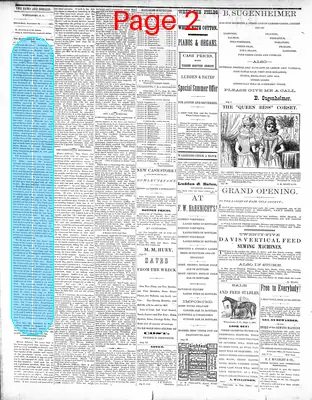
Editorial
September 22, 1881
The News And Herald
Winnsboro, Fairfield County, South Carolina
What is this article about?
Editorial mourns President Garfield's death from assassination on September 19, 1881, recounts his life from humble origins to presidency, reflects on his political rise amid controversy, assesses minimal national impact of his death, critiques incoming President Arthur's prospects, and demands swift execution of assassin Guiteau.
Clipping

OCR Quality
98%
Excellent
Full Text
The Dead President and the Living One.
The hour has come. President Garfield breathed his last in the little cottage at Elberon on Monday night at half-past ten o'clock. A brave battle has been made with death, but the king of terrors has again asserted his matchless majesty and claimed his victim, while a sorrowing, sympathizing world looks on powerless to save.
On the second day of July last as President Garfield stood in the depot at Washington, the assassin crept behind him and fired the fatal shot. When it was first announced that the ball had passed through his body, his recovery was despaired of. But subsequent developments proving the error of this diagnosis, hope revived. A first relapse gave no special alarm, but when the second came it was evident to all but the most hopeful that his chances were desperate. Thus, vibrating between life and death, he lived on, a sublime spectacle of fortitude and heroism that made all the world wonder, and made for him entrance to the inner hearts of men into which he could never otherwise have come.
President Garfield was an illustrious example of the possibilities of a land like ours. A poor, illiterate boy, he paced the tow-path of the canal, and thence by force of talent, energy, will and thirst for knowledge he became in succession pupil, janitor, student, professor, major-general, Congressman, United States Senator and President. At the time of his nomination he was filling his eighth term in Congress, and had already been elected to the United States Senate to succeed Thurman. Never before has any one held these three honorable positions at one and the same time.
The memories of the last campaign are fresh in the minds of the people—the bitter canvass, the personal charges, the purchased votes, by means of vast sums of money, and the consequent result. Garfield became President, and the people acquiesced. At the threshold of his Presidential career he was struck down. It was not what he had done but what he was expected to do that gave him the good will of the South. No man had been more bitter in speech than he; yet it was somehow felt that these were not his real sentiments, and it was believed that in becoming ruler of the whole people he would sink the partisan in the patriot, and give full play to the best qualities of his nature. The South also felt that he was a barrier standing between her and Grantism, and for that reason she rallied round him. It is perhaps well for him that he has been cut off at this time. No act of his could ever have made him more popular than his memory will be; and had he recovered he might have discovered that there are supreme moments in the life of some men when to die is gain and to live is loss. His niche is now secure, all his foibles and weaknesses are forgotten, and only his finer qualities remembered.
We do not see that any harm can come to the country at large or to the South by his death. In his own words when, at the death of Lincoln, he quelled the mob, "God reigns and the government at Washington still lives." Trade will pursue its accustomed channels, and the people will move on in the even tenor of their way. As for the Democratic party its chances are much brighter under Arthur's administration than they could have been in the event of the President's recovery. The personal popularity of the latter, after having undergone an attempted assassination, would have given him a walk-over in '84. Arthur is an accident. His accession recalls to mind Guiteau and Stalwartism, and his own party have no stomach for him. He must be either King Log or King Stork. In the former event he will do nothing to strengthen his party; in the latter, he will offend not only all Democrats, but Conservative Republicans alike. He must get rid of Conkling or become unsavory to the public nostrils. No accidental President has ever done well, and it will be beyond all precedent if Arthur prove more of a success than Tyler, Fillmore or Andrew Johnson.
Now that the President is dead, Guiteau should be hanged in short order. The country cannot settle down until the assassin has paid the penalty of his crime with his life.
The hour has come. President Garfield breathed his last in the little cottage at Elberon on Monday night at half-past ten o'clock. A brave battle has been made with death, but the king of terrors has again asserted his matchless majesty and claimed his victim, while a sorrowing, sympathizing world looks on powerless to save.
On the second day of July last as President Garfield stood in the depot at Washington, the assassin crept behind him and fired the fatal shot. When it was first announced that the ball had passed through his body, his recovery was despaired of. But subsequent developments proving the error of this diagnosis, hope revived. A first relapse gave no special alarm, but when the second came it was evident to all but the most hopeful that his chances were desperate. Thus, vibrating between life and death, he lived on, a sublime spectacle of fortitude and heroism that made all the world wonder, and made for him entrance to the inner hearts of men into which he could never otherwise have come.
President Garfield was an illustrious example of the possibilities of a land like ours. A poor, illiterate boy, he paced the tow-path of the canal, and thence by force of talent, energy, will and thirst for knowledge he became in succession pupil, janitor, student, professor, major-general, Congressman, United States Senator and President. At the time of his nomination he was filling his eighth term in Congress, and had already been elected to the United States Senate to succeed Thurman. Never before has any one held these three honorable positions at one and the same time.
The memories of the last campaign are fresh in the minds of the people—the bitter canvass, the personal charges, the purchased votes, by means of vast sums of money, and the consequent result. Garfield became President, and the people acquiesced. At the threshold of his Presidential career he was struck down. It was not what he had done but what he was expected to do that gave him the good will of the South. No man had been more bitter in speech than he; yet it was somehow felt that these were not his real sentiments, and it was believed that in becoming ruler of the whole people he would sink the partisan in the patriot, and give full play to the best qualities of his nature. The South also felt that he was a barrier standing between her and Grantism, and for that reason she rallied round him. It is perhaps well for him that he has been cut off at this time. No act of his could ever have made him more popular than his memory will be; and had he recovered he might have discovered that there are supreme moments in the life of some men when to die is gain and to live is loss. His niche is now secure, all his foibles and weaknesses are forgotten, and only his finer qualities remembered.
We do not see that any harm can come to the country at large or to the South by his death. In his own words when, at the death of Lincoln, he quelled the mob, "God reigns and the government at Washington still lives." Trade will pursue its accustomed channels, and the people will move on in the even tenor of their way. As for the Democratic party its chances are much brighter under Arthur's administration than they could have been in the event of the President's recovery. The personal popularity of the latter, after having undergone an attempted assassination, would have given him a walk-over in '84. Arthur is an accident. His accession recalls to mind Guiteau and Stalwartism, and his own party have no stomach for him. He must be either King Log or King Stork. In the former event he will do nothing to strengthen his party; in the latter, he will offend not only all Democrats, but Conservative Republicans alike. He must get rid of Conkling or become unsavory to the public nostrils. No accidental President has ever done well, and it will be beyond all precedent if Arthur prove more of a success than Tyler, Fillmore or Andrew Johnson.
Now that the President is dead, Guiteau should be hanged in short order. The country cannot settle down until the assassin has paid the penalty of his crime with his life.
What sub-type of article is it?
Partisan Politics
Crime Or Punishment
What keywords are associated?
Garfield Death
Assassination
Arthur Presidency
Guiteau Execution
Stalwartism
Democratic Chances
Presidential Succession
What entities or persons were involved?
President Garfield
Guiteau
Arthur
Conkling
Lincoln
Thurman
Grant
Editorial Details
Primary Topic
Mourning Garfield's Assassination And Political Implications For Arthur's Presidency
Stance / Tone
Sympathetic To Garfield, Critical Of Arthur, Demanding Justice For Guiteau
Key Figures
President Garfield
Guiteau
Arthur
Conkling
Lincoln
Thurman
Grant
Key Arguments
Garfield's Heroic Struggle And Death Elevates His Legacy
His Rise From Poverty Exemplifies American Opportunity
Political Campaign Was Bitter With Purchased Votes
South Supported Him As Barrier To Grantism
His Death Poses No Harm To Nation Or South
Arthur's Accidental Presidency Weakens Republicans And Aids Democrats
Guiteau Must Be Executed Swiftly