Thank you for visiting SNEWPapers!
Sign up free
Literary
February 6, 1868
The Plymouth Weekly Democrat
Plymouth, Marshall County, Indiana
What is this article about?
A satirical prose sketch reminiscing about 19th-century American life, detailing outdated habits in health, social customs, entertainment, dress, and daily routines, contrasting them with modern practices.
Clipping
OCR Quality
95%
Excellent
Full Text
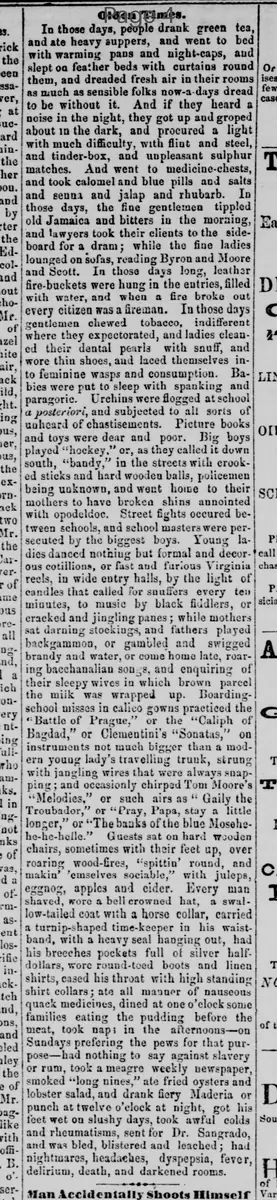
In those days, people drank green tea and ate heavy suppers, and went to bed with warming pans and night-caps, and slept on feather beds with curtains round them, and dreaded fresh air in their rooms as much as sensible folks now-a-days dread to be without it. And if they heard a noise in the night, they got up and groped about in the dark, and procured a light with much difficulty, with flint and steel, and tinder-box, and unpleasant sulphur matches. And went to medicine-chests, and took calomel and blue pills and salts and senna and jalap and rhubarb. In those days, the fine gentlemen tippled old Jamaica and bitters in the morning, and lawyers took their clients to the side-board for a dram; while the fine ladies lounged on sofas, reading Byron and Moore and Scott. In those days long, leather fire-buckets were hung in the entries, filled with water, and when a fire broke out every citizen was a fireman. In those days gentlemen chewed tobacco, indifferent where they expectorated, and ladies cleaned their dental pearls with snuff, and wore thin shoes, and laced themselves into feminine waists and consumption. Babies were put to sleep with spanking and paregoric. Urchins were flogged at school a posteriori, and subjected to all sorts of uphard chastisements. Picture books and toys were dear and poor. Big boys played "hockey," or, as they called it down south, "bandy," in the streets with crooked sticks and hard wooden balls, policemen being unknown, and went home to their mothers to have broken shins anointed with opodeldoc. Street fights occurred between schools, and school masters were persecuted by the biggest boys. Young ladies danced nothing but formal and decorous cotillions, or fast and furious Virginia reels, in wide entry halls, by the light of candles that called for snuffers every ten minutes, to music by black fiddlers, or cracked and jingling pianos; while mothers sat darning stockings, and fathers played backgammon, or gambled and swigged brandy and water, or come home late, roaring bacchanalian songs, and enquiring of their sleepy wives in which brown parcel the milk was wrapped up. Boarding-school misses in calico gowns practiced the "Battle of Prague," or the "Caliph of Bagdad," or Clementi's "Sonatas," on instruments not much bigger than a modern young lady's travelling trunk, strung with jangling wires that were always snapping; and occasionally chirped Tom Moore's "Melodies," or such airs as "Gaily the Troubadour," or "Pray, Papa, stay a little longer," or "The banks of the blue Moselle-he-he-helle." Guests sat on hard wooden chairs, sometimes with their feet up, over roaring wood-fires, "spittin' round, and makin' 'emselves sociable," with juleps, eggnog, apples and cider. Every man shaved, wore a bell crowned hat, a swallow-tailed coat with a horse collar, carried a turnip-shaped time-keeper in his waistband, with a heavy seal hanging out, had his breeches pockets full of silver half dollars, wore round-toed boots and linen shirts, cased his throat with high standing shirt collars; ate all manner of nauseous quack medicines, dined at one o'clock some families eating the pudding before the meat, took naps in the afternoons—on Sundays preferring the pews for that purpose—had nothing to say against slavery or rum, took a meagre weekly newspaper, smoked "long nines," ate fried oysters and lobster salad, and drank fiery Madeira or punch at twelve o'clock at night, got his feet wet on slushy days, took awful colds and rheumatisms, sent for Dr. Sangrado, and was bled, blistered and leeched; had nightmares, headaches, dyspepsia, fever, delirium, death, and darkened rooms.
What sub-type of article is it?
Essay
Satire
What themes does it cover?
Social Manners
What keywords are associated?
Historical Customs
Social Habits
19th Century Life
Satirical Reminiscence
Daily Routines
Outdated Practices
Literary Details
Subject
Customs And Habits Of The Past
Key Lines
In Those Days, People Drank Green Tea And Ate Heavy Suppers, And Went To Bed With Warming Pans And Night Caps, And Slept On Feather Beds With Curtains Round Them, And Dreaded Fresh Air In Their Rooms As Much As Sensible Folks Now A Days Dread To Be Without It.
In Those Days Gentlemen Chewed Tobacco, Indifferent Where They Expectorated, And Ladies Cleaned Their Dental Pearls With Snuff, And Wore Thin Shoes, And Laced Themselves Into Feminine Waists And Consumption.
Had Nothing To Say Against Slavery Or Rum, Took A Meagre Weekly Newspaper, Smoked "Long Nines," Ate Fried Oysters And Lobster Salad, And Drank Fiery Madeira Or Punch At Twelve O'clock At Night