Thank you for visiting SNEWPapers!
Sign up free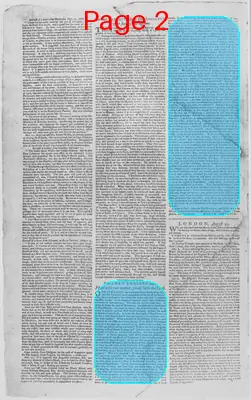
Editorial
December 8, 1768
The Virginia Gazette
Richmond, Williamsburg, Richmond County, Virginia
What is this article about?
A New England editorial, voiced as North America's plea to Britannia, defends colonial rights as Englishmen against taxation without representation, standing armies in peacetime, and ministerial authority, warning of slavery and imperial ruin if unaddressed.
Clipping
OCR Quality
95%
Excellent
Full Text
From a NEW ENGLAND paper.
Plead with your mother, plead, saith the Lord.
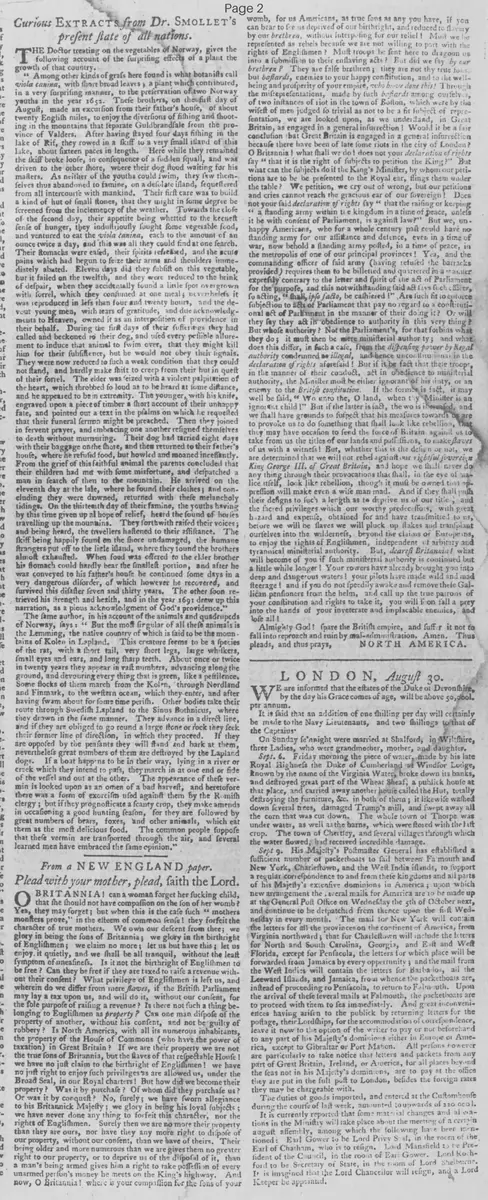
BRITANNIA! can a woman forget her sucking child, that she should not have compassion on the son of her womb? Yea, they may forget; but when this is the case such mothers monsters prove, in the esteem of common sense! they forfeit the character of true mothers. We own our descent from thee; we glory in being the sons of Britannia; we glory in the birthright of Englishmen; we claim no more; let us but have this; let us enjoy it quietly, and we shall be all tranquil, without the least symptom of uneasiness. Is it not the birthright of Englishmen to be free? Can they be free if they are taxed to raise a revenue without their consent? What privilege of Englishmen is left us, and wherein do we differ from mere slaves, if the British Parliament may lay a tax upon us, and will do it, without our consent, for the sole purpose of raising a revenue? Is there not such a thing belonging to Englishmen as property? Can one man dispose of the property of another, without his consent, and not be guilty of robbery? Is North America, with all its numerous inhabitants, the property of the House of Commons (who have the power of taxation) in Great Britain? If we are their property we are not the true sons of Britannia, but the slaves of that respectable House! we have no just claim to the birthright of Englishmen! we have no just right to enjoy such privileges as are allowed us, under the Broad Seal, in our Royal charters! But how did we become their property? Was it by purchase? Of whom did they purchase us? Or was it by conquest? No, surely; we have sworn allegiance to his Britannick Majesty; we glory in being his loyal subjects; we have never done any thing to forfeit this character, nor the rights of Englishmen. Surely then we are no more their property than they are ours, nor have they any more right to dispose of our property, without our consent, than we have of theirs. Their being older and more numerous than we are gives them no greater right to our property, or to deprive us of the disposal of it, than a man's being armed gives him a right to take possession of every unarmed person's money he meets on the King's highway. And now, O Britannia! where is your compassion for the sons of your womb, for us Americans, as true sons as any you have, if you can bear to see us deprived of our birthright, and reduced to slavery by our brethren, without interposing for our relief! Must we be represented as rebels because we are not willing to part with the rights of Englishmen? Must troops be sent here to dragoon us into a submission to their enslaving acts? But did we say by our brethren? They are false brethren; they are not thy true sons, but bastards, enemies to your happy constitution, and to the well-being and prosperity of your empire, who have done this! Through the misrepresentations, made by such bastards among ourselves, of two instances of riot in the town of Boston, which were by the wisest of men judged so trivial as not to be a fit subject of representation, we are looked upon, as we understand, in Great Britain, as engaged in a general insurrection! Would it be a fair conclusion that Great Britain is engaged in a general insurrection because there have been of late some riots in the city of London? O Britannia! what shall we do! does not your declaration of rights say "that it is the right of subjects to petition the King?" But what can the subjects do if the King's Minister, by whom our petitions are to be presented to the Royal ear, flings them under the table? We petition, we cry out of wrong, but our petitions and cries cannot reach the gracious ear of our sovereign! Does not your said declaration of rights say "that the raising or keeping a standing army within the kingdom in a time of peace, unless it be with consent of Parliament, is against law?" But we, unhappy Americans, who for a whole century past could have no standing army for our assistance and defence, even in a time of war, now behold a standing army posted, in a time of peace, in the metropolis of one of our principal provinces! Yea, and the commanding officer of said army (having refused the barracks provided) requires them to be billeted and quartered in a manner expressly contrary to the letter and spirit of the act of Parliament for the purpose, and this notwithstanding said act says such officer, so acting, "shall, ipso facto, be cashiered!" Are such fit to enforce subjection to acts of Parliament that pay no regard to a constitutional act of Parliament in the manner of their doing it? Or will they say they act in obedience to authority in this very thing? But whose authority? Not the Parliament's, for that forbids what they do; it must then be mere ministerial authority; and what does this differ, in such a case, from the dispensing power by Regal authority condemned as illegal, and hence unconstitutional, in the declaration of rights aforesaid! But if it be fact that these troops, in the manner of their conduct, act in obedience to ministerial authority, the Minister must be either ignorant of his duty, or an enemy to the British constitution. If the former is fact, it may well be said, "Wo unto thee, O land, when thy Minister is an ignorant child!" But if the latter is fact, the wo is increased, and we shall have grounds to suspect that his measures towards us are to provoke us to do something that shall look like rebellion, that they may have occasion to send the force of Britain against us to take from us the titles of our lands and possessions, to make slaves of us with a witness! But, whether this is the design or not, we are determined that we will not rebel against our rightful sovereign King George III. of Great Britain, and hope we shall never do any thing through their provocations that shall, in the eye of nations itself, look like rebellion, though it must be owned that oppression will make even a wise man mad. And if they shall push their designs to such a length as to deprive us of our titles; and the sacred privileges which our worthy predecessors, with great hazard and expense, obtained for and have transmitted to us, before we will be slaves we will pluck up stakes and transplant ourselves into the wilderness, beyond the claims of Europeans, to enjoy the rights of Englishmen, independent of arbitrary and tyrannical ministerial authority. But, dear Britannia! what will become of you if such ministerial authority is continued but a little while longer! Your rowers have already brought you into deep and dangerous waters! your pilots have made wild and mad steerage! and if you do not speedily awake and remove these Gallican pensioners from the helm, and call up the true patrons of your constitution and rights to take it, you will soon fall a prey into the hands of your inveterate and implacable enemies, and lose all!
Almighty God! preserve the British empire, and suffer it not to fall into reproach and ruin by mal-administration. Amen. Thus pleads, and thus prays,
NORTH AMERICA."
Plead with your mother, plead, saith the Lord.
BRITANNIA! can a woman forget her sucking child, that she should not have compassion on the son of her womb? Yea, they may forget; but when this is the case such mothers monsters prove, in the esteem of common sense! they forfeit the character of true mothers. We own our descent from thee; we glory in being the sons of Britannia; we glory in the birthright of Englishmen; we claim no more; let us but have this; let us enjoy it quietly, and we shall be all tranquil, without the least symptom of uneasiness. Is it not the birthright of Englishmen to be free? Can they be free if they are taxed to raise a revenue without their consent? What privilege of Englishmen is left us, and wherein do we differ from mere slaves, if the British Parliament may lay a tax upon us, and will do it, without our consent, for the sole purpose of raising a revenue? Is there not such a thing belonging to Englishmen as property? Can one man dispose of the property of another, without his consent, and not be guilty of robbery? Is North America, with all its numerous inhabitants, the property of the House of Commons (who have the power of taxation) in Great Britain? If we are their property we are not the true sons of Britannia, but the slaves of that respectable House! we have no just claim to the birthright of Englishmen! we have no just right to enjoy such privileges as are allowed us, under the Broad Seal, in our Royal charters! But how did we become their property? Was it by purchase? Of whom did they purchase us? Or was it by conquest? No, surely; we have sworn allegiance to his Britannick Majesty; we glory in being his loyal subjects; we have never done any thing to forfeit this character, nor the rights of Englishmen. Surely then we are no more their property than they are ours, nor have they any more right to dispose of our property, without our consent, than we have of theirs. Their being older and more numerous than we are gives them no greater right to our property, or to deprive us of the disposal of it, than a man's being armed gives him a right to take possession of every unarmed person's money he meets on the King's highway. And now, O Britannia! where is your compassion for the sons of your womb, for us Americans, as true sons as any you have, if you can bear to see us deprived of our birthright, and reduced to slavery by our brethren, without interposing for our relief! Must we be represented as rebels because we are not willing to part with the rights of Englishmen? Must troops be sent here to dragoon us into a submission to their enslaving acts? But did we say by our brethren? They are false brethren; they are not thy true sons, but bastards, enemies to your happy constitution, and to the well-being and prosperity of your empire, who have done this! Through the misrepresentations, made by such bastards among ourselves, of two instances of riot in the town of Boston, which were by the wisest of men judged so trivial as not to be a fit subject of representation, we are looked upon, as we understand, in Great Britain, as engaged in a general insurrection! Would it be a fair conclusion that Great Britain is engaged in a general insurrection because there have been of late some riots in the city of London? O Britannia! what shall we do! does not your declaration of rights say "that it is the right of subjects to petition the King?" But what can the subjects do if the King's Minister, by whom our petitions are to be presented to the Royal ear, flings them under the table? We petition, we cry out of wrong, but our petitions and cries cannot reach the gracious ear of our sovereign! Does not your said declaration of rights say "that the raising or keeping a standing army within the kingdom in a time of peace, unless it be with consent of Parliament, is against law?" But we, unhappy Americans, who for a whole century past could have no standing army for our assistance and defence, even in a time of war, now behold a standing army posted, in a time of peace, in the metropolis of one of our principal provinces! Yea, and the commanding officer of said army (having refused the barracks provided) requires them to be billeted and quartered in a manner expressly contrary to the letter and spirit of the act of Parliament for the purpose, and this notwithstanding said act says such officer, so acting, "shall, ipso facto, be cashiered!" Are such fit to enforce subjection to acts of Parliament that pay no regard to a constitutional act of Parliament in the manner of their doing it? Or will they say they act in obedience to authority in this very thing? But whose authority? Not the Parliament's, for that forbids what they do; it must then be mere ministerial authority; and what does this differ, in such a case, from the dispensing power by Regal authority condemned as illegal, and hence unconstitutional, in the declaration of rights aforesaid! But if it be fact that these troops, in the manner of their conduct, act in obedience to ministerial authority, the Minister must be either ignorant of his duty, or an enemy to the British constitution. If the former is fact, it may well be said, "Wo unto thee, O land, when thy Minister is an ignorant child!" But if the latter is fact, the wo is increased, and we shall have grounds to suspect that his measures towards us are to provoke us to do something that shall look like rebellion, that they may have occasion to send the force of Britain against us to take from us the titles of our lands and possessions, to make slaves of us with a witness! But, whether this is the design or not, we are determined that we will not rebel against our rightful sovereign King George III. of Great Britain, and hope we shall never do any thing through their provocations that shall, in the eye of nations itself, look like rebellion, though it must be owned that oppression will make even a wise man mad. And if they shall push their designs to such a length as to deprive us of our titles; and the sacred privileges which our worthy predecessors, with great hazard and expense, obtained for and have transmitted to us, before we will be slaves we will pluck up stakes and transplant ourselves into the wilderness, beyond the claims of Europeans, to enjoy the rights of Englishmen, independent of arbitrary and tyrannical ministerial authority. But, dear Britannia! what will become of you if such ministerial authority is continued but a little while longer! Your rowers have already brought you into deep and dangerous waters! your pilots have made wild and mad steerage! and if you do not speedily awake and remove these Gallican pensioners from the helm, and call up the true patrons of your constitution and rights to take it, you will soon fall a prey into the hands of your inveterate and implacable enemies, and lose all!
Almighty God! preserve the British empire, and suffer it not to fall into reproach and ruin by mal-administration. Amen. Thus pleads, and thus prays,
NORTH AMERICA."
What sub-type of article is it?
Constitutional
Taxation
Military Affairs
What keywords are associated?
Taxation Without Representation
English Birthright
Colonial Rights
Standing Army
Ministerial Authority
British Constitution
Boston Riots
King George Iii
What entities or persons were involved?
Britannia
British Parliament
House Of Commons
King George Iii
King's Minister
North America
Americans
Editorial Details
Primary Topic
Defense Of American Rights As Englishmen Against Taxation Without Representation And Ministerial Oppression
Stance / Tone
Passionate Plea And Strong Condemnation Of British Policies As Tyrannical
Key Figures
Britannia
British Parliament
House Of Commons
King George Iii
King's Minister
North America
Americans
Key Arguments
- taxation without consent violates english birthright and reduces colonists to slaves
- property cannot be disposed of without owner's consent, equating taxation to robbery
- colonists are loyal subjects who have not forfeited rights through conquest or purchase
- standing army in peacetime without consent is illegal per declaration of rights
- improper quartering of troops violates parliamentary acts and constitution
- ministerial authority overrides parliament, akin to illegal dispensing power
- misrepresentations of boston riots falsely portray colonists as rebels
- petitions to the king are ignored by the minister
- oppression may provoke resistance, but colonists vow loyalty to the king
- continued mal-administration risks ruin of the british empire