Thank you for visiting SNEWPapers!
Sign up free
Literary
October 12, 1803
Alexandria Daily Advertiser
Alexandria, Virginia
What is this article about?
An essay from 'The Moralist' series (No. XI) explores hope as humanity's chief blessing, quoting Dr. Johnson on its necessity in poverty, sickness, and life. It includes original poems depicting hope as a comforting light amid despair and death, emphasizing its delusive yet vital nature.
Clipping
OCR Quality
98%
Excellent
Full Text
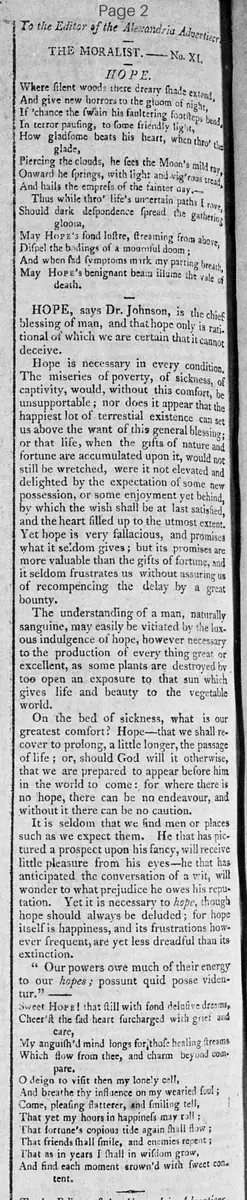
To the Editor of the Alexandria Advertiser
THE MORALIST.--No. XI.
HOPE.
Where silent woods their dreary shade extend,
And give new horrors to the gloom of night,
If 'chance the swain his faltering footsteps bend.
In terror pausing, to some friendly light,
How gladsome beats his heart, when thro' the glade,
Piercing the clouds, he sees the Moon's mild ray,
Onward he springs, with light and vigorous tread,
And hails the empress of the fainter day.--
Thus while thro' life's uncertain paths I rove,
Should dark despondence spread the gathering gloom,
May Hope's fond lustre, streaming from above
Dispel the bodings of a mournful doom;
And when sad symptoms mark my parting breath,
May Hope's benignant beam illumine the vale of death.
HOPE, says Dr. Johnson, is the chief blessing of man, and that hope only is rational of which we are certain that it cannot deceive.
Hope is necessary in every condition. The miseries of poverty, of sickness, of captivity, would, without this comfort, be unsupportable; nor does it appear that the happiest lot of terrestrial existence can set us above the want of this general blessing: or that life, when the gifts of nature and fortune are accumulated upon it, would not still be wretched, were it not elevated and delighted by the expectation of some new possession, or some enjoyment yet behind, by which the wish shall be at last satisfied, and the heart filled up to the utmost extent.
Yet hope is very fallacious, and promises what it seldom gives; but its promises are more valuable than the gifts of fortune, and it seldom frustrates us without assuring us of recompencing the delay by a great bounty.
The understanding of a man, naturally sanguine, may easily be vitiated by the luxurious indulgence of hope, however necessary to the production of every thing great or excellent, as some plants are destroyed by too open an exposure to that sun which gives life and beauty to the vegetable world.
On the bed of sickness, what is our greatest comfort? Hope--that we shall recover to prolong, a little longer, the passage of life; or, should God will it otherwise, that we are prepared to appear before him in the world to come: for where there is no hope, there can be no endeavour, and without it there can be no caution.
It is seldom that we find men or places such as we expect them. He that has pictured a prospect upon his fancy, will receive little pleasure from his eyes--he that has anticipated the conversation of a wit, will wonder to what prejudice he owes his reputation. Yet it is necessary to hope, though hope should always be deluded; for hope itself is happiness, and its frustrations however frequent, are yet less dreadful than its extinction.
"Our powers owe much of their energy to our hopes; possunt, quia posse videntur."
Sweet Hope! that still with fond delusive dreams
Cheer'st the sad heart surcharged with grief and care,
My anguished mind longs for those healing streams
Which flow from thee, and charm beyond compare.
O deign to visit then my lonely cell,
And breathe thy influence on my wearied soul;
Come, pleasing flatterer, and smiling tell,
That yet my hours in happiness may roll;
That fortune's copious tide again shall flow;
That friends shall smile, and enemies repent;
That as in years I shall in wisdom grow,
And find each moment crowned with sweet content.
THE MORALIST.--No. XI.
HOPE.
Where silent woods their dreary shade extend,
And give new horrors to the gloom of night,
If 'chance the swain his faltering footsteps bend.
In terror pausing, to some friendly light,
How gladsome beats his heart, when thro' the glade,
Piercing the clouds, he sees the Moon's mild ray,
Onward he springs, with light and vigorous tread,
And hails the empress of the fainter day.--
Thus while thro' life's uncertain paths I rove,
Should dark despondence spread the gathering gloom,
May Hope's fond lustre, streaming from above
Dispel the bodings of a mournful doom;
And when sad symptoms mark my parting breath,
May Hope's benignant beam illumine the vale of death.
HOPE, says Dr. Johnson, is the chief blessing of man, and that hope only is rational of which we are certain that it cannot deceive.
Hope is necessary in every condition. The miseries of poverty, of sickness, of captivity, would, without this comfort, be unsupportable; nor does it appear that the happiest lot of terrestrial existence can set us above the want of this general blessing: or that life, when the gifts of nature and fortune are accumulated upon it, would not still be wretched, were it not elevated and delighted by the expectation of some new possession, or some enjoyment yet behind, by which the wish shall be at last satisfied, and the heart filled up to the utmost extent.
Yet hope is very fallacious, and promises what it seldom gives; but its promises are more valuable than the gifts of fortune, and it seldom frustrates us without assuring us of recompencing the delay by a great bounty.
The understanding of a man, naturally sanguine, may easily be vitiated by the luxurious indulgence of hope, however necessary to the production of every thing great or excellent, as some plants are destroyed by too open an exposure to that sun which gives life and beauty to the vegetable world.
On the bed of sickness, what is our greatest comfort? Hope--that we shall recover to prolong, a little longer, the passage of life; or, should God will it otherwise, that we are prepared to appear before him in the world to come: for where there is no hope, there can be no endeavour, and without it there can be no caution.
It is seldom that we find men or places such as we expect them. He that has pictured a prospect upon his fancy, will receive little pleasure from his eyes--he that has anticipated the conversation of a wit, will wonder to what prejudice he owes his reputation. Yet it is necessary to hope, though hope should always be deluded; for hope itself is happiness, and its frustrations however frequent, are yet less dreadful than its extinction.
"Our powers owe much of their energy to our hopes; possunt, quia posse videntur."
Sweet Hope! that still with fond delusive dreams
Cheer'st the sad heart surcharged with grief and care,
My anguished mind longs for those healing streams
Which flow from thee, and charm beyond compare.
O deign to visit then my lonely cell,
And breathe thy influence on my wearied soul;
Come, pleasing flatterer, and smiling tell,
That yet my hours in happiness may roll;
That fortune's copious tide again shall flow;
That friends shall smile, and enemies repent;
That as in years I shall in wisdom grow,
And find each moment crowned with sweet content.
What sub-type of article is it?
Essay
Poem
What themes does it cover?
Moral Virtue
Religious
Death Mortality
What keywords are associated?
Hope
Moralist
Dr Johnson
Despondence
Sickness
Death
Delusive Dreams
Happiness
Literary Details
Title
The Moralist. No. Xi. Hope.
Form / Style
Prose Essay With Integrated Verse On Hope
Key Lines
Where Silent Woods Their Dreary Shade Extend,
And Give New Horrors To The Gloom Of Night,
If 'Chance The Swain His Faltering Footsteps Bend.
In Terror Pausing, To Some Friendly Light,
Hope, Says Dr. Johnson, Is The Chief Blessing Of Man, And That Hope Only Is Rational Of Which We Are Certain That It Cannot Deceive.
Yet Hope Is Very Fallacious, And Promises What It Seldom Gives; But Its Promises Are More Valuable Than The Gifts Of Fortune,
For Hope Itself Is Happiness, And Its Frustrations However Frequent, Are Yet Less Dreadful Than Its Extinction.
Sweet Hope! That Still With Fond Delusive Dreams
Cheer'st The Sad Heart Surcharged With Grief And Care,