Thank you for visiting SNEWPapers!
Sign up free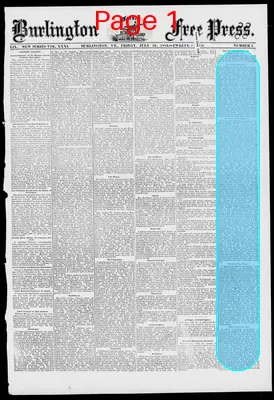
Editorial
July 31, 1885
Burlington Weekly Free Press
Burlington, Chittenden County, Vermont
What is this article about?
Compilation of newspaper excerpts discussing President Cleveland's appointment of Democrat B.B. Smalley as customs collector in Burlington, VT, replacing Republican Gen. Wells, amid debates on civil service reform, partisanship, and political motivations.
Clipping

OCR Quality
98%
Excellent
Full Text
The Vermont Collectorship.
[Boston Traveller.]
Colonel B. B. Smalley has been made collector of customs at the port of Burlington, and the Democratic party of Vermont, so far as known, is now provided for.
[St. Albans Messenger.]
Gen. Wells has made an excellent government officer, the best in this generation, if one has been better than another. His administration has been conducted upon business principles strictly, and no other reason is assigned for his removal than that he is a thorough-going and straight-out Republican. Mr. Smalley has earned the position by the stand he has taken in his party and is entitled to it on the ground of superior qualification. His father, Judge Smalley, was collector for many years previous to his appointment to the judgeship, and his son, Bradley B., became well acquainted with its duties. His office has since been in the custom house building, and through his associations with the customs officials and his duties as clerk of the United States District Court, Col. Smalley will start in more than ordinarily well posted. His appointment may not be entirely consistent with "civil service reform," but is quite consistent with the National Democratic victory. Mr. Smalley was thoroughly a war Democrat whose patriotism was superior to his party. He has always been a good citizen and a defender of the American government under all circumstances.
[From the Rutland Herald.]
In the last presidential campaign all the federal officers exhibited more than ordinary interest in the campaign, not to the extent of attending conventions or work at the polls, but to the extent of attending the public meetings and joining in the political parades of the party. If this be "offensive partisanship," then Gen. Wells was a partisan, but in the sense of using his authority and influence to organize meetings and extort contributions, or morally bulldoze voters through his subordinates, Gen. Wells has not been a partisan at all, but a quiet man, devoting himself to the efficient discharge of his legitimate business duties as collector. Hon. B. B. Smalley, who succeeds Gen. Wells, is his personal friend, and is one of the brightest and most popular men in Vermont. As a business man, and as a lawyer armed with large knowledge and clear understanding of the federal law, gained in his long experience as clerk and attorney of the United States court, Mr. Smalley cannot fail to make an excellent officer. Many Republicans and Democrats hold that the President appointed Mr. Smalley in satisfaction of his own strong regard for him as a personal friend, who was a most influential Cleveland partisan at Chicago, where the opposition to the President's nomination was most obstinate and bitter to the last. Another class of Republicans and Democrats in Burlington believe that the removal of Gen. Wells, against whom no charges of offensive partisanship save as a subterfuge can fairly lie, is a signal of surrender on the part of the President to the professional politicians; they believe the President was sincere in his Curtis letter and his inaugural, that he has honestly resisted pressure for removals like that of Gen. Wells, but that the impact of the whole party has become too strong to be resisted; that the threatened loss of Ohio and New York has persuaded the President at last to lower his flag to the remonstrances of the party leaders. The appointment, however, is not a large one from a National point of view, and would hardly be selected to mark any change of policy. Mr. Smalley has suffered some severe financial losses through the famous Bradley Barlow failure; he is the nephew of Mr. Barlow and was on his paper for a large amount. Mr. Smalley's health is not the most robust; neither his own domestic tastes nor those of his family incline him to leave Vermont for public office at Washington or abroad, and the $8000 annual emoluments of the Burlington custom house would be as good as double that income in Washington or foreign public life. The collectorship is the most considerable federal office in the State, Gen. Wells's commission had three years to run, and it happened that there was not even a clear case of "offensive partisanship" to warrant his decapitation. The removal was in fact a representative instance of the partisan kind of operation and there is some talk about its being made the occasion of a battle between the Senate and the President. Some people do not think that Mr. Edmunds will take up the cudgels in the matter, and if he does there will of course be a good many other similar cases involved, and a tolerably lively war.
[From the Troy Times.]
In appointing Bradley B. Smalley to be collector of the port of Burlington, Vt., the Cleveland administration has given another indication of the sort of civil service principles which controls its policy. Personally Mr. Smalley is a clever fellow and genial gentleman, but politically he is one of the most offensive of partisans, according to the standard pretentiously set up by President Cleveland. He is one of the most energetic Democratic workers of the State, secretary of the National committee, and has for a long period had a finger in every political pie that was baked. He has, notwithstanding his politics, been able to hold on to the comfortable office of clerk in the United States district court for twenty years or more, a fact which we commend to the attention of civil-service-reform theorists. Mr. Smalley displaces Gen. William Wells, a man who, though a Republican, has never been a working politician. Gen. Wells is a friend of Senator Edmunds and has made an excellent official. It is doubtful whether the change would have been made had not Mr. Edmunds's absence from the country given Smalley an opportunity to get the President's ear without protest from the Vermont senator. As it is, Mr. Edmunds may have something to say not very flattering to Mr. Smalley when the appointment shall come up in the Senate for confirmation. The pressure in making B. B. Smalley, the Democratic leader of Vermont, collector of Burlington, vice-General Wells, whom nobody believes to have been guilty of partisanship where he resides. Smalley poses as the Democratic party of Vermont. His appointment will not bring a vote to the Vermont Democracy, but will stimulate the Republicans to increase their majorities. Nobody has been or will be benefitted by Smalley's appointment except himself and a few officers he may designate, and nothing will be affected by it except his standing as "boss." Senator Edmunds has said that he shall oppose Smalley's confirmation, and as it was simply a spoils selection into which the President was evidently drawn against his better judgment, it is to be hoped that he will be supported by every Republican of the United States senate. There is no excuse for a purely political appointment like that of Mr Smalley.
[Boston Traveller.]
Colonel B. B. Smalley has been made collector of customs at the port of Burlington, and the Democratic party of Vermont, so far as known, is now provided for.
[St. Albans Messenger.]
Gen. Wells has made an excellent government officer, the best in this generation, if one has been better than another. His administration has been conducted upon business principles strictly, and no other reason is assigned for his removal than that he is a thorough-going and straight-out Republican. Mr. Smalley has earned the position by the stand he has taken in his party and is entitled to it on the ground of superior qualification. His father, Judge Smalley, was collector for many years previous to his appointment to the judgeship, and his son, Bradley B., became well acquainted with its duties. His office has since been in the custom house building, and through his associations with the customs officials and his duties as clerk of the United States District Court, Col. Smalley will start in more than ordinarily well posted. His appointment may not be entirely consistent with "civil service reform," but is quite consistent with the National Democratic victory. Mr. Smalley was thoroughly a war Democrat whose patriotism was superior to his party. He has always been a good citizen and a defender of the American government under all circumstances.
[From the Rutland Herald.]
In the last presidential campaign all the federal officers exhibited more than ordinary interest in the campaign, not to the extent of attending conventions or work at the polls, but to the extent of attending the public meetings and joining in the political parades of the party. If this be "offensive partisanship," then Gen. Wells was a partisan, but in the sense of using his authority and influence to organize meetings and extort contributions, or morally bulldoze voters through his subordinates, Gen. Wells has not been a partisan at all, but a quiet man, devoting himself to the efficient discharge of his legitimate business duties as collector. Hon. B. B. Smalley, who succeeds Gen. Wells, is his personal friend, and is one of the brightest and most popular men in Vermont. As a business man, and as a lawyer armed with large knowledge and clear understanding of the federal law, gained in his long experience as clerk and attorney of the United States court, Mr. Smalley cannot fail to make an excellent officer. Many Republicans and Democrats hold that the President appointed Mr. Smalley in satisfaction of his own strong regard for him as a personal friend, who was a most influential Cleveland partisan at Chicago, where the opposition to the President's nomination was most obstinate and bitter to the last. Another class of Republicans and Democrats in Burlington believe that the removal of Gen. Wells, against whom no charges of offensive partisanship save as a subterfuge can fairly lie, is a signal of surrender on the part of the President to the professional politicians; they believe the President was sincere in his Curtis letter and his inaugural, that he has honestly resisted pressure for removals like that of Gen. Wells, but that the impact of the whole party has become too strong to be resisted; that the threatened loss of Ohio and New York has persuaded the President at last to lower his flag to the remonstrances of the party leaders. The appointment, however, is not a large one from a National point of view, and would hardly be selected to mark any change of policy. Mr. Smalley has suffered some severe financial losses through the famous Bradley Barlow failure; he is the nephew of Mr. Barlow and was on his paper for a large amount. Mr. Smalley's health is not the most robust; neither his own domestic tastes nor those of his family incline him to leave Vermont for public office at Washington or abroad, and the $8000 annual emoluments of the Burlington custom house would be as good as double that income in Washington or foreign public life. The collectorship is the most considerable federal office in the State, Gen. Wells's commission had three years to run, and it happened that there was not even a clear case of "offensive partisanship" to warrant his decapitation. The removal was in fact a representative instance of the partisan kind of operation and there is some talk about its being made the occasion of a battle between the Senate and the President. Some people do not think that Mr. Edmunds will take up the cudgels in the matter, and if he does there will of course be a good many other similar cases involved, and a tolerably lively war.
[From the Troy Times.]
In appointing Bradley B. Smalley to be collector of the port of Burlington, Vt., the Cleveland administration has given another indication of the sort of civil service principles which controls its policy. Personally Mr. Smalley is a clever fellow and genial gentleman, but politically he is one of the most offensive of partisans, according to the standard pretentiously set up by President Cleveland. He is one of the most energetic Democratic workers of the State, secretary of the National committee, and has for a long period had a finger in every political pie that was baked. He has, notwithstanding his politics, been able to hold on to the comfortable office of clerk in the United States district court for twenty years or more, a fact which we commend to the attention of civil-service-reform theorists. Mr. Smalley displaces Gen. William Wells, a man who, though a Republican, has never been a working politician. Gen. Wells is a friend of Senator Edmunds and has made an excellent official. It is doubtful whether the change would have been made had not Mr. Edmunds's absence from the country given Smalley an opportunity to get the President's ear without protest from the Vermont senator. As it is, Mr. Edmunds may have something to say not very flattering to Mr. Smalley when the appointment shall come up in the Senate for confirmation. The pressure in making B. B. Smalley, the Democratic leader of Vermont, collector of Burlington, vice-General Wells, whom nobody believes to have been guilty of partisanship where he resides. Smalley poses as the Democratic party of Vermont. His appointment will not bring a vote to the Vermont Democracy, but will stimulate the Republicans to increase their majorities. Nobody has been or will be benefitted by Smalley's appointment except himself and a few officers he may designate, and nothing will be affected by it except his standing as "boss." Senator Edmunds has said that he shall oppose Smalley's confirmation, and as it was simply a spoils selection into which the President was evidently drawn against his better judgment, it is to be hoped that he will be supported by every Republican of the United States senate. There is no excuse for a purely political appointment like that of Mr Smalley.
What sub-type of article is it?
Partisan Politics
What keywords are associated?
Vermont Collectorship
Smalley Appointment
Civil Service Reform
Partisan Removal
President Cleveland
Senator Edmunds
What entities or persons were involved?
B.B. Smalley
Gen. Wells
President Cleveland
Senator Edmunds
Democratic Party Of Vermont
Editorial Details
Primary Topic
Appointment Of B.B. Smalley As Collector Of Customs At Burlington, Vermont
Stance / Tone
Mixed Commentary On Political Appointment And Civil Service Implications
Key Figures
B.B. Smalley
Gen. Wells
President Cleveland
Senator Edmunds
Democratic Party Of Vermont
Key Arguments
Smalley Qualified By Family Experience And Court Duties
Wells Removed Solely For Republican Affiliation
Appointment Inconsistent With Civil Service Reform But Aligns With Democratic Victory
Wells Not Guilty Of Offensive Partisanship
Possible Senate Opposition To Confirmation
Criticism Of Smalley As Partisan Spoils Recipient