Thank you for visiting SNEWPapers!
Sign up free
Literary
October 15, 1904
Martinsburg Herald
Martinsburg, Berkeley County, West Virginia
What is this article about?
Biographical essay on poet James Whitcomb Riley, born in Greenfield, Ind., about 50 years ago to a Quaker lawyer. Describes his childhood love for nature, rejection of formal education, adventures as a sign painter, early poems including the hoax 'Leonaine' attributed to Poe, and his sentimental, dialect-free works. Copyright 1903 by B. B. Hamlin, Jr.
Clipping
OCR Quality
98%
Excellent
Full Text
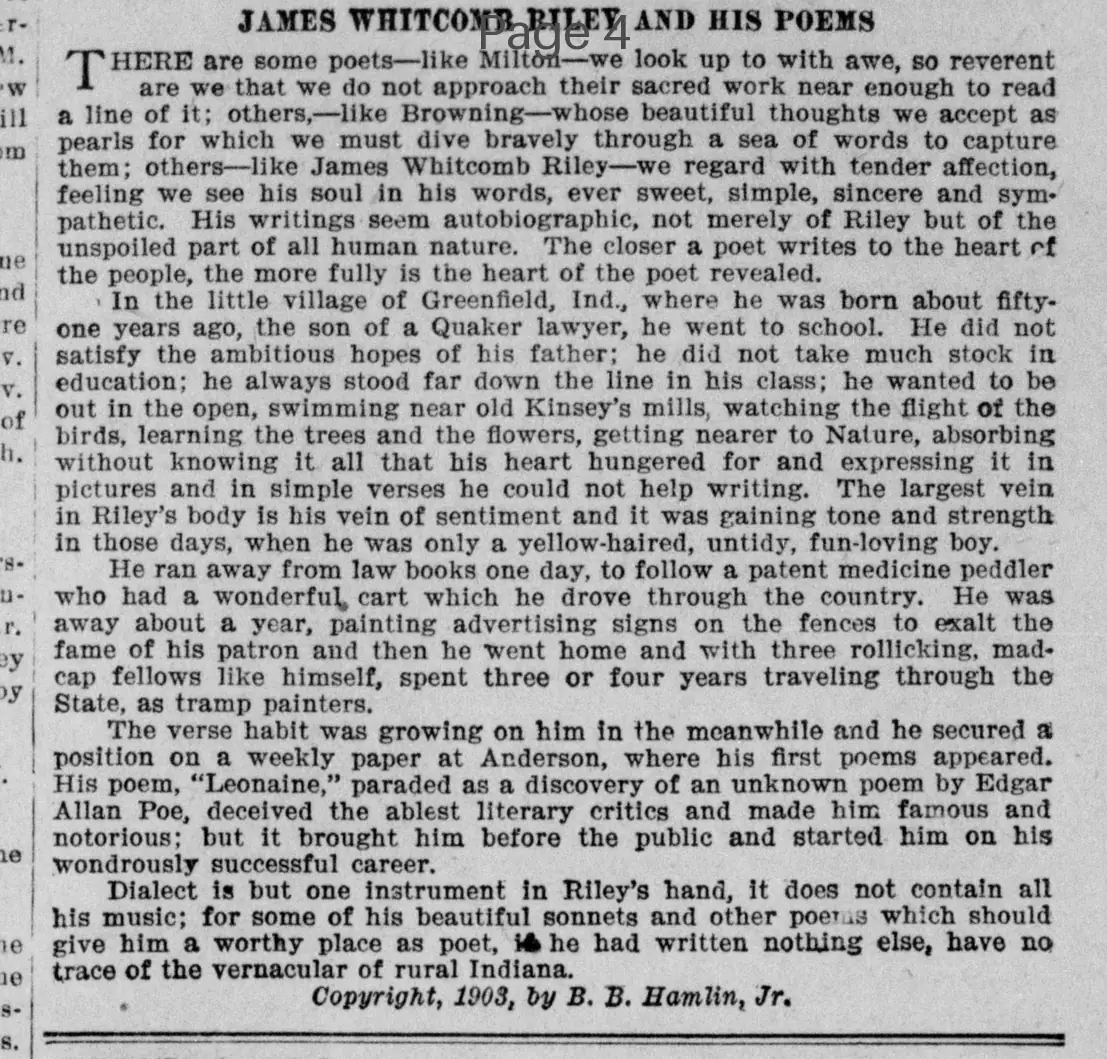
There are some poets-like Milton-we look up to with awe, so reverent are we that we do not approach their sacred work near enough to read a line of it; others,-like Browning-whose beautiful thoughts we accept as pearls for which we must dive bravely through a sea of words to capture them; others-like James Whitcomb Riley we regard with tender affection, feeling we see his soul in his words, ever sweet, simple, sincere and sympathetic. His writings seem autobiographic, not merely of Riley but of the unspoiled part of all human nature. The closer a poet writes to the heart of the people, the more fully is the heart of the poet revealed.
In the little village of Greenfield, Ind., where he was born about fifty one years ago, the son of a Quaker lawyer, he went to school. He did not satisfy the ambitious hopes of his father; he did not take much stock in education; he always stood far down the line in his class; he wanted to be out in the open, swimming near old Kinsey's mills, watching the flight of the birds, learning the trees and the flowers, getting nearer to Nature, absorbing without knowing it all that his heart hungered for and expressing it in pictures and in simple verses he could not help writing. The largest vein in Riley's body is his vein of sentiment and it was gaining tone and strength in those days, when he was only a yellow-haired, untidy, fun-loving boy.
He ran away from law books one day, to follow a patent medicine peddler who had a wonderful cart which he drove through the country. He was away about a year, painting advertising signs on the fences to exalt the fame of his patron and then he went home and with three rollicking, mad-cap fellows like himself, spent three or four years traveling through the State, as tramp painters.
The verse habit was growing on him in the meanwhile and he secured a position on a weekly paper at Anderson, where his first poems appeared. His poem, "Leonaine," paraded as a discovery of an unknown poem by Edgar Allan Poe, deceived the ablest literary critics and made him famous and notorious; but it brought him before the public and started him on his wondrously successful career.
Dialect is but one instrument in Riley's hand, it does not contain all his music; for some of his beautiful sonnets and other poems which should give him a worthy place as poet, if he had written nothing else, have no trace of the vernacular of rural Indiana.
Copyright, 1903, by B. B. Hamlin, Jr.
In the little village of Greenfield, Ind., where he was born about fifty one years ago, the son of a Quaker lawyer, he went to school. He did not satisfy the ambitious hopes of his father; he did not take much stock in education; he always stood far down the line in his class; he wanted to be out in the open, swimming near old Kinsey's mills, watching the flight of the birds, learning the trees and the flowers, getting nearer to Nature, absorbing without knowing it all that his heart hungered for and expressing it in pictures and in simple verses he could not help writing. The largest vein in Riley's body is his vein of sentiment and it was gaining tone and strength in those days, when he was only a yellow-haired, untidy, fun-loving boy.
He ran away from law books one day, to follow a patent medicine peddler who had a wonderful cart which he drove through the country. He was away about a year, painting advertising signs on the fences to exalt the fame of his patron and then he went home and with three rollicking, mad-cap fellows like himself, spent three or four years traveling through the State, as tramp painters.
The verse habit was growing on him in the meanwhile and he secured a position on a weekly paper at Anderson, where his first poems appeared. His poem, "Leonaine," paraded as a discovery of an unknown poem by Edgar Allan Poe, deceived the ablest literary critics and made him famous and notorious; but it brought him before the public and started him on his wondrously successful career.
Dialect is but one instrument in Riley's hand, it does not contain all his music; for some of his beautiful sonnets and other poems which should give him a worthy place as poet, if he had written nothing else, have no trace of the vernacular of rural Indiana.
Copyright, 1903, by B. B. Hamlin, Jr.
What sub-type of article is it?
Essay
What themes does it cover?
Nature
Moral Virtue
What keywords are associated?
James Whitcomb Riley
Poet
Biography
Nature
Sentiment
Dialect
Leonaine
Greenfield Indiana
Quaker Lawyer
Patent Medicine Peddler
What entities or persons were involved?
B. B. Hamlin, Jr.
Literary Details
Author
B. B. Hamlin, Jr.
Subject
Biography Of James Whitcomb Riley
Form / Style
Biographical Essay In Prose
Key Lines
There Are Some Poets Like Milton We Look Up To With Awe, So Reverent Are We That We Do Not Approach Their Sacred Work Near Enough To Read A Line Of It; Others, Like Browning Whose Beautiful Thoughts We Accept As Pearls For Which We Must Dive Bravely Through A Sea Of Words To Capture Them; Others Like James Whitcomb Riley We Regard With Tender Affection, Feeling We See His Soul In His Words, Ever Sweet, Simple, Sincere And Sympathetic.
The Closer A Poet Writes To The Heart Of The People, The More Fully Is The Heart Of The Poet Revealed.
The Largest Vein In Riley's Body Is His Vein Of Sentiment And It Was Gaining Tone And Strength In Those Days, When He Was Only A Yellow Haired, Untidy, Fun Loving Boy.
His Poem, "Leonaine," Paraded As A Discovery Of An Unknown Poem By Edgar Allan Poe, Deceived The Ablest Literary Critics And Made Him Famous And Notorious;
Dialect Is But One Instrument In Riley's Hand, It Does Not Contain All His Music;