Thank you for visiting SNEWPapers!
Sign up free
Literary
April 10, 1799
Gazette Of The United States, & Philadelphia Daily Advertiser
Philadelphia, Philadelphia County, Pennsylvania
What is this article about?
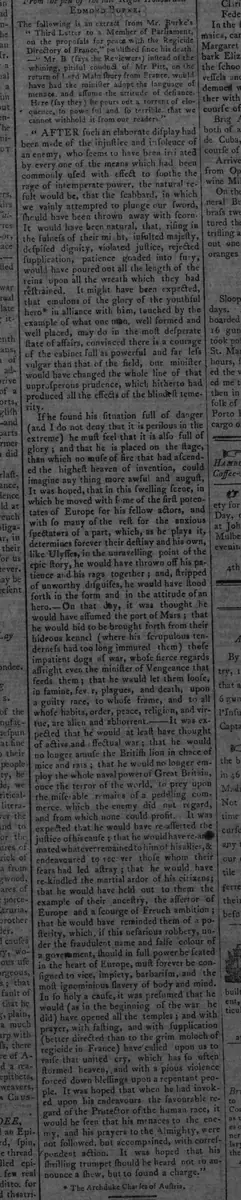
Extract from Edmund Burke's 'Third Letter to a Member of Parliament' critiques Pitt's conciliatory policy toward revolutionary France, urging a defiant, warlike response to the regicide directory, invoking heroic action, justice, and divine support against tyranny.
Clipping
OCR Quality
95%
Excellent
Full Text
The following is an extract from Mr. Burke's
"Third Letter to a Member of Parliament,
on the proposals for peace with the Regicide
Directory of France," published since his death
—"Mr. B (says the Reviewers) instead of the
whining, pitiful conduct of Mr. Pitt, on the
return of Lord Malmesbury from France, would
have had the minister adopt the language of
menace, and assume the attitude of defiance.
Here (say they) he pours out a torrent of elo-
quence, so powerful and so terrible, that we
cannot withhold it from our readers."
"AFTER such an elaborate display had
been made of the injustice and insolence of
an enemy, who seems to have been irritated
by every one of the means which had been
commonly used with effect to sooth the
rage of intemperate power, the natural re-
sult would be, that the scabbard, in which
we vainly attempted to plunge our sword,
should have been thrown away with scorn.
It would have been natural, that, rising in
the fulness of their might, insulted majesty,
despised dignity, violated justice, rejected
supplication, patience goaded into fury,
would have poured out all the length of the
reins upon all the wrath which they had
restrained. It might have been expected,
that emulous of the glory of the youthful
hero* in alliance with him, touched by the
example of what one man, well formed and
well placed, may do in the most desperate
state of affairs, convinced there is a courage
of the cabinet full as powerful and far less
vulgar than that of the field, our minister
would have changed the whole line of that
unprosperous prudence, which hitherto had
produced all the effects of the blindest tempe-
rity.
If he found his situation full of danger
(and I do not deny that it is perilous in the
extreme) he must feel that it is also full of
glory; and that he is placed on the stage,
than which no muse of fire that had ascend-
ed the highest heaven of invention, could
imagine any thing more awful and august.
It was hoped, that in this swelling scene, in
which he moved with some of the first poten-
tates of Europe for his fellow actors, and
with so many of the rest for the anxious
spectators of a part, which, as he plays it,
determines forever their destiny and his own,
like Ulysses, in the unravelling point of the
epic story, he would have thrown off his pa-
tience and his rags together; and, stripped
of unworthy dignities, he would have stood
forth in the form and in the attitude of a
hero.—On that day, it was thought he
would have assumed the port of Mars; that
he would bid to be brought forth from their
hideous kennel (where his scrupulous ten-
derness had too long immured them) those
impatient dogs of war, whose fierce regards
affright even the minister of Vengeance that
feeds them; that he would let them loose,
in famine, fever, plagues, and death, upon
a guilty race, to whose frame, and to all
whose habits, order, peace, religion, and vir-
tue, are alien and abhorrent.—It was ex-
pected that he would at least have thought
of active and effectual war; that he would
no longer amuse the British lion in chace of
mice and rats; that he would no longer em-
ploy the whole naval power of Great Britain,
once the terror of the world, to prey upon
the miserable remains of a peddling com-
merce, which the enemy did not regard,
and from which none could profit. It was
expected that he would have re-asserted the
justice of his cause; that he would have re-ani-
mated whatever remained to him of his allies, &
endeavoured to recover those whom their
fears had led astray; that he would have
re-kindled the martial ardor of his citizens;
that he would have held out to them the
example of their ancestry, the assertor of
Europe and a scourge of French ambition;
that he would have reminded them of a po-
sterity, which, if this nefarious robbery, un-
der the fraudulent name and false colour of
a government, should in full power be seated
in the heart of Europe, must forever be con-
signed to vice, impiety, barbarism, and the
most ignominious slavery of body and mind.
In so holy a cause, it was presumed that he
would (as in the beginning of the war he
did) have opened all the temples; and with
prayer, with fasting, and with supplication
(better directed than to the grim moloch of
regicide in France) have called upon us to
raise that united cry, which has so often
stormed heaven, and with a pious violence
forced down blessings upon a repentant peo-
ple. It was hoped that when he had invok-
ed upon his endeavours the favourable re-
gard of the Protector of the human race, it
would be seen that his menaces to the ene-
my, and his prayers to the Almighty, were
not followed, but accompanied, with corres-
pondent action. It was hoped that his
thrilling trumpet should be heard not to an-
nounce a new, but to sound a charge."
"Third Letter to a Member of Parliament,
on the proposals for peace with the Regicide
Directory of France," published since his death
—"Mr. B (says the Reviewers) instead of the
whining, pitiful conduct of Mr. Pitt, on the
return of Lord Malmesbury from France, would
have had the minister adopt the language of
menace, and assume the attitude of defiance.
Here (say they) he pours out a torrent of elo-
quence, so powerful and so terrible, that we
cannot withhold it from our readers."
"AFTER such an elaborate display had
been made of the injustice and insolence of
an enemy, who seems to have been irritated
by every one of the means which had been
commonly used with effect to sooth the
rage of intemperate power, the natural re-
sult would be, that the scabbard, in which
we vainly attempted to plunge our sword,
should have been thrown away with scorn.
It would have been natural, that, rising in
the fulness of their might, insulted majesty,
despised dignity, violated justice, rejected
supplication, patience goaded into fury,
would have poured out all the length of the
reins upon all the wrath which they had
restrained. It might have been expected,
that emulous of the glory of the youthful
hero* in alliance with him, touched by the
example of what one man, well formed and
well placed, may do in the most desperate
state of affairs, convinced there is a courage
of the cabinet full as powerful and far less
vulgar than that of the field, our minister
would have changed the whole line of that
unprosperous prudence, which hitherto had
produced all the effects of the blindest tempe-
rity.
If he found his situation full of danger
(and I do not deny that it is perilous in the
extreme) he must feel that it is also full of
glory; and that he is placed on the stage,
than which no muse of fire that had ascend-
ed the highest heaven of invention, could
imagine any thing more awful and august.
It was hoped, that in this swelling scene, in
which he moved with some of the first poten-
tates of Europe for his fellow actors, and
with so many of the rest for the anxious
spectators of a part, which, as he plays it,
determines forever their destiny and his own,
like Ulysses, in the unravelling point of the
epic story, he would have thrown off his pa-
tience and his rags together; and, stripped
of unworthy dignities, he would have stood
forth in the form and in the attitude of a
hero.—On that day, it was thought he
would have assumed the port of Mars; that
he would bid to be brought forth from their
hideous kennel (where his scrupulous ten-
derness had too long immured them) those
impatient dogs of war, whose fierce regards
affright even the minister of Vengeance that
feeds them; that he would let them loose,
in famine, fever, plagues, and death, upon
a guilty race, to whose frame, and to all
whose habits, order, peace, religion, and vir-
tue, are alien and abhorrent.—It was ex-
pected that he would at least have thought
of active and effectual war; that he would
no longer amuse the British lion in chace of
mice and rats; that he would no longer em-
ploy the whole naval power of Great Britain,
once the terror of the world, to prey upon
the miserable remains of a peddling com-
merce, which the enemy did not regard,
and from which none could profit. It was
expected that he would have re-asserted the
justice of his cause; that he would have re-ani-
mated whatever remained to him of his allies, &
endeavoured to recover those whom their
fears had led astray; that he would have
re-kindled the martial ardor of his citizens;
that he would have held out to them the
example of their ancestry, the assertor of
Europe and a scourge of French ambition;
that he would have reminded them of a po-
sterity, which, if this nefarious robbery, un-
der the fraudulent name and false colour of
a government, should in full power be seated
in the heart of Europe, must forever be con-
signed to vice, impiety, barbarism, and the
most ignominious slavery of body and mind.
In so holy a cause, it was presumed that he
would (as in the beginning of the war he
did) have opened all the temples; and with
prayer, with fasting, and with supplication
(better directed than to the grim moloch of
regicide in France) have called upon us to
raise that united cry, which has so often
stormed heaven, and with a pious violence
forced down blessings upon a repentant peo-
ple. It was hoped that when he had invok-
ed upon his endeavours the favourable re-
gard of the Protector of the human race, it
would be seen that his menaces to the ene-
my, and his prayers to the Almighty, were
not followed, but accompanied, with corres-
pondent action. It was hoped that his
thrilling trumpet should be heard not to an-
nounce a new, but to sound a charge."
What sub-type of article is it?
Essay
Epistolary
What themes does it cover?
Political
War Peace
Liberty Freedom
What keywords are associated?
Burke
Pitt
French Directory
Regicide
War Policy
Peace Proposals
British Ministry
Heroic Defiance
What entities or persons were involved?
Mr. Burke
Literary Details
Title
Third Letter To A Member Of Parliament, On The Proposals For Peace With The Regicide Directory Of France
Author
Mr. Burke
Subject
On The Proposals For Peace With The Regicide Directory Of France
Key Lines
It Would Have Been Natural, That, Rising In The Fulness Of Their Might, Insulted Majesty, Despised Dignity, Violated Justice, Rejected Supplication, Patience Goaded Into Fury, Would Have Poured Out All The Length Of The Reins Upon All The Wrath Which They Had Restrained.
Like Ulysses, In The Unravelling Point Of The Epic Story, He Would Have Thrown Off His Patience And His Rags Together; And, Stripped Of Unworthy Dignities, He Would Have Stood Forth In The Form And In The Attitude Of A Hero.
It Was Expected That He Would At Least Have Thought Of Active And Effectual War; That He Would No Longer Amuse The British Lion In Chace Of Mice And Rats;
In So Holy A Cause, It Was Presumed That He Would (As In The Beginning Of The War He Did) Have Opened All The Temples; And With Prayer, With Fasting, And With Supplication (Better Directed Than To The Grim Moloch Of Regicide In France) Have Called Upon Us To Raise That United Cry, Which Has So Often Stormed Heaven,
It Was Hoped That His Thrilling Trumpet Should Be Heard Not To Announce A New, But To Sound A Charge."