Thank you for visiting SNEWPapers!
Sign up free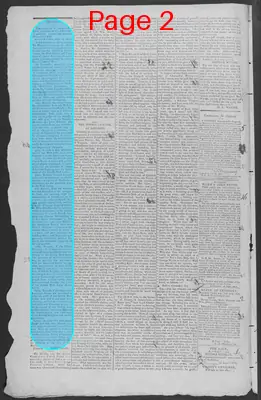
Foreign News
August 11, 1808
Kentucky Gazette And General Advertiser
Lexington, Fayette County, Kentucky
What is this article about?
On May 14, 1806, Lord Sheffield protested in the House of Lords against the American Intercourse Bill, which allows neutral ships to trade with British West Indies and South America during war, arguing it harms British navigation, colonies, and commerce.
Clipping

OCR Quality
95%
Excellent
Full Text
PROTEST.
The following is the protest of Lord Sheffield, on the passing what is generally termed the American Intercourse Bill.
HOUSE OF LORDS, MAY 14, 1806.
A bill entitled an act for enabling his Majesty in Council, to permit the importation and exportation into and from his Majesty's Territories in the West-Indies, and Continent of South America; of certain goods and commodities, in Neutral ships in time of War.
1st. Dissent. Because no proof whatever has been adduced, to show either the expediency or necessity of a measure, which facilitates and systematically establishes the suspension of our navigation and colonial laws; and thereby sacrifices to foreigners, the supply trade of the British West-India settlements to which the United Kingdom and its dependencies are rightfully entitled in return for the monopoly they afford at their own market, to the produce of those settlements.
2dly. Because the bill will transfer responsibility from the West-India Governors to his Majesty's Ministers at home: that is, it will take responsibility from those, who alone can be judges of the necessity, and will give it to his Majesty's Ministers at a great distance, who cannot possibly have any information in due time, to enable them to act on emergency; therefore the power of suspending the laws, must be ultimately delegated to the persons from whom the responsibility will be removed, to persons who actually derive great emolument from the frequency of the abuse.
3dly. Because it will ultimately render our West-India settlements dependent on the American States.
4thly. Because the British colonies in North America will be ruined, or greatly prejudiced, in consequence of the admission of foreign American shipping, into the supply trade of the British West-Indies.
5thly. Because Ireland in particular, will be dependent on the discretion and caprice of Ministers or Governors, for the provision trade to the West Indies.
6th. Because, since the relaxations and suspension of the navigation laws, our carrying trade and commerce is transferred to foreigners, the value of British shipping greatly depreciated, and the quantity of foreign shipping employed in the British trade has increased within a late period, in the proportion of 12 to 1 over British shipping, and thereby ship-building is so alarmingly discouraged in this kingdom, that only two ships for the merchants service have been built in the river Thames since December 1802, a period of nearly 3 1-2 years, and only two more are building there: and ship-building in general in the several ports of England, has decreased nearly in the same proportion.
7thly. Because, if the United Kingdom and its dependencies cannot at all times furnish the necessary articles to the British West Indies (the contrary of which, however, may be proved) the intercourse with the American States for supplies, may and can be most surely and steadily carried on, as heretofore, in British shipping, navigated according to law, of which there is and has been a large number unemployed since neutral vessels have been permitted to enter the ports of the British West India settlements.
8thly. Because, if the ships of the American States are permitted to enter the ports of the British West Indies, they will at the same time introduce, as they do at present, all East India and European goods, to the detriment of the British East India company, and to the shipping the manufactures, and commerce of the United Kingdom and its dependencies.
Lastly. Because the petitioners against this bill, who prayed that they might be allowed to state how they shall be aggrieved thereby, have been refused to be heard, notwithstanding the strong allegations stated in their petitions, which they offered to prove by the most respectable evidence at the Bar of this House.
(Signed) SHEFFIELD.
The following is the protest of Lord Sheffield, on the passing what is generally termed the American Intercourse Bill.
HOUSE OF LORDS, MAY 14, 1806.
A bill entitled an act for enabling his Majesty in Council, to permit the importation and exportation into and from his Majesty's Territories in the West-Indies, and Continent of South America; of certain goods and commodities, in Neutral ships in time of War.
1st. Dissent. Because no proof whatever has been adduced, to show either the expediency or necessity of a measure, which facilitates and systematically establishes the suspension of our navigation and colonial laws; and thereby sacrifices to foreigners, the supply trade of the British West-India settlements to which the United Kingdom and its dependencies are rightfully entitled in return for the monopoly they afford at their own market, to the produce of those settlements.
2dly. Because the bill will transfer responsibility from the West-India Governors to his Majesty's Ministers at home: that is, it will take responsibility from those, who alone can be judges of the necessity, and will give it to his Majesty's Ministers at a great distance, who cannot possibly have any information in due time, to enable them to act on emergency; therefore the power of suspending the laws, must be ultimately delegated to the persons from whom the responsibility will be removed, to persons who actually derive great emolument from the frequency of the abuse.
3dly. Because it will ultimately render our West-India settlements dependent on the American States.
4thly. Because the British colonies in North America will be ruined, or greatly prejudiced, in consequence of the admission of foreign American shipping, into the supply trade of the British West-Indies.
5thly. Because Ireland in particular, will be dependent on the discretion and caprice of Ministers or Governors, for the provision trade to the West Indies.
6th. Because, since the relaxations and suspension of the navigation laws, our carrying trade and commerce is transferred to foreigners, the value of British shipping greatly depreciated, and the quantity of foreign shipping employed in the British trade has increased within a late period, in the proportion of 12 to 1 over British shipping, and thereby ship-building is so alarmingly discouraged in this kingdom, that only two ships for the merchants service have been built in the river Thames since December 1802, a period of nearly 3 1-2 years, and only two more are building there: and ship-building in general in the several ports of England, has decreased nearly in the same proportion.
7thly. Because, if the United Kingdom and its dependencies cannot at all times furnish the necessary articles to the British West Indies (the contrary of which, however, may be proved) the intercourse with the American States for supplies, may and can be most surely and steadily carried on, as heretofore, in British shipping, navigated according to law, of which there is and has been a large number unemployed since neutral vessels have been permitted to enter the ports of the British West India settlements.
8thly. Because, if the ships of the American States are permitted to enter the ports of the British West Indies, they will at the same time introduce, as they do at present, all East India and European goods, to the detriment of the British East India company, and to the shipping the manufactures, and commerce of the United Kingdom and its dependencies.
Lastly. Because the petitioners against this bill, who prayed that they might be allowed to state how they shall be aggrieved thereby, have been refused to be heard, notwithstanding the strong allegations stated in their petitions, which they offered to prove by the most respectable evidence at the Bar of this House.
(Signed) SHEFFIELD.
What sub-type of article is it?
Trade Or Commerce
Colonial Affairs
Economic
What keywords are associated?
American Intercourse Bill
Lord Sheffield Protest
West Indies Trade
Navigation Laws Suspension
Neutral Ships Wartime
British Colonial Commerce
What entities or persons were involved?
Lord Sheffield
Where did it happen?
West Indies
Foreign News Details
Primary Location
West Indies
Event Date
May 14, 1806
Key Persons
Lord Sheffield
Outcome
bill passed despite protest; potential harm to british shipping, colonies, and commerce argued.
Event Details
Lord Sheffield's protest against the American Intercourse Bill, listing eight points of dissent on its impacts on navigation laws, colonial dependency, British shipping, and trade monopolies, plus refusal to hear petitioners.