Thank you for visiting SNEWPapers!
Sign up free
Litchfield Enquirer
Litchfield, Litchfield County, Connecticut
What is this article about?
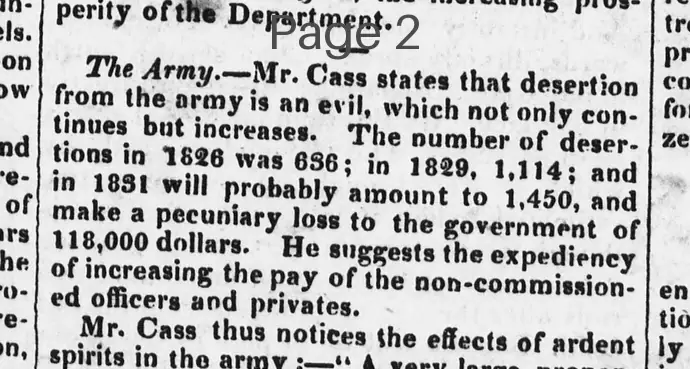
Mr. Cass reports rising army desertions (636 in 1826 to est. 1,450 in 1831, costing $118,000) and urges pay increases. He blames intemperance from whiskey rations (72,537 gal. in 1830, $22,000) for crimes, proposing alternatives like tea/coffee/sugar. Calls for better moral/religious education for soldiers.
Clipping
OCR Quality
Full Text
Mr. Cass thus notices the effects of ardent spirits in the army: "A very large proportion of all the crimes committed in the army may be traced to habits of intemperance. This vice is in fact the prevalent one of our soldiery. I am satisfied that ardent spirits should not form a component part of the ration. By issuing it, we furnish to those already accustomed to its use the means of a vicious indulgence, and we invite those who are yet temperate to acquire this destructive habit. There were issued to the army in 1830, 72,537 gallons of whiskey, at the cost of $22,000. If this sum were applied to the purchase of tea, coffee and sugar, for the use of the soldiers, their habits and morals would be greatly improved, and the discipline and respectability of the army promoted."
Mr. Cass says the moral culture of the American soldiers is wholly neglected, and suggests that something should be done to promote their mental and religious improvement.
What sub-type of article is it?
What keywords are associated?
What entities or persons were involved?
Domestic News Details
Key Persons
Outcome
desertions: 636 in 1826, 1,114 in 1829, estimated 1,450 in 1831 with pecuniary loss of $118,000. whiskey issued: 72,537 gallons in 1830 at cost of $22,000.
Event Details
Mr. Cass states desertion from the army is increasing and suggests increasing pay of non-commissioned officers and privates. He notes that a large proportion of army crimes trace to intemperance from ardent spirits, which should not be part of the ration, and suggests using the whiskey budget for tea, coffee, and sugar to improve habits, morals, discipline, and respectability. He says the moral culture of American soldiers is wholly neglected and suggests promoting their mental and religious improvement.