Thank you for visiting SNEWPapers!
Sign up free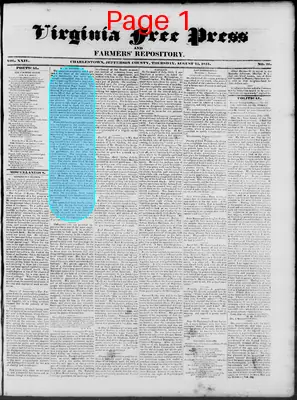
Literary
August 25, 1831
Virginia Free Press & Farmers' Repository
Charles Town, Jefferson County, West Virginia
What is this article about?
Biographical account of Marie Antoinette's sensibility in saving Sir Charles Asgill, her dignified trial and execution by guillotine during the French Revolution, and the lack of evidence against her moral character despite calumnies.
Clipping
OCR Quality
95%
Excellent
Full Text
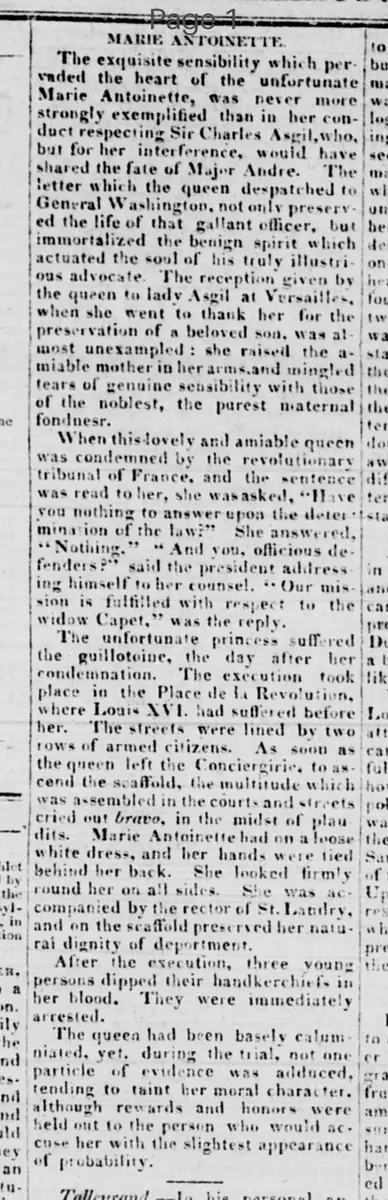
MARIE ANTOINETTE.
The exquisite sensibility which pervaded the heart of the unfortunate Marie Antoinette, was never more strongly exemplified than in her conduct respecting Sir Charles Asgill, who, but for her interference, would have shared the fate of Major Andre. The letter which the queen despatched to General Washington, not only preserved the life of that gallant officer, but immortalized the benign spirit which actuated the soul of his truly illustrious advocate. The reception given by the queen to Lady Asgill at Versailles, when she went to thank her for the preservation of a beloved son, was almost unexampled: she raised the amiable mother in her arms, and mingled tears of genuine sensibility with those of the noblest, the purest maternal fondness.
When this lovely and amiable queen was condemned by the revolutionary tribunal of France, and the sentence was read to her, she was asked, "Have you nothing to answer upon the determination of the law?" She answered, "Nothing." "And you, officious defenders?" said the president addressing himself to her counsel. "Our mission is fulfilled with respect to the widow Capet," was the reply.
The unfortunate princess suffered the guillotine, the day after her condemnation. The execution took place in the Place de la Revolution, where Louis XVI. had suffered before her. The streets were lined by two rows of armed citizens. As soon as the queen left the Conciergerie, to ascend the scaffold, the multitude which was assembled in the courts and streets cried out bravo, in the midst of plaudits. Marie Antoinette had on a loose white dress, and her hands were tied behind her back. She looked firmly round her on all sides. She was accompanied by the rector of St. Landry, and on the scaffold preserved her natural dignity of deportment.
After the execution, three young persons dipped their handkerchiefs in her blood. They were immediately arrested.
The queen had been basely calumniated, yet, during the trial, not one particle of evidence was adduced, tending to taint her moral character, although rewards and honors were held out to the person who would accuse her with the slightest appearance of probability.
The exquisite sensibility which pervaded the heart of the unfortunate Marie Antoinette, was never more strongly exemplified than in her conduct respecting Sir Charles Asgill, who, but for her interference, would have shared the fate of Major Andre. The letter which the queen despatched to General Washington, not only preserved the life of that gallant officer, but immortalized the benign spirit which actuated the soul of his truly illustrious advocate. The reception given by the queen to Lady Asgill at Versailles, when she went to thank her for the preservation of a beloved son, was almost unexampled: she raised the amiable mother in her arms, and mingled tears of genuine sensibility with those of the noblest, the purest maternal fondness.
When this lovely and amiable queen was condemned by the revolutionary tribunal of France, and the sentence was read to her, she was asked, "Have you nothing to answer upon the determination of the law?" She answered, "Nothing." "And you, officious defenders?" said the president addressing himself to her counsel. "Our mission is fulfilled with respect to the widow Capet," was the reply.
The unfortunate princess suffered the guillotine, the day after her condemnation. The execution took place in the Place de la Revolution, where Louis XVI. had suffered before her. The streets were lined by two rows of armed citizens. As soon as the queen left the Conciergerie, to ascend the scaffold, the multitude which was assembled in the courts and streets cried out bravo, in the midst of plaudits. Marie Antoinette had on a loose white dress, and her hands were tied behind her back. She looked firmly round her on all sides. She was accompanied by the rector of St. Landry, and on the scaffold preserved her natural dignity of deportment.
After the execution, three young persons dipped their handkerchiefs in her blood. They were immediately arrested.
The queen had been basely calumniated, yet, during the trial, not one particle of evidence was adduced, tending to taint her moral character, although rewards and honors were held out to the person who would accuse her with the slightest appearance of probability.
What sub-type of article is it?
Essay
What themes does it cover?
Political
Death Mortality
Moral Virtue
What keywords are associated?
Marie Antoinette
French Revolution
Guillotine
Execution
Trial
Sensibility
Moral Character
Literary Details
Title
Marie Antoinette.
Subject
Life And Execution Of Marie Antoinette
Key Lines
"Have You Nothing To Answer Upon The Determination Of The Law?" She Answered, "Nothing." "And You, Officious Defenders?" Said The President Addressing Himself To Her Counsel. "Our Mission Is Fulfilled With Respect To The Widow Capet," Was The Reply.
The Unfortunate Princess Suffered The Guillotine, The Day After Her Condemnation. The Execution Took Place In The Place De La Revolution, Where Louis Xvi. Had Suffered Before Her.