Thank you for visiting SNEWPapers!
Sign up free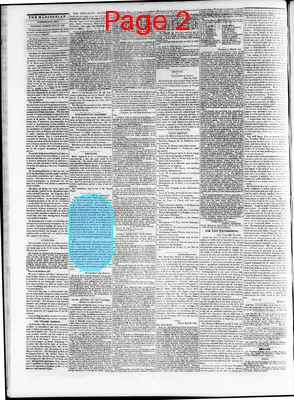
Editorial
May 27, 1843
The Daily Madisonian
Washington, District Of Columbia
What is this article about?
The editorial argues that an administration practicing economy and retrenchment faces unpopularity from office-seekers and dismissed officials, unlike patronage which builds support. It praises pursuing national prosperity over fleeting party popularity, referencing Mr. Clay.
Clipping
OCR Quality
98%
Excellent
Full Text
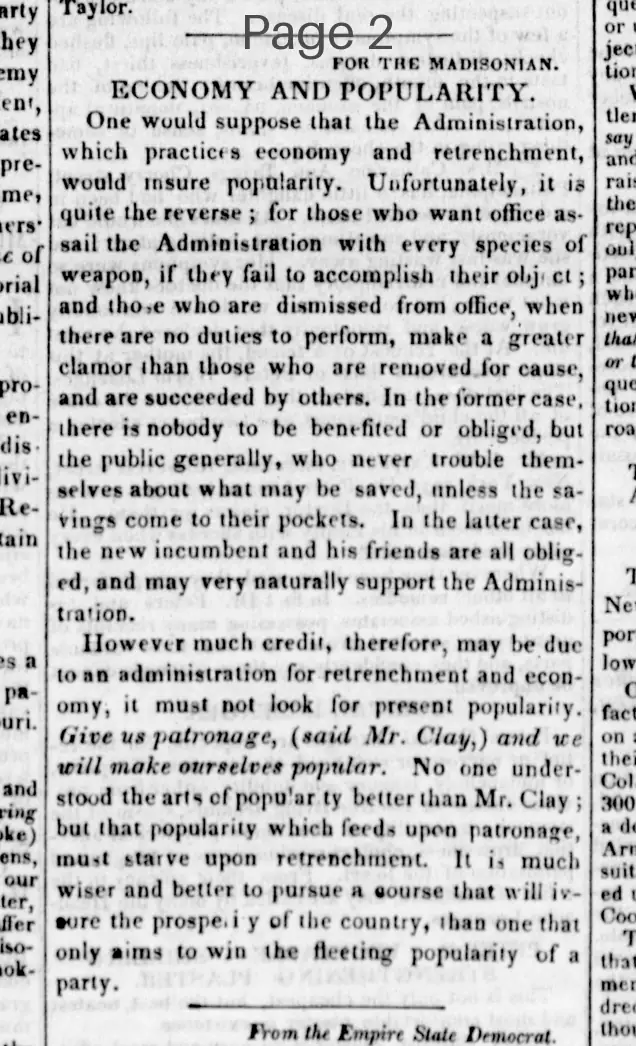
FOR THE MADISONIAN.
ECONOMY AND POPULARITY.
One would suppose that the Administration, which practices economy and retrenchment, would insure popularity. Unfortunately, it is quite the reverse; for those who want office assail the Administration with every species of weapon, if they fail to accomplish their object; and those who are dismissed from office, when there are no duties to perform, make a greater clamor than those who are removed for cause, and are succeeded by others. In the former case there is nobody to be benefited or obliged, but the public generally, who never trouble themselves about what may be saved, unless the savings come to their pockets. In the latter case, the new incumbent and his friends are all obliged, and may very naturally support the Administration.
However much credit, therefore, may be due to an administration for retrenchment and economy, it must not look for present popularity.
Give us patronage, (said Mr. Clay,) and we will make ourselves popular. No one understood the arts of popularity better than Mr. Clay; but that popularity which feeds upon patronage, must starve upon retrenchment. It is much wiser and better to pursue a course that will insure the prosperity of the country, than one that only aims to win the fleeting popularity of a party.
ECONOMY AND POPULARITY.
One would suppose that the Administration, which practices economy and retrenchment, would insure popularity. Unfortunately, it is quite the reverse; for those who want office assail the Administration with every species of weapon, if they fail to accomplish their object; and those who are dismissed from office, when there are no duties to perform, make a greater clamor than those who are removed for cause, and are succeeded by others. In the former case there is nobody to be benefited or obliged, but the public generally, who never trouble themselves about what may be saved, unless the savings come to their pockets. In the latter case, the new incumbent and his friends are all obliged, and may very naturally support the Administration.
However much credit, therefore, may be due to an administration for retrenchment and economy, it must not look for present popularity.
Give us patronage, (said Mr. Clay,) and we will make ourselves popular. No one understood the arts of popularity better than Mr. Clay; but that popularity which feeds upon patronage, must starve upon retrenchment. It is much wiser and better to pursue a course that will insure the prosperity of the country, than one that only aims to win the fleeting popularity of a party.
What sub-type of article is it?
Economic Policy
Partisan Politics
What keywords are associated?
Economy
Retrenchment
Popularity
Patronage
Administration
Office Seekers
Mr Clay
What entities or persons were involved?
Administration
Mr. Clay
Editorial Details
Primary Topic
Economy And Popularity In Administration
Stance / Tone
Support For Retrenchment Over Patronage
Key Figures
Administration
Mr. Clay
Key Arguments
Economy And Retrenchment Do Not Bring Popularity As Office Seekers Attack The Administration
Dismissed Officials Without Duties Clamor More Than Those Removed For Cause
Public Ignores Savings Unless They Benefit Directly
Patronage Obliges Supporters While Retrenchment Benefits None Personally
Popularity From Patronage Starves Under Retrenchment
Better To Pursue National Prosperity Than Fleeting Party Popularity