Thank you for visiting SNEWPapers!
Sign up free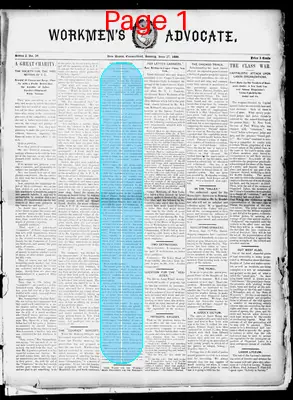
Literary
June 27, 1886
Workmen's Advocate
New Haven, New Haven County, Connecticut
What is this article about?
Excerpt from Laurence Gronlund's 'Co-operative Commonwealth' argues that true constitutions are organic powers shaping institutions, not mere written documents. It critiques the U.S. Constitution's evolution through events like slavery's abolition and asserts socialist changes will arise from economic logic, not imposed political reforms.
Clipping

OCR Quality
95%
Excellent
Full Text
CONSTITUTIONS,
Extract from Gronlund's "Co-operative Commonwealth."
"And when you have succeeded in doing away with the Term System, the Representative System, the Presidency, the three Co-ordinate Powers, the Senate, State Sovereignty and Appointments from above—in short with our whole constitution, be good enough to tell us what other Constitution it will please your Co-operative Commonwealth to give us."
An inquirer will very naturally, at this stage, ask some such question. It would remind us that we have not yet made our fundamental position in regard to political changes clear.
Constitutions are not at all things to be given or taken away at pleasure. What is a Constitution?
When we speak of the Constitution of the solar system, we mean by that term the attraction of the sun which so regulates the movements of the planets that this movement cannot be otherwise than what it is. When we in the same sense—the proper sense—speak of the "Constitution" of a country, we do not mean that piece of paper which is called a "Constitution," but the organic power that makes necessary the institutions which we find. It is therefore a fundamental mistake to think, that our country with her written "constitution" occupies a peculiar position.
Every country has and always had a constitution. The motto of Louis XIV: "L'etat c'est moi" ("I am the State") was as fully the constitution of France as any constitution she, or any country, ever had. The peculiarity of modern times consists simply in a piece of paper, simply in the giving written expression to the organic power. But if such a written "constitution" does not correctly respond to this organic power—as the "constitutions" of France during the Revolution did not, and as the "constitution" of the present German Empire does not—it is not worth the paper it is written on. If it, on the other hand, does so respond, it is like a swiftly flying buzz-saw—dangerous to go too near to.
The short history of our own country, even, bears us out in this view. Our present "constitution" is a very different one from what it was in 1850. The point of change was the period when people prated about "upholding the constitution." Whenever a "Constitution" needs being "upheld," it is going, or gone.
During that period was promulgated the "Dred Scott" decision, which, undoubtedly, was a correct "constitutional" decision. Yet it was but an idle breath, or, if it had any effect, it was to make our people (so approvingly styled "a law abiding people") subvert the very "constitution," that was the sanction of the decision.
What was the matter?
The organic power in the Nation was simply changing. Mark! it was the abolition of Slavery which amended our "constitution," emphatically not the amendments to the "constitution" which abolished Slavery.
Is this socialist view of the organic law of a country not far more philosophic than the vulgar one, held by our "statesmen" or even by such an eminent authority as Judge Story, who reduces the whole science of government to a eulogy of the "Constitution?"
It remains true, reader! No army of lawyers, nor of soldiers, can uphold a "constitution" when the centre of gravity of society has changed its position.
Socialists, then, have no thought whatever of "laying impious hands" on this glorious paper "constitution" of ours, or of "giving" to, or imposing upon, our country a new frame of government of our own; just as little as we fancy that we can change its economic conditions.
It is the Logic of Events that will accomplish both: these changes.
But mark the radical difference between the economic and the political revolution.
The economic relations of the Co-operative Commonwealth will evolve out of our present industrial conditions, but the form of administration of that Commonwealth will not be an outgrowth of our present form of government.
Extract from Gronlund's "Co-operative Commonwealth."
"And when you have succeeded in doing away with the Term System, the Representative System, the Presidency, the three Co-ordinate Powers, the Senate, State Sovereignty and Appointments from above—in short with our whole constitution, be good enough to tell us what other Constitution it will please your Co-operative Commonwealth to give us."
An inquirer will very naturally, at this stage, ask some such question. It would remind us that we have not yet made our fundamental position in regard to political changes clear.
Constitutions are not at all things to be given or taken away at pleasure. What is a Constitution?
When we speak of the Constitution of the solar system, we mean by that term the attraction of the sun which so regulates the movements of the planets that this movement cannot be otherwise than what it is. When we in the same sense—the proper sense—speak of the "Constitution" of a country, we do not mean that piece of paper which is called a "Constitution," but the organic power that makes necessary the institutions which we find. It is therefore a fundamental mistake to think, that our country with her written "constitution" occupies a peculiar position.
Every country has and always had a constitution. The motto of Louis XIV: "L'etat c'est moi" ("I am the State") was as fully the constitution of France as any constitution she, or any country, ever had. The peculiarity of modern times consists simply in a piece of paper, simply in the giving written expression to the organic power. But if such a written "constitution" does not correctly respond to this organic power—as the "constitutions" of France during the Revolution did not, and as the "constitution" of the present German Empire does not—it is not worth the paper it is written on. If it, on the other hand, does so respond, it is like a swiftly flying buzz-saw—dangerous to go too near to.
The short history of our own country, even, bears us out in this view. Our present "constitution" is a very different one from what it was in 1850. The point of change was the period when people prated about "upholding the constitution." Whenever a "Constitution" needs being "upheld," it is going, or gone.
During that period was promulgated the "Dred Scott" decision, which, undoubtedly, was a correct "constitutional" decision. Yet it was but an idle breath, or, if it had any effect, it was to make our people (so approvingly styled "a law abiding people") subvert the very "constitution," that was the sanction of the decision.
What was the matter?
The organic power in the Nation was simply changing. Mark! it was the abolition of Slavery which amended our "constitution," emphatically not the amendments to the "constitution" which abolished Slavery.
Is this socialist view of the organic law of a country not far more philosophic than the vulgar one, held by our "statesmen" or even by such an eminent authority as Judge Story, who reduces the whole science of government to a eulogy of the "Constitution?"
It remains true, reader! No army of lawyers, nor of soldiers, can uphold a "constitution" when the centre of gravity of society has changed its position.
Socialists, then, have no thought whatever of "laying impious hands" on this glorious paper "constitution" of ours, or of "giving" to, or imposing upon, our country a new frame of government of our own; just as little as we fancy that we can change its economic conditions.
It is the Logic of Events that will accomplish both: these changes.
But mark the radical difference between the economic and the political revolution.
The economic relations of the Co-operative Commonwealth will evolve out of our present industrial conditions, but the form of administration of that Commonwealth will not be an outgrowth of our present form of government.
What sub-type of article is it?
Essay
What themes does it cover?
Political
What keywords are associated?
Constitution
Organic Power
Socialism
Co Operative Commonwealth
Political Change
Slavery Abolition
Dred Scott Decision
What entities or persons were involved?
Gronlund
Literary Details
Title
Extract From Gronlund's "Co Operative Commonwealth."
Author
Gronlund
Subject
On Constitutions And Socialist Political Change
Key Lines
"And When You Have Succeeded In Doing Away With The Term System, The Representative System, The Presidency, The Three Co Ordinate Powers, The Senate, State Sovereignty And Appointments From Above—In Short With Our Whole Constitution, Be Good Enough To Tell Us What Other Constitution It Will Please Your Co Operative Commonwealth To Give Us."
The Motto Of Louis Xiv: "L'etat C'est Moi" ("I Am The State") Was As Fully The Constitution Of France As Any Constitution She, Or Any Country, Ever Had.
Mark! It Was The Abolition Of Slavery Which Amended Our "Constitution," Emphatically Not The Amendments To The "Constitution" Which Abolished Slavery.
It Is The Logic Of Events That Will Accomplish Both: These Changes.
The Economic Relations Of The Co Operative Commonwealth Will Evolve Out Of Our Present Industrial Conditions, But The Form Of Administration Of That Commonwealth Will Not Be An Outgrowth Of Our Present Form Of Government.