Thank you for visiting SNEWPapers!
Sign up free
Literary
December 10, 1879
Daily Los Angeles Herald
Los Angeles, Los Angeles County, California
What is this article about?
Biographical sketch of Letizia Ramolina, mother of Napoleon Bonaparte, detailing her Italian-Corsican origins, marriage to Carlo Bonaparte, her strong character influencing family and son, survival through hardships, and life after the Empire's fall.
Clipping
OCR Quality
98%
Excellent
Full Text
The Great Napoleon's Mother,
(December Harper's)
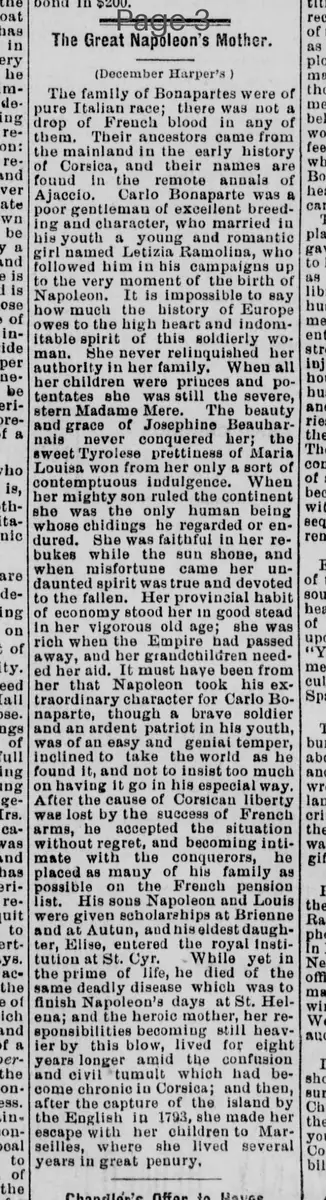
The family of Bonapartes were of pure Italian race; there was not a drop of French blood in any of them. Their ancestors came from the mainland in the early history of Corsica, and their names are found in the remote annals of Ajaccio. Carlo Bonaparte was a poor gentleman of excellent breeding and character, who married in his youth a young and romantic girl named Letizia Ramolina, who followed him in his campaigns up to the very moment of the birth of Napoleon. It is impossible to say how much the history of Europe owes to the high heart and indomitable spirit of this soldierly woman. She never relinquished her authority in her family. When all her children were princes and potentates she was still the severe, stern Madame Mere. The beauty and grace of Josephine Beaubarnais never conquered her; the sweet Tyrolese prettiness of Maria Louisa won from her only a sort of contemptuous indulgence. When her mighty son ruled the continent she was the only human being whose chidings he regarded or endured. She was faithful in her rebukes while the sun shone, and when misfortune came her undaunted spirit was true and devoted to the fallen. Her provincial habit of economy stood her in good stead in her vigorous old age; she was rich when the Empire had passed away, and her grandchildren needed her aid. It must have been from her that Napoleon took his extraordinary character for Carlo Bonaparte, though a brave soldier and an ardent patriot in his youth, was of an easy and genial temper, inclined to take the world as he found it, and not to insist too much on having it go in his especial way. After the cause of Corsican liberty was lost by the success of French arms, he accepted the situation without regret, and becoming intimate with the conquerors, he placed as many of his family as possible on the French pension list. His sons Napoleon and Louis were given scholarships at Brienne and at Autun, and his eldest daughter, Elise, entered the royal institution at St. Cyr. While yet in the prime of life, he died of the same deadly disease which was to finish Napoleon's days at St. Helena; and the heroic mother, her responsibilities becoming still heavier by this blow, lived for eight years longer amid the confusion and civil tumult which had become chronic in Corsica; and then, after the capture of the island by the English in 1793, she made her escape with her children to Marseilles, where she lived several years in great penury.
(December Harper's)
The family of Bonapartes were of pure Italian race; there was not a drop of French blood in any of them. Their ancestors came from the mainland in the early history of Corsica, and their names are found in the remote annals of Ajaccio. Carlo Bonaparte was a poor gentleman of excellent breeding and character, who married in his youth a young and romantic girl named Letizia Ramolina, who followed him in his campaigns up to the very moment of the birth of Napoleon. It is impossible to say how much the history of Europe owes to the high heart and indomitable spirit of this soldierly woman. She never relinquished her authority in her family. When all her children were princes and potentates she was still the severe, stern Madame Mere. The beauty and grace of Josephine Beaubarnais never conquered her; the sweet Tyrolese prettiness of Maria Louisa won from her only a sort of contemptuous indulgence. When her mighty son ruled the continent she was the only human being whose chidings he regarded or endured. She was faithful in her rebukes while the sun shone, and when misfortune came her undaunted spirit was true and devoted to the fallen. Her provincial habit of economy stood her in good stead in her vigorous old age; she was rich when the Empire had passed away, and her grandchildren needed her aid. It must have been from her that Napoleon took his extraordinary character for Carlo Bonaparte, though a brave soldier and an ardent patriot in his youth, was of an easy and genial temper, inclined to take the world as he found it, and not to insist too much on having it go in his especial way. After the cause of Corsican liberty was lost by the success of French arms, he accepted the situation without regret, and becoming intimate with the conquerors, he placed as many of his family as possible on the French pension list. His sons Napoleon and Louis were given scholarships at Brienne and at Autun, and his eldest daughter, Elise, entered the royal institution at St. Cyr. While yet in the prime of life, he died of the same deadly disease which was to finish Napoleon's days at St. Helena; and the heroic mother, her responsibilities becoming still heavier by this blow, lived for eight years longer amid the confusion and civil tumult which had become chronic in Corsica; and then, after the capture of the island by the English in 1793, she made her escape with her children to Marseilles, where she lived several years in great penury.
What sub-type of article is it?
Essay
What themes does it cover?
Political
Liberty Freedom
Moral Virtue
What keywords are associated?
Napoleon Bonaparte
Letizia Ramolina
Carlo Bonaparte
Corsican Liberty
French Empire
Family History
Maternal Influence
Literary Details
Title
The Great Napoleon's Mother
Key Lines
It Is Impossible To Say How Much The History Of Europe Owes To The High Heart And Indomitable Spirit Of This Soldierly Woman.
When Her Mighty Son Ruled The Continent She Was The Only Human Being Whose Chidings He Regarded Or Endured.
After The Cause Of Corsican Liberty Was Lost By The Success Of French Arms, He Accepted The Situation Without Regret