Thank you for visiting SNEWPapers!
Sign up free
Literary
May 22, 1795
Gazette Of The United States And Daily Evening Advertiser
Philadelphia, Philadelphia County, Pennsylvania
What is this article about?
An extract critiquing the brutal practice of domestic slavery in ancient Rome, highlighting its dehumanizing effects on Roman society, with examples from Cato and Vidius Pollio, and reflecting on the moral improvement in modern times.
Clipping
OCR Quality
95%
Excellent
Full Text
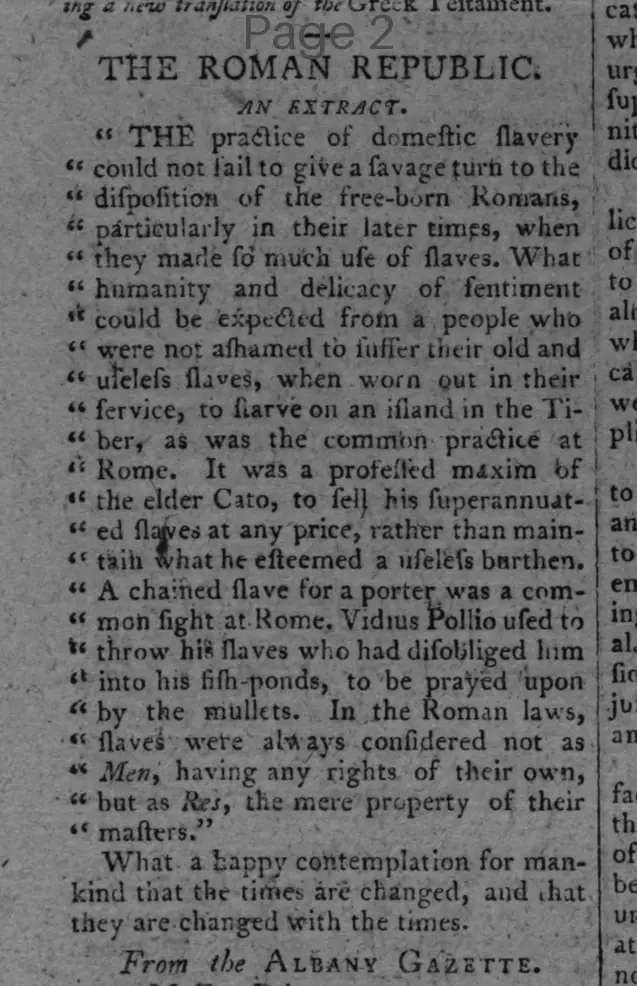
THE ROMAN REPUBLIC.
AN EXTRACT.
"THE practice of domestic slavery could not fail to give a savage turn to the disposition of the free-born Romans, particularly in their later times, when they made so much use of slaves. What humanity and delicacy of sentiment could be expected from a people who were not ashamed to suffer their old and useless slaves, when worn out in their service, to starve on an island in the Tiber, as was the common practice at Rome. It was a professed maxim of the elder Cato, to sell his superannuated slaves at any price, rather than maintain what he esteemed a useless burden. A chained slave for a porter was a common sight at Rome. Vidius Pollio used to throw his slaves who had disobliged him into his fish-ponds, to be preyed upon by the mullets. In the Roman laws, slaves were always considered not as Men, having any rights of their own, but as Res, the mere property of their masters."
What a happy contemplation for mankind that the times are changed, and that they are changed with the times.
AN EXTRACT.
"THE practice of domestic slavery could not fail to give a savage turn to the disposition of the free-born Romans, particularly in their later times, when they made so much use of slaves. What humanity and delicacy of sentiment could be expected from a people who were not ashamed to suffer their old and useless slaves, when worn out in their service, to starve on an island in the Tiber, as was the common practice at Rome. It was a professed maxim of the elder Cato, to sell his superannuated slaves at any price, rather than maintain what he esteemed a useless burden. A chained slave for a porter was a common sight at Rome. Vidius Pollio used to throw his slaves who had disobliged him into his fish-ponds, to be preyed upon by the mullets. In the Roman laws, slaves were always considered not as Men, having any rights of their own, but as Res, the mere property of their masters."
What a happy contemplation for mankind that the times are changed, and that they are changed with the times.
What sub-type of article is it?
Essay
What themes does it cover?
Slavery Abolition
Moral Virtue
What keywords are associated?
Roman Slavery
Cato
Vidius Pollio
Moral Decay
Ancient Rome
Human Rights
Literary Details
Title
The Roman Republic. An Extract.
Subject
Domestic Slavery In Ancient Rome
Form / Style
Historical Prose Reflection
Key Lines
It Was A Professed Maxim Of The Elder Cato, To Sell His Superannuated Slaves At Any Price, Rather Than Maintain What He Esteemed A Useless Burden.
Vidius Pollio Used To Throw His Slaves Who Had Disobliged Him Into His Fish Ponds, To Be Preyed Upon By The Mullets.
In The Roman Laws, Slaves Were Always Considered Not As Men, Having Any Rights Of Their Own, But As Res, The Mere Property Of Their Masters.
What A Happy Contemplation For Mankind That The Times Are Changed, And That They Are Changed With The Times.