Thank you for visiting SNEWPapers!
Sign up free
Literary
December 28, 1898
The Breckenridge News
Hardinsburg, Cloverport, Breckinridge County, Kentucky
What is this article about?
Absalom Bogle bequeaths his fortune to missing brother Jeptha or relatives if unclaimed. Relatives reject Jedediah Sprout's claim as illegitimate son of another brother. Kind cousins Kate and Jack offer their share to Sprout amid family greed.
Clipping
OCR Quality
95%
Excellent
Full Text
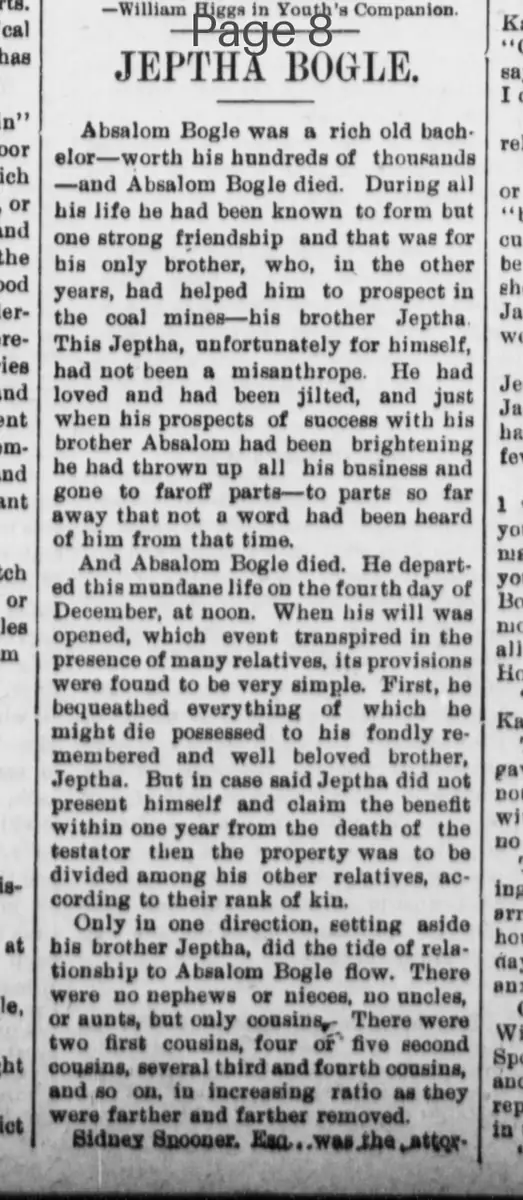
JEPTHA BOGLE.
Absalom Bogle was a rich old bachelor—worth his hundreds of thousands—and Absalom Bogle died. During all his life he had been known to form but one strong friendship and that was for his only brother, who, in the other years, had helped him to prospect in the coal mines—his brother Jeptha.
This Jeptha, unfortunately for himself, had not been a misanthrope. He had loved and had been jilted, and just when his prospects of success with his brother Absalom had been brightening he had thrown up all his business and gone to far-off parts—to parts so far away that not a word had been heard of him from that time.
And Absalom Bogle died. He departed this mundane life on the fourth day of December, at noon. When his will was opened, which event transpired in the presence of many relatives, its provisions were found to be very simple. First, he bequeathed everything of which he might die possessed to his fondly remembered and well beloved brother, Jeptha. But in case said Jeptha did not present himself and claim the benefit within one year from the death of the testator then the property was to be divided among his other relatives, according to their rank of kin.
Only in one direction, setting aside his brother Jeptha, did the tide of relationship to Absalom Bogle flow. There were no nephews or nieces, no uncles, or aunts, but only cousins. There were two first cousins, four or five second cousins, several third and fourth cousins, and so on, in increasing ratio as they were farther and farther removed.
Sidney Spooner, Esq., was the attorney whom Bogle had selected to hold in trust his estate. When the frosts of October had begun to trace their delicate pencilings upon the crisp foliage, Mr. Spooner sent his clerk around among the relatives of Absalom Bogle to bid them prepare for presenting their claims at the appointed time. If the long absent brother did not show himself on or before noon of the fourth day of the coming December, the property would be theirs.
This clerk of Mr. Spooner was a quaint old fellow, answering to the name of Jedediah Sprout. He never hesitated to acknowledge that the attorney had taken him in out of charity, and in his humble way he sought to serve his patron faithfully. But the most wonderful thing about Jedediah Sprout was that he claimed to be a near relative of Absalom Bogle—nearer by far than any other living. He claimed descent from a brother of Absalom—an elder brother, much older than either Absalom or Jeptha—who had died in South America many years ago. The cousins looked up the family history and found that the ancient brother in question had been one Solomon Bogle, a wild, wayward fellow, who under a cloud had changed his name to Sprout and who had left no record of having ever married. Jedediah acknowledged that the said Solomon had never married, and yet he had the hardihood to claim to be his son.
Could anything be more impudent?
The cousins, from the first to the sixteenth remove, held up their hands in holy horror. That a man in possession of his senses should unblushingly acknowledge such shame, and, above all, that from such a slough of ignominy he should thrust himself into relationship with honest people!
And yet Jedediah Sprout worked in his humble station for Mr. Spooner. He visited the cousins with his instructions from his patron, and to each he tearfully presented his own claim.
"I ask not for a prime share of the wealth of my father's relative," he said. "I am very poor, and a mere pittance will serve me. Let me share with the very least."
But they scouted and jeered and would not listen. They received the legal instructions which he brought from the attorney, and then kicked him out.
In a neighboring town lived Kate Winthrop. She had been Kate Wetherbee, but during the very last summer, while other cousins had been cultivating their golden expectations, she had married Jack Winthrop and had settled down in a snug, quiet home, peaceful and happy. Her husband worked hard for a living, and she helped him, and she was grateful and glad that she had the strength so to do.
Jedediah Sprout called upon Kate and presented the attorney's instructions.
"Come in—come in and rest," said Kate, in her winsome, cheery way. "Come in and stop for dinner, but don't say anything about the Bogle property. I don't care to hear it."
"But," urged Jedediah, "you are a relative!"
"My mother was a cousin, some four or five times removed," answered Kate, "but I found no claims upon that circumstance. My poor pittance wouldn't be worth the wrangling and tangling I should have to endure, and, moreover, Jack and myself have concluded that we had better paddle our own canoe."
By and by Jack came in, and to him Jedediah presented the subject. But Jack was as emphatic as his pretty wife had been. He didn't care to mix in the feverish, scrambling mess.
"But," said he, "I'll tell you what I will do, Mr. Sprout. I have heard your story, and in all honor and humanity I think your claims are just. If you cannot get the share of Absalom Bogle's property to which you are morally entitled, you are welcome to all you can get in the name of my wife. How is that, Kate?"
"I agree with all my heart!" cried Kate.
The rich moisture in Jedediah's eyes gave token of the feelings which he did not speak. He sat down and ate dinner with the happy young couple and said no more upon the subject of business.
The weeks rolled on, and the morning of the 4th of December at length arrived. In the great, old, shambling house which had been vacant since the day of Absalom Bogle's funeral an anxious crew were assembled.
On that very morning Jack and Kate Winthrop had been visited by Mr. Spooner, who had asked their attendance on the coming occasion. They had replied to him that they had no interest in the matter.
"But," said Mr. Spooner, "Jedediah
Absalom Bogle was a rich old bachelor—worth his hundreds of thousands—and Absalom Bogle died. During all his life he had been known to form but one strong friendship and that was for his only brother, who, in the other years, had helped him to prospect in the coal mines—his brother Jeptha.
This Jeptha, unfortunately for himself, had not been a misanthrope. He had loved and had been jilted, and just when his prospects of success with his brother Absalom had been brightening he had thrown up all his business and gone to far-off parts—to parts so far away that not a word had been heard of him from that time.
And Absalom Bogle died. He departed this mundane life on the fourth day of December, at noon. When his will was opened, which event transpired in the presence of many relatives, its provisions were found to be very simple. First, he bequeathed everything of which he might die possessed to his fondly remembered and well beloved brother, Jeptha. But in case said Jeptha did not present himself and claim the benefit within one year from the death of the testator then the property was to be divided among his other relatives, according to their rank of kin.
Only in one direction, setting aside his brother Jeptha, did the tide of relationship to Absalom Bogle flow. There were no nephews or nieces, no uncles, or aunts, but only cousins. There were two first cousins, four or five second cousins, several third and fourth cousins, and so on, in increasing ratio as they were farther and farther removed.
Sidney Spooner, Esq., was the attorney whom Bogle had selected to hold in trust his estate. When the frosts of October had begun to trace their delicate pencilings upon the crisp foliage, Mr. Spooner sent his clerk around among the relatives of Absalom Bogle to bid them prepare for presenting their claims at the appointed time. If the long absent brother did not show himself on or before noon of the fourth day of the coming December, the property would be theirs.
This clerk of Mr. Spooner was a quaint old fellow, answering to the name of Jedediah Sprout. He never hesitated to acknowledge that the attorney had taken him in out of charity, and in his humble way he sought to serve his patron faithfully. But the most wonderful thing about Jedediah Sprout was that he claimed to be a near relative of Absalom Bogle—nearer by far than any other living. He claimed descent from a brother of Absalom—an elder brother, much older than either Absalom or Jeptha—who had died in South America many years ago. The cousins looked up the family history and found that the ancient brother in question had been one Solomon Bogle, a wild, wayward fellow, who under a cloud had changed his name to Sprout and who had left no record of having ever married. Jedediah acknowledged that the said Solomon had never married, and yet he had the hardihood to claim to be his son.
Could anything be more impudent?
The cousins, from the first to the sixteenth remove, held up their hands in holy horror. That a man in possession of his senses should unblushingly acknowledge such shame, and, above all, that from such a slough of ignominy he should thrust himself into relationship with honest people!
And yet Jedediah Sprout worked in his humble station for Mr. Spooner. He visited the cousins with his instructions from his patron, and to each he tearfully presented his own claim.
"I ask not for a prime share of the wealth of my father's relative," he said. "I am very poor, and a mere pittance will serve me. Let me share with the very least."
But they scouted and jeered and would not listen. They received the legal instructions which he brought from the attorney, and then kicked him out.
In a neighboring town lived Kate Winthrop. She had been Kate Wetherbee, but during the very last summer, while other cousins had been cultivating their golden expectations, she had married Jack Winthrop and had settled down in a snug, quiet home, peaceful and happy. Her husband worked hard for a living, and she helped him, and she was grateful and glad that she had the strength so to do.
Jedediah Sprout called upon Kate and presented the attorney's instructions.
"Come in—come in and rest," said Kate, in her winsome, cheery way. "Come in and stop for dinner, but don't say anything about the Bogle property. I don't care to hear it."
"But," urged Jedediah, "you are a relative!"
"My mother was a cousin, some four or five times removed," answered Kate, "but I found no claims upon that circumstance. My poor pittance wouldn't be worth the wrangling and tangling I should have to endure, and, moreover, Jack and myself have concluded that we had better paddle our own canoe."
By and by Jack came in, and to him Jedediah presented the subject. But Jack was as emphatic as his pretty wife had been. He didn't care to mix in the feverish, scrambling mess.
"But," said he, "I'll tell you what I will do, Mr. Sprout. I have heard your story, and in all honor and humanity I think your claims are just. If you cannot get the share of Absalom Bogle's property to which you are morally entitled, you are welcome to all you can get in the name of my wife. How is that, Kate?"
"I agree with all my heart!" cried Kate.
The rich moisture in Jedediah's eyes gave token of the feelings which he did not speak. He sat down and ate dinner with the happy young couple and said no more upon the subject of business.
The weeks rolled on, and the morning of the 4th of December at length arrived. In the great, old, shambling house which had been vacant since the day of Absalom Bogle's funeral an anxious crew were assembled.
On that very morning Jack and Kate Winthrop had been visited by Mr. Spooner, who had asked their attendance on the coming occasion. They had replied to him that they had no interest in the matter.
"But," said Mr. Spooner, "Jedediah
What sub-type of article is it?
Prose Fiction
What themes does it cover?
Social Manners
Moral Virtue
What keywords are associated?
Inheritance
Family Claims
Missing Brother
Illegitimate Son
Moral Generosity
Literary Details
Title
Jeptha Bogle.
Key Lines
"I Ask Not For A Prime Share Of The Wealth Of My Father's Relative," He Said. "I Am Very Poor, And A Mere Pittance Will Serve Me. Let Me Share With The Very Least."
"Come In—Come In And Rest," Said Kate, In Her Winsome, Cheery Way. "Come In And Stop For Dinner, But Don't Say Anything About The Bogle Property. I Don't Care To Hear It."
"My Mother Was A Cousin, Some Four Or Five Times Removed," Answered Kate, "But I Found No Claims Upon That Circumstance. My Poor Pittance Wouldn't Be Worth The Wrangling And Tangling I Should Have To Endure, And, Moreover, Jack And Myself Have Concluded That We Had Better Paddle Our Own Canoe."
"But," Said He, "I'll Tell You What I Will Do, Mr. Sprout. I Have Heard Your Story, And In All Honor And Humanity I Think Your Claims Are Just. If You Cannot Get The Share Of Absalom Bogle's Property To Which You Are Morally Entitled, You Are Welcome To All You Can Get In The Name Of My Wife. How Is That, Kate?"
"I Agree With All My Heart!" Cried Kate.