Thank you for visiting SNEWPapers!
Sign up free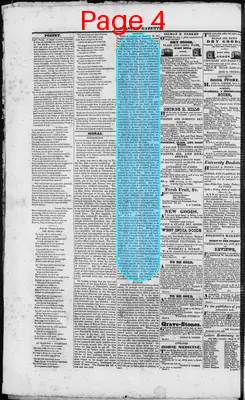
Editorial
April 8, 1828
Lancaster Gazette
Lancaster, Worcester County, Massachusetts
What is this article about?
An editorial essay on the perils of procrastination, quoting Dr. Young's famous line, critiques human tendency to delay duties, arguing it leads to greater difficulties and diminished capacity, while urging diligence for happiness and fulfillment.
Clipping

OCR Quality
98%
Excellent
Full Text
There is perhaps no sentence in the English language more frequently quoted than the line of Dr. Young: "Procrastination is the thief of time." Yet it would be difficult to find any precept more generally neglected than the one which it implies, or any possession lavished away with such heedless prodigality, as the most of men evince in the disposal of time. The necessity of diligence is universally acknowledged; but it is a necessity to which the mind reluctantly yields, until every excuse for delay has been exhausted. and every suggestion of the imagination that another day will diminish the labour, or increase the ability, has been shown to be illusive. The absurdity of procrastinating that which cannot be eventually avoided; of deferring to a more convenient season the duties which require present accomplishment. is one of the weaknesses of our nature, which the satirist has derided, and the moralist rebuked; but which will be found to exist, in some degree or other, in every mind, however stored with knowledge, or regulated by reason.
It is the nature of man to look upon evils with dread; not so much in reference to their magnitude, as in proportion to their proximity; distance softening to the mental, as to the bodily, vision, the ruggedness of mountains into shadowy smoothness; trivial obstructions, that lie immediately before him, are viewed with apprehension, and avoided with eagerness. Accordingly, by the operation of this principle, days of present ease are willingly purchased at the price of future weeks of labour; the heart easily deluding itself into the belief that the period of ultimate necessity is afar off, and that when the mountain is to be climbed, augmented vigour will be furnished for the task.
But vigour is not the result of indolence; and he who suffers the proper time for action to pass by unimproved, will find his difficulties increase, and his capability diminish, with each succeeding moment of delay-until the fruit which at first might have been easily plucked, shall hang above his head, in irritating mockery, alluring to the eye, but receding from the grasp, as from that of the fabled Tantalus. The story of Sisyphus is no fiction, as applied to human life. Each man is doomed to roll a heavy burden up the toilsome ascent of years; and every remission of diligence is invariably followed by a necessity of greater exertion. But labour soon becomes light to assiduous industry; while to the dilatory and procrastinating. that which was dreaded at first grows more and more repulsive; each hour as it passes adds difficulty to difficulty, and each suggestion of fear augments timidity, until the time in which what is neglected might easily have been accomplished, not only elapses, but our capacity for effort is dwindled, in consequence of the imbecility which always follows procrastination.
"Be wise to-day; 'tis madness to defer." It is certain that life cannot be of long duration at any rate, and accident or disease may shorten its brevity; it is therefore requisite that what is necessary to be done, be done with activity, while yet we may call the day our own. Memory and anticipation are both the friends of industry; while idleness blushes to look back. and trembles to look forward. The true way to be happy is to be well and constantly employed; but none are so wretched as they who have nothing to do; who postpone the execution of petty duties, until, by constant agglomeration, they have grown into mountains, which the beholder looks upon with feelings of mingled apprehension and remorse.
Certainty of success cannot be proposed as the reward of assiduity; for the grave sometimes ingulfs the bark that is but midway of the ocean; but it is ours to be cut off in the career of duty, not reposing in unmanly indolence; to die "with harness on our back," not slumbering in cowardly supineness. afar from the scene of action.-Merchants' Telegraph.
It is the nature of man to look upon evils with dread; not so much in reference to their magnitude, as in proportion to their proximity; distance softening to the mental, as to the bodily, vision, the ruggedness of mountains into shadowy smoothness; trivial obstructions, that lie immediately before him, are viewed with apprehension, and avoided with eagerness. Accordingly, by the operation of this principle, days of present ease are willingly purchased at the price of future weeks of labour; the heart easily deluding itself into the belief that the period of ultimate necessity is afar off, and that when the mountain is to be climbed, augmented vigour will be furnished for the task.
But vigour is not the result of indolence; and he who suffers the proper time for action to pass by unimproved, will find his difficulties increase, and his capability diminish, with each succeeding moment of delay-until the fruit which at first might have been easily plucked, shall hang above his head, in irritating mockery, alluring to the eye, but receding from the grasp, as from that of the fabled Tantalus. The story of Sisyphus is no fiction, as applied to human life. Each man is doomed to roll a heavy burden up the toilsome ascent of years; and every remission of diligence is invariably followed by a necessity of greater exertion. But labour soon becomes light to assiduous industry; while to the dilatory and procrastinating. that which was dreaded at first grows more and more repulsive; each hour as it passes adds difficulty to difficulty, and each suggestion of fear augments timidity, until the time in which what is neglected might easily have been accomplished, not only elapses, but our capacity for effort is dwindled, in consequence of the imbecility which always follows procrastination.
"Be wise to-day; 'tis madness to defer." It is certain that life cannot be of long duration at any rate, and accident or disease may shorten its brevity; it is therefore requisite that what is necessary to be done, be done with activity, while yet we may call the day our own. Memory and anticipation are both the friends of industry; while idleness blushes to look back. and trembles to look forward. The true way to be happy is to be well and constantly employed; but none are so wretched as they who have nothing to do; who postpone the execution of petty duties, until, by constant agglomeration, they have grown into mountains, which the beholder looks upon with feelings of mingled apprehension and remorse.
Certainty of success cannot be proposed as the reward of assiduity; for the grave sometimes ingulfs the bark that is but midway of the ocean; but it is ours to be cut off in the career of duty, not reposing in unmanly indolence; to die "with harness on our back," not slumbering in cowardly supineness. afar from the scene of action.-Merchants' Telegraph.
What sub-type of article is it?
Moral Or Religious
What keywords are associated?
Procrastination
Diligence
Time Management
Moral Exhortation
Human Weakness
Industry
Idleness
What entities or persons were involved?
Dr. Young
Editorial Details
Primary Topic
Dangers Of Procrastination And Need For Diligence
Stance / Tone
Moral Exhortation Against Delay
Key Figures
Dr. Young
Key Arguments
Procrastination Is The Thief Of Time And Widely Neglected.
Diligence Is Necessary But Minds Resist Until Excuses Are Exhausted.
Delaying Inevitable Duties Is Absurd And A Human Weakness.
Humans Dread Immediate Evils More Than Distant Ones, Leading To Present Ease At Future Cost.
Indolence Does Not Build Vigor; Delays Increase Difficulties And Diminish Capability.
Procrastination Leads To Imbecility And Unfulfilled Potential, Like Tantalus Or Sisyphus.
Life Is Short; Act With Activity While Possible.
Industry Brings Happiness; Idleness Causes Wretchedness And Remorse.
Better To Die In Duty Than In Indolence.