Thank you for visiting SNEWPapers!
Sign up free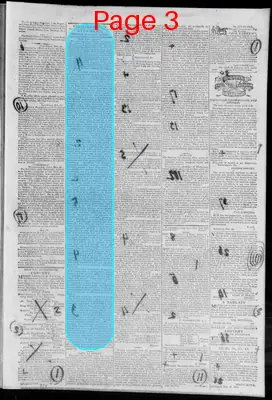
Editorial
November 25, 1811
Virginia Argus
Richmond, Virginia
What is this article about?
Editorial praises President Madison's call for stricter enforcement of commercial laws against smuggling, arguing it is essential to maintain republican government through firm, impartial application of laws, contrasting it with monarchical stability and critiquing partisan personalism.
Clipping

OCR Quality
95%
Excellent
Full Text
:VIRGINIA ARGUS.
RICHMOND.
MONDAY, NOVEMBER 25, 1811.
FOR THE ARGUS.
"The early attention of Congress will be due to the expediency of further guards against evasions and infractions of our commercial laws. The practice of smuggling, which is odious every where, and particularly criminal in free governments, where, the laws being made by all for the good of all, a fraud is committed on every individual as well as on the state, attains its utmost guilt, when it blends, with a pursuit of ignominious gain, a treacherous subservience, in the transgressors, to a foreign policy, more injurious than that of their own country. It is then that the virtuous indignation of the public should be enabled to manifest itself, through the regular animadversions of the most competent laws."
—President Madison's Message to Congress, Nov. 5th, 1811.
If we were asked to point to that part of the first message of the President to Congress at the opening of the present session, which is most indicative of republican spirit and is most vitally important to the free form of government under which we live, we should lay our finger upon the passage that we have taken for our motto. It has often been said that republican government means any thing or nothing. This is one of those superficial observations which party men and fluctuating minds find convenient to their purposes. It is scarcely used except by knaves or by those who never formed principles to themselves upon any subject whatsoever. The idea of a republic, and consequently of republicanism, is as clear and definable as that of any thing else. Let us, then, attempt to define it. A republican government is a government of laws; and not only of laws, but of public and known laws: And is put in opposition to aristocratical, monarchal, or despotic government, which more or less, are all anti-republican, because they are governments in their nature personal and arbitrary, subjecting the citizen to the whims and caprices of men instead of a fixed and steady rule of conduct. The perfection of republican government, therefore, consists in the firm & just operation of the laws; the want of such operation being, in a republican government what imbecility is in the prince or ruling aristocracy of other forms of government. Where the people have the right of electing those who make the laws, they can amend them whenever they are defective; and hence it follows, that as each voter is a constituent part of the law-making power, so infractions of the laws are a putting at defiance the will of the people individually and collectively. "Instability," said Bonaparte, on a certain occasion, "destroys every thing." He never uttered a truer observation. To give stability to a republic the laws must be maintained; and men ought to be forever changeable, but laws ought never to be indirectly varied or relaxed during the term for which they are enacted. If laws come to be despised and disobeyed with impunity, as they will be if not enforced, then republican government is a nullity; or worse, it is a mere scene of distraction. In every government there must be something that shall be fixed in its operation. In monarchies, it is the hereditary principle that prevails: and it is in this point of view that favorers of monarchy have been able to adduce their most plausible arguments. For, say they, the operations of a government that is controlled by the will of the majority are forever fluctuating, because, as one generation dies off another springs up with new notions, and overturns whatsoever has been done by the generation that precedes it: Thus, measures are continually changing; there is nothing like a system, nothing permanent; and fools undo what wise men have instituted. Fix, then, continue the monarchists, one family at the head of government, whose interests it shall be to make every thing stable, in order that the works of wisdom and experience may not be trodden down in the mire of ignorance and anarchy.
To oppose with success this artful argument, what have republicans to do but to guard their laws with a sacred vigilance, to enforce them with a nervous vigor; and to maintain with unabating rigor, against offenders either in or out of power, whatsoever is clearly law, let who will be at the head of affairs. This is the only doctrine that can insure the duration of the republic; and we are pleased to find it officially vindicated in the message of President Madison in a case which most imperiously calls upon the Congress to follow up the executive vindication with force.
It is in vain that we endeavor to perpetuate free institutions, if our legislators permit themselves to be the instruments of a temporary and fleeting expedient. No nostrum or plaster will answer. There must be a firm manifestation of vigor; a resolute and open avowal of an inviolable determination to enforce whatever laws are made; and offenders must be made to see and to feel, not only that the parliament ordains punishment, but that the arm of Justice is sufficiently powerful to inflict it.
If any fear exists that the political health of the nation is too feeble to bear strong correctives, and that fear should prevail to counteract the suggestions of the President, then, indeed the hope for free representative government will be faint. We must be permitted to press this subject upon public observation; for never have we remarked a greater clamor in favor of freedom and independence, and never have we seen men's minds incline more to aristocracy and servility. The divisions of our political parties are, in effect, all personal. It is no longer a question whether this or that measure shall be supported, but whether this or that man shall be maintained & saved to the party. Every where intrigues, and management, and combinations, and co-partnerships, are spoken of with a degree of levity that is alarming to the true friends of the constitution. It is to no purpose that the sails of the national vessel are filled with full of patriotism if the thoughts and private conversations of men warp her into the port of monarchy.
RICHMOND.
MONDAY, NOVEMBER 25, 1811.
FOR THE ARGUS.
"The early attention of Congress will be due to the expediency of further guards against evasions and infractions of our commercial laws. The practice of smuggling, which is odious every where, and particularly criminal in free governments, where, the laws being made by all for the good of all, a fraud is committed on every individual as well as on the state, attains its utmost guilt, when it blends, with a pursuit of ignominious gain, a treacherous subservience, in the transgressors, to a foreign policy, more injurious than that of their own country. It is then that the virtuous indignation of the public should be enabled to manifest itself, through the regular animadversions of the most competent laws."
—President Madison's Message to Congress, Nov. 5th, 1811.
If we were asked to point to that part of the first message of the President to Congress at the opening of the present session, which is most indicative of republican spirit and is most vitally important to the free form of government under which we live, we should lay our finger upon the passage that we have taken for our motto. It has often been said that republican government means any thing or nothing. This is one of those superficial observations which party men and fluctuating minds find convenient to their purposes. It is scarcely used except by knaves or by those who never formed principles to themselves upon any subject whatsoever. The idea of a republic, and consequently of republicanism, is as clear and definable as that of any thing else. Let us, then, attempt to define it. A republican government is a government of laws; and not only of laws, but of public and known laws: And is put in opposition to aristocratical, monarchal, or despotic government, which more or less, are all anti-republican, because they are governments in their nature personal and arbitrary, subjecting the citizen to the whims and caprices of men instead of a fixed and steady rule of conduct. The perfection of republican government, therefore, consists in the firm & just operation of the laws; the want of such operation being, in a republican government what imbecility is in the prince or ruling aristocracy of other forms of government. Where the people have the right of electing those who make the laws, they can amend them whenever they are defective; and hence it follows, that as each voter is a constituent part of the law-making power, so infractions of the laws are a putting at defiance the will of the people individually and collectively. "Instability," said Bonaparte, on a certain occasion, "destroys every thing." He never uttered a truer observation. To give stability to a republic the laws must be maintained; and men ought to be forever changeable, but laws ought never to be indirectly varied or relaxed during the term for which they are enacted. If laws come to be despised and disobeyed with impunity, as they will be if not enforced, then republican government is a nullity; or worse, it is a mere scene of distraction. In every government there must be something that shall be fixed in its operation. In monarchies, it is the hereditary principle that prevails: and it is in this point of view that favorers of monarchy have been able to adduce their most plausible arguments. For, say they, the operations of a government that is controlled by the will of the majority are forever fluctuating, because, as one generation dies off another springs up with new notions, and overturns whatsoever has been done by the generation that precedes it: Thus, measures are continually changing; there is nothing like a system, nothing permanent; and fools undo what wise men have instituted. Fix, then, continue the monarchists, one family at the head of government, whose interests it shall be to make every thing stable, in order that the works of wisdom and experience may not be trodden down in the mire of ignorance and anarchy.
To oppose with success this artful argument, what have republicans to do but to guard their laws with a sacred vigilance, to enforce them with a nervous vigor; and to maintain with unabating rigor, against offenders either in or out of power, whatsoever is clearly law, let who will be at the head of affairs. This is the only doctrine that can insure the duration of the republic; and we are pleased to find it officially vindicated in the message of President Madison in a case which most imperiously calls upon the Congress to follow up the executive vindication with force.
It is in vain that we endeavor to perpetuate free institutions, if our legislators permit themselves to be the instruments of a temporary and fleeting expedient. No nostrum or plaster will answer. There must be a firm manifestation of vigor; a resolute and open avowal of an inviolable determination to enforce whatever laws are made; and offenders must be made to see and to feel, not only that the parliament ordains punishment, but that the arm of Justice is sufficiently powerful to inflict it.
If any fear exists that the political health of the nation is too feeble to bear strong correctives, and that fear should prevail to counteract the suggestions of the President, then, indeed the hope for free representative government will be faint. We must be permitted to press this subject upon public observation; for never have we remarked a greater clamor in favor of freedom and independence, and never have we seen men's minds incline more to aristocracy and servility. The divisions of our political parties are, in effect, all personal. It is no longer a question whether this or that measure shall be supported, but whether this or that man shall be maintained & saved to the party. Every where intrigues, and management, and combinations, and co-partnerships, are spoken of with a degree of levity that is alarming to the true friends of the constitution. It is to no purpose that the sails of the national vessel are filled with full of patriotism if the thoughts and private conversations of men warp her into the port of monarchy.
What sub-type of article is it?
Constitutional
Legal Reform
Economic Policy
What keywords are associated?
Republican Government
Law Enforcement
Smuggling
Commercial Laws
Political Stability
President Madison
What entities or persons were involved?
President Madison
Congress
Bonaparte
Editorial Details
Primary Topic
Enforcement Of Commercial Laws Against Smuggling To Preserve Republican Government
Stance / Tone
Strongly Advocates For Vigorous Law Enforcement And Republican Principles
Key Figures
President Madison
Congress
Bonaparte
Key Arguments
Republican Government Is Defined By Firm And Just Operation Of Public Laws, Opposing Arbitrary Personal Rule
Infractions Of Laws Defy The Will Of The People As Law Makers
Stability In Republics Requires Unyielding Enforcement Of Laws, Unlike Monarchies' Hereditary Principle
President Madison's Message Highlights Need For Guards Against Smuggling As Treacherous To The Nation
Political Parties' Personal Divisions Threaten Constitutional Stability, Inclining Towards Aristocracy