Thank you for visiting SNEWPapers!
Sign up free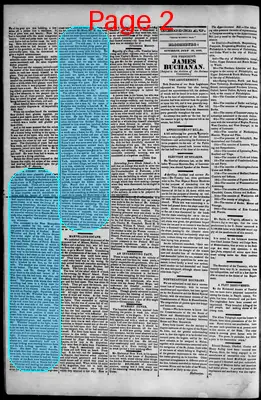
Literary
July 30, 1842
The Columbia Democrat
Bloomsburg, Columbia County, Pennsylvania
What is this article about?
A newspaper recounts a verified ghost story from New Hampshire: two men witness a crimson-lit apparition at Samuel Mann's deathbed in North Benton, prompting his confession to a 40-year-old murder of a man named Edwards, linked to past events involving Jonathan Noyes and a missing joiner Hodgdon.
Clipping
OCR Quality
95%
Excellent
Full Text
A GHOST STORY.
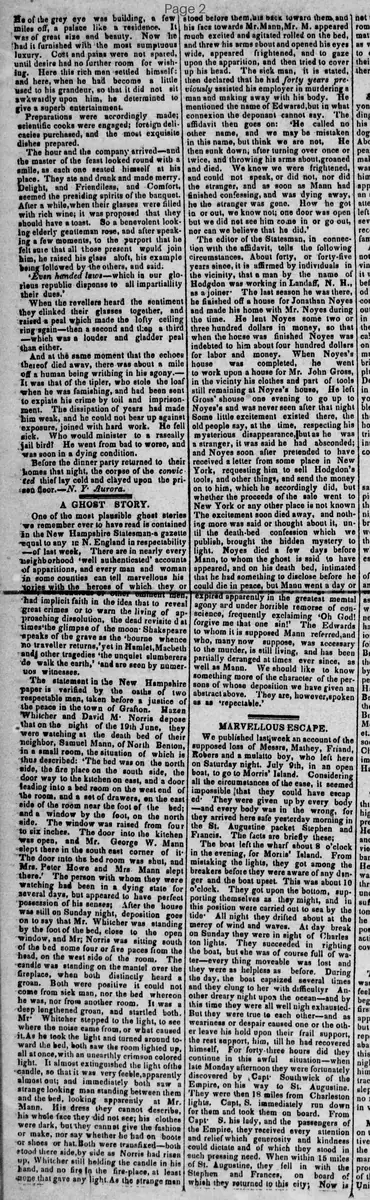
One of the most plausible ghost stories we remember ever to have read is contained in the New Hampshire Statesman--a gazette equal to any in New England in respectability--of last week. There are in nearly every neighbourhood 'well authenticated' accounts of apparitions, and every man and woman in some counties can tell marvellous stories with the heroes of which they or their ancestors had implicit faith in the idea that to reveal great crimes or to warn the living of approaching dissolution, the dead revisit the glimpses of the moon' Shakespeare speaks of the grave as the 'bourne whence no traveller returns,' yet in Hamlet, Macbeth and other tragedies the unquiet slumberers 'do walk the earth,' and are seen by numerous witnesses.
The statement in the New Hampshire paper is verified by the oaths of two respectable men, taken before a justice of the peace in the town of Grayson. Hazen Whitcher and David M. Norris depose that on the night of the 19th June, they were watching at the death bed of their neighbor, Samuel Mann, of North Benton, in a small room, the situation of which is thus described: 'The bed was on the north side, the fire place on the south side, the door way to the kitchen on east, and a door leading into a bed room on the west end of the room, and a set of drawers, on the east side of the room near the foot of the bed; and a window by the foot, on the north side. The window was raised from four to six inches. The door into the kitchen was open, and Mr. George W. Mann slept there in the south east corner of it. The door into the bed room was shut, and Mrs. Peter Howe and Mrs. Mann slept there.' The person with whom they were watching had been in a dying state for several days, but appeared to have perfect possession of his senses; After the house was still on Sunday night, deposition goes on to say that Mr. Whitcher was standing by the foot of the bed, close to the open window, and Mr. Norris was sitting south of the bed some four or five paces from the head, on the west side of the room. The candle was standing on the mantel over the fire place, when both distinctly heard a groan. Both were positive it could not come from sick man, nor the bed whereon he was, nor from another room. It was a deep lengthened groan, and startled both. Mr. Whitcher stepped to the light, to see where the noise came from, or what caused it. As he took the light and turned around toward the bed, both saw the room lighted up all at once, with an unearthly crimson colored light. It almost extinguished the light of the candle, so that it was very feeble, apparently almost out; and immediately both saw a strange looking man standing between them and the bed, looking apparently at Mr. Mann. His dress they cannot describe, his whole face they did not see; his clothes were dark, but they cannot give the fashion or make, nor say whether he had on boots or shoes or hat. Both were transfixed--both stood there side by side as Norris had risen up, Whitcher still holding the candle in his hand, and no fire in the fire-place, at least none that gave any light. As the strange man stood before them, his back toward them and his face towards Mr. Mann, Mr. M. appeared much excited and agitated rolled on the bed. and threw his arms about and opened his eyes wide, appeared frightened, and to gaze upon the apparition, and then tried to cover up his head. The sick man, it is stated, then declared that he had forty years previously assisted his employer in murdering a man and making away with his body. He mentioned the name of Edwards, but in what connexion the deponent cannot say. The affidavit then goes on: He called no other name, and we may be mistaken in this name, but think we are not, He then sunk down; after turning over once or twice, and throwing his arms about, groaned and died. We know we were frightened, and could not speak, or did not, nor did the stranger, and as soon as Mann had finished confessing, and was dying away, he the stranger was gone. How he got in or out, we know not; one door was open but we did not see him come in or go out, nor can we believe that he did.'
The editor of the Statesman, in connection with the affidavit, tells the following circumstances, About forty, or forty-five years since, it is affirmed by individuals in the vicinity, that a man by the name of Hodgdon was working in Landaff. N. H., as a joiner. The last season he was there, he finished off a house for Jonathan Noyes and made his home with Mr. Noyes during the time. He lent Noyes some two or three hundred dollars in money, so that when the house was completed, he went to work upon a house for Mr. John Gross, in the vicinity his clothes and part of tools still remaining at Noyes's house, He let Gross' house one evening to go up to Noyes's and was never seen after that night Some little excitement existed there, the old people say, at the time, respecting his mysterious disappearance, but as he was a stranger, it was said he had absconded: and Noyes soon after pretended to have received a letter from some place in New York, requesting him to sell Hodgdon's tools, and other things, and send the money on to him, which he accordingly did, but whether the proceeds of the sale went to New York or any other place is not known The excitement soon died away, and nothing more was said or thought about it, until the death-bed confession which we publish, brought the hidden mystery to light. Noyes died a few days before Mann, to whom the ghost is said to have appeared, and on his death bed, intimated that he had something to disclose before he could die in peace, but Mann went a day or expired apparently in the greatest mental agony and under horrible remorse of conscience, frequently exclaiming 'Oh God! Forgive me that one sin!' The Edwards to whom it is supposed Mann referred, and who, many now suppose, was accessory to the murder, is still living, and has been partially deranged at times ever since, as well as Mann. We should like to know something more of the character of the persons of whose deposition we have given an abstract above. They are, however, spoken as 'respectable.'
One of the most plausible ghost stories we remember ever to have read is contained in the New Hampshire Statesman--a gazette equal to any in New England in respectability--of last week. There are in nearly every neighbourhood 'well authenticated' accounts of apparitions, and every man and woman in some counties can tell marvellous stories with the heroes of which they or their ancestors had implicit faith in the idea that to reveal great crimes or to warn the living of approaching dissolution, the dead revisit the glimpses of the moon' Shakespeare speaks of the grave as the 'bourne whence no traveller returns,' yet in Hamlet, Macbeth and other tragedies the unquiet slumberers 'do walk the earth,' and are seen by numerous witnesses.
The statement in the New Hampshire paper is verified by the oaths of two respectable men, taken before a justice of the peace in the town of Grayson. Hazen Whitcher and David M. Norris depose that on the night of the 19th June, they were watching at the death bed of their neighbor, Samuel Mann, of North Benton, in a small room, the situation of which is thus described: 'The bed was on the north side, the fire place on the south side, the door way to the kitchen on east, and a door leading into a bed room on the west end of the room, and a set of drawers, on the east side of the room near the foot of the bed; and a window by the foot, on the north side. The window was raised from four to six inches. The door into the kitchen was open, and Mr. George W. Mann slept there in the south east corner of it. The door into the bed room was shut, and Mrs. Peter Howe and Mrs. Mann slept there.' The person with whom they were watching had been in a dying state for several days, but appeared to have perfect possession of his senses; After the house was still on Sunday night, deposition goes on to say that Mr. Whitcher was standing by the foot of the bed, close to the open window, and Mr. Norris was sitting south of the bed some four or five paces from the head, on the west side of the room. The candle was standing on the mantel over the fire place, when both distinctly heard a groan. Both were positive it could not come from sick man, nor the bed whereon he was, nor from another room. It was a deep lengthened groan, and startled both. Mr. Whitcher stepped to the light, to see where the noise came from, or what caused it. As he took the light and turned around toward the bed, both saw the room lighted up all at once, with an unearthly crimson colored light. It almost extinguished the light of the candle, so that it was very feeble, apparently almost out; and immediately both saw a strange looking man standing between them and the bed, looking apparently at Mr. Mann. His dress they cannot describe, his whole face they did not see; his clothes were dark, but they cannot give the fashion or make, nor say whether he had on boots or shoes or hat. Both were transfixed--both stood there side by side as Norris had risen up, Whitcher still holding the candle in his hand, and no fire in the fire-place, at least none that gave any light. As the strange man stood before them, his back toward them and his face towards Mr. Mann, Mr. M. appeared much excited and agitated rolled on the bed. and threw his arms about and opened his eyes wide, appeared frightened, and to gaze upon the apparition, and then tried to cover up his head. The sick man, it is stated, then declared that he had forty years previously assisted his employer in murdering a man and making away with his body. He mentioned the name of Edwards, but in what connexion the deponent cannot say. The affidavit then goes on: He called no other name, and we may be mistaken in this name, but think we are not, He then sunk down; after turning over once or twice, and throwing his arms about, groaned and died. We know we were frightened, and could not speak, or did not, nor did the stranger, and as soon as Mann had finished confessing, and was dying away, he the stranger was gone. How he got in or out, we know not; one door was open but we did not see him come in or go out, nor can we believe that he did.'
The editor of the Statesman, in connection with the affidavit, tells the following circumstances, About forty, or forty-five years since, it is affirmed by individuals in the vicinity, that a man by the name of Hodgdon was working in Landaff. N. H., as a joiner. The last season he was there, he finished off a house for Jonathan Noyes and made his home with Mr. Noyes during the time. He lent Noyes some two or three hundred dollars in money, so that when the house was completed, he went to work upon a house for Mr. John Gross, in the vicinity his clothes and part of tools still remaining at Noyes's house, He let Gross' house one evening to go up to Noyes's and was never seen after that night Some little excitement existed there, the old people say, at the time, respecting his mysterious disappearance, but as he was a stranger, it was said he had absconded: and Noyes soon after pretended to have received a letter from some place in New York, requesting him to sell Hodgdon's tools, and other things, and send the money on to him, which he accordingly did, but whether the proceeds of the sale went to New York or any other place is not known The excitement soon died away, and nothing more was said or thought about it, until the death-bed confession which we publish, brought the hidden mystery to light. Noyes died a few days before Mann, to whom the ghost is said to have appeared, and on his death bed, intimated that he had something to disclose before he could die in peace, but Mann went a day or expired apparently in the greatest mental agony and under horrible remorse of conscience, frequently exclaiming 'Oh God! Forgive me that one sin!' The Edwards to whom it is supposed Mann referred, and who, many now suppose, was accessory to the murder, is still living, and has been partially deranged at times ever since, as well as Mann. We should like to know something more of the character of the persons of whose deposition we have given an abstract above. They are, however, spoken as 'respectable.'
What sub-type of article is it?
Prose Fiction
What themes does it cover?
Death Mortality
Moral Virtue
What keywords are associated?
Ghost Story
Apparition
Deathbed Confession
Murder
Supernatural
Affidavit
New Hampshire
Literary Details
Title
A Ghost Story.
Subject
Deathbed Apparition And Confession Of Murder
Form / Style
Narrative Account Of Supernatural Event With Affidavit
Key Lines
Both Saw The Room Lighted Up All At Once, With An Unearthly Crimson Colored Light.
The Sick Man, It Is Stated, Then Declared That He Had Forty Years Previously Assisted His Employer In Murdering A Man And Making Away With His Body.
Oh God! Forgive Me That One Sin!