Thank you for visiting SNEWPapers!
Sign up free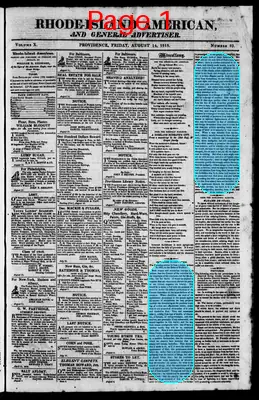
Literary
August 14, 1818
The Rhode Island American, And General Advertiser
Providence, Providence County, Rhode Island
What is this article about?
Extract from Bishop Watson's 1801 letter to the Duke of Grafton explores how reason and revelation show God's desire for human happiness, links vice to misery in this life and the next, and emphasizes sincere repentance as key to forgiveness and salvation.
Merged-components note: Continuation of the same literary article excerpted from Bishop Watson's works; the text flows directly from one component to the next across adjacent columns.
Clipping
OCR Quality
95%
Excellent
Full Text
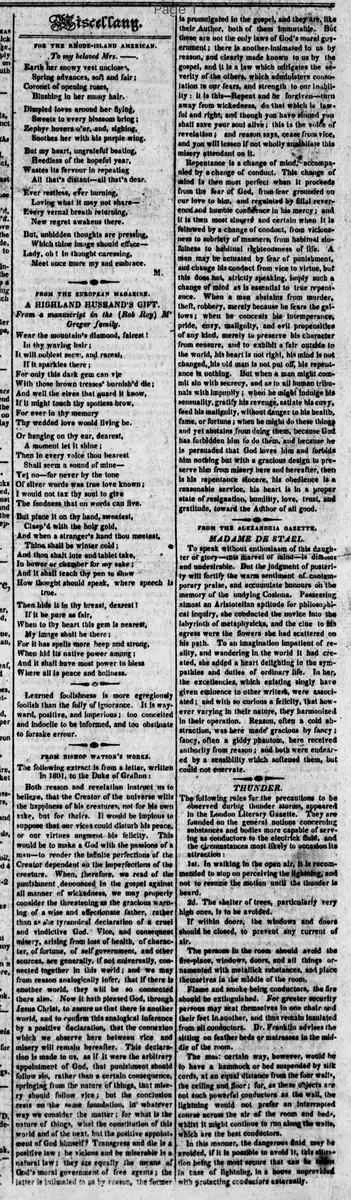
FROM BISHOP WATSON'S WORKS.
The following extract is from a letter, written in 1801, to the Duke of Grafton:
Both reason and revelation instruct us to believe, that the Creator of the universe wills the happiness of his creatures, not for his own sake, but for theirs. It would be impious to suppose that our vices could disturb his peace, or our virtues augment his felicity. This would be to make a God with the passions of a man--to render the infinite perfections of the Creator dependent on the imperfections of the creature. When, therefore, we read of the punishment denounced in the gospel against all manner of wickedness, we may properly consider the threatening as the gracious warning of a wise and affectionate father, (rather than as the tyrannical declaration of a cruel and vindictive God.* Vice, and consequent misery, arising from loss of health, of character, of fortune, of self government, and other sources, are generally, if not universally, connected together in this world; and we may from reason analogically infer, that if there is another world, they will be so connected there also. Now it hath pleased God, through Jesus Christ, to assure us that there is another world, and to confirm this analogical inference by a positive declaration, that the connexion which we observe here between vice and misery will remain hereafter. This declaration is made to us, as if it were the arbitrary appointment of God, that punishment should follow sin, rather than a certain consequence, springing from the nature of things, that misery should follow vice; but the conclusion rests on the same foundation, in whatever way we consider the matter; or what is the nature of things, what the constitution of this world and of the next, but the positive appointment of God himself? Transgress and die is a positive law; be vicious and be miserable is a natural law; they are equally the means of God's moral government of free agents; the latter is intimated to us by reason, the former
is promulgated in the gospel, and they are, like their Author, both of them immutable. But these are not the only laws of God's moral government; there is another--intimated to us by reason, and clearly made known to us by the gospel, and it is a law which mitigates the severity of the others, which administers consolation to our fears, and strength to our inability: it is this--Repent and be forgiven!--turn away from wickedness, do that which is lawful and right, and though you have sinned you shall save your soul alive; this is the voice of revelation; and reason says, cease from vice, and you will lessen if not wholly annihilate this misery attendant on it.
Repentance is a change of mind, accompanied by a change of conduct. This change of mind is then most perfect when it proceeds from the fear of God, from fear grounded on our love to him, and regulated by filial reverence and humble confidence in his mercy; and it is then most sincere and certain when it is followed by a change of conduct, from viciousness to sobriety of manners; from habitual sinfulness to habitual righteousness of life. A man may be actuated by fear of punishment. and change his conduct from vice to virtue, but this does not, strictly speaking, imply such a change of mind as is essential to true repentance. When a man abstains from murder theft, robbery, merely because he fears the gallows; when he conceals his intemperance; pride, envy, malignity, and evil propensities of any kind, merely to preserve his character from censure, and to exhibit a fair outside to the world, his heart is not right, his mind is not changed, his old man is not put off, his repentance is nothing. But when a man might commit sin with secrecy, and as to all human tribunals with impunity; when he might indulge his sensuality, gratify his revenge, satiate his envy. feed his malignity, without danger to his health, fame, or fortune; when he might do these things and yet abstains from doing them, because God has forbidden him to do them, and because he is persuaded that God loves him and forbids him nothing but with a gracious design to preserve him from misery here and hereafter, then is his repentance sincere, his obedience is a reasonable service, his heart is in a proper state of resignation, humility, love, trust, and gratitude, toward the Author of all good.
The following extract is from a letter, written in 1801, to the Duke of Grafton:
Both reason and revelation instruct us to believe, that the Creator of the universe wills the happiness of his creatures, not for his own sake, but for theirs. It would be impious to suppose that our vices could disturb his peace, or our virtues augment his felicity. This would be to make a God with the passions of a man--to render the infinite perfections of the Creator dependent on the imperfections of the creature. When, therefore, we read of the punishment denounced in the gospel against all manner of wickedness, we may properly consider the threatening as the gracious warning of a wise and affectionate father, (rather than as the tyrannical declaration of a cruel and vindictive God.* Vice, and consequent misery, arising from loss of health, of character, of fortune, of self government, and other sources, are generally, if not universally, connected together in this world; and we may from reason analogically infer, that if there is another world, they will be so connected there also. Now it hath pleased God, through Jesus Christ, to assure us that there is another world, and to confirm this analogical inference by a positive declaration, that the connexion which we observe here between vice and misery will remain hereafter. This declaration is made to us, as if it were the arbitrary appointment of God, that punishment should follow sin, rather than a certain consequence, springing from the nature of things, that misery should follow vice; but the conclusion rests on the same foundation, in whatever way we consider the matter; or what is the nature of things, what the constitution of this world and of the next, but the positive appointment of God himself? Transgress and die is a positive law; be vicious and be miserable is a natural law; they are equally the means of God's moral government of free agents; the latter is intimated to us by reason, the former
is promulgated in the gospel, and they are, like their Author, both of them immutable. But these are not the only laws of God's moral government; there is another--intimated to us by reason, and clearly made known to us by the gospel, and it is a law which mitigates the severity of the others, which administers consolation to our fears, and strength to our inability: it is this--Repent and be forgiven!--turn away from wickedness, do that which is lawful and right, and though you have sinned you shall save your soul alive; this is the voice of revelation; and reason says, cease from vice, and you will lessen if not wholly annihilate this misery attendant on it.
Repentance is a change of mind, accompanied by a change of conduct. This change of mind is then most perfect when it proceeds from the fear of God, from fear grounded on our love to him, and regulated by filial reverence and humble confidence in his mercy; and it is then most sincere and certain when it is followed by a change of conduct, from viciousness to sobriety of manners; from habitual sinfulness to habitual righteousness of life. A man may be actuated by fear of punishment. and change his conduct from vice to virtue, but this does not, strictly speaking, imply such a change of mind as is essential to true repentance. When a man abstains from murder theft, robbery, merely because he fears the gallows; when he conceals his intemperance; pride, envy, malignity, and evil propensities of any kind, merely to preserve his character from censure, and to exhibit a fair outside to the world, his heart is not right, his mind is not changed, his old man is not put off, his repentance is nothing. But when a man might commit sin with secrecy, and as to all human tribunals with impunity; when he might indulge his sensuality, gratify his revenge, satiate his envy. feed his malignity, without danger to his health, fame, or fortune; when he might do these things and yet abstains from doing them, because God has forbidden him to do them, and because he is persuaded that God loves him and forbids him nothing but with a gracious design to preserve him from misery here and hereafter, then is his repentance sincere, his obedience is a reasonable service, his heart is in a proper state of resignation, humility, love, trust, and gratitude, toward the Author of all good.
What sub-type of article is it?
Essay
What themes does it cover?
Religious
Moral Virtue
What keywords are associated?
Theological Essay
Repentance
Vice And Misery
Moral Government
Divine Forgiveness
What entities or persons were involved?
Bishop Watson
Literary Details
Author
Bishop Watson
Subject
Letter Written In 1801 To The Duke Of Grafton On Vice, Punishment, Repentance, And God's Moral Government
Key Lines
Both Reason And Revelation Instruct Us To Believe, That The Creator Of The Universe Wills The Happiness Of His Creatures, Not For His Own Sake, But For Theirs.
Repent And Be Forgiven! Turn Away From Wickedness, Do That Which Is Lawful And Right, And Though You Have Sinned You Shall Save Your Soul Alive; This Is The Voice Of Revelation;
Repentance Is A Change Of Mind, Accompanied By A Change Of Conduct.