Thank you for visiting SNEWPapers!
Sign up free
Literary
July 14, 1820
The Rhode Island American, And General Advertiser
Providence, Providence County, Rhode Island
What is this article about?
A 1636 Hartford decree fined unmarried young men without servants or office for living alone without town consent, and families for housing them without approval. The text praises this as wise regulation fostering Connecticut's growth.
Clipping
OCR Quality
98%
Excellent
Full Text
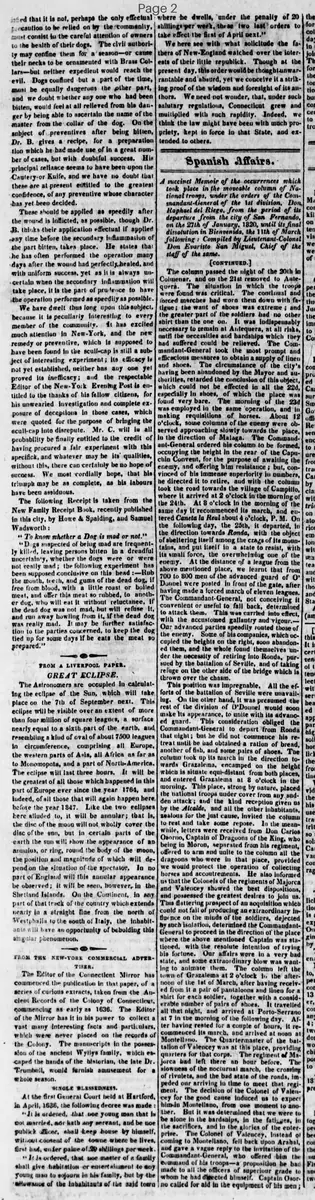
SINGLE BLESSEDNESS.
At the first General Court held at Hartford, in April, 1636, the following decree was made:
"It is ordered, that no young man that is not married, nor hath any servant, and be no publick officer, shall keep house by himself without consent of the towne where he lives, first had, under paine of 20 shillings per week.
"It is ordered, that no master of a family shall give habitation or entertainment to any young man to sojourn in his family, but by the allowance of the inhabitants of the said towne where he dwells, under the penalty of 20 shillings per week, these two last orders to take effect the first of April next."
We here see with what solicitude the fathers of New-England watched over the interests of their little republick. Though at the present day, this order would be thought unwarrantable and absurd, yet we conceive it a striking proof of the wisdom and foresight of its authors. We need not wonder, that, under such salutary regulations, Connecticut grew and multiplied with such rapidity. Indeed, we think the law might have been with much propriety, kept in force in that State, and extended to others.
At the first General Court held at Hartford, in April, 1636, the following decree was made:
"It is ordered, that no young man that is not married, nor hath any servant, and be no publick officer, shall keep house by himself without consent of the towne where he lives, first had, under paine of 20 shillings per week.
"It is ordered, that no master of a family shall give habitation or entertainment to any young man to sojourn in his family, but by the allowance of the inhabitants of the said towne where he dwells, under the penalty of 20 shillings per week, these two last orders to take effect the first of April next."
We here see with what solicitude the fathers of New-England watched over the interests of their little republick. Though at the present day, this order would be thought unwarrantable and absurd, yet we conceive it a striking proof of the wisdom and foresight of its authors. We need not wonder, that, under such salutary regulations, Connecticut grew and multiplied with such rapidity. Indeed, we think the law might have been with much propriety, kept in force in that State, and extended to others.
What sub-type of article is it?
Essay
What themes does it cover?
Social Manners
Political
What keywords are associated?
Colonial Decree
Single Blessedness
Hartford 1636
Connecticut Law
Social Regulation
Literary Details
Title
Single Blessedness.
Subject
Decree On Unmarried Young Men Keeping House In 1636 Hartford
Key Lines
It Is Ordered, That No Young Man That Is Not Married, Nor Hath Any Servant, And Be No Publick Officer, Shall Keep House By Himself Without Consent Of The Towne Where He Lives, First Had, Under Paine Of 20 Shillings Per Week.
It Is Ordered, That No Master Of A Family Shall Give Habitation Or Entertainment To Any Young Man To Sojourn In His Family, But By The Allowance Of The Inhabitants Of The Said Towne Where He Dwells, Under The Penalty Of 20 Shillings Per Week, These Two Last Orders To Take Effect The First Of April Next.