Thank you for visiting SNEWPapers!
Sign up free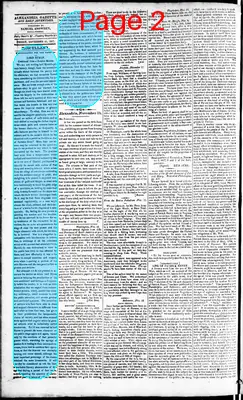
Literary
November 21, 1817
Alexandria Gazette & Daily Advertiser
Alexandria, Virginia
What is this article about?
A literary review analyzing Lord Byron's poetry, character, and popularity. It explores why he often portrays heroes with his own melancholic traits, attributing it to temperament, disguise, or defiance of critics. Despite uniformity, his genius maintains public acclaim over four years.
Clipping
OCR Quality
95%
Excellent
Full Text
MISCELLANY.
COMMUNICATED FOR THE GAZETTE.
LORD BYRON.
Continued from a London Review.
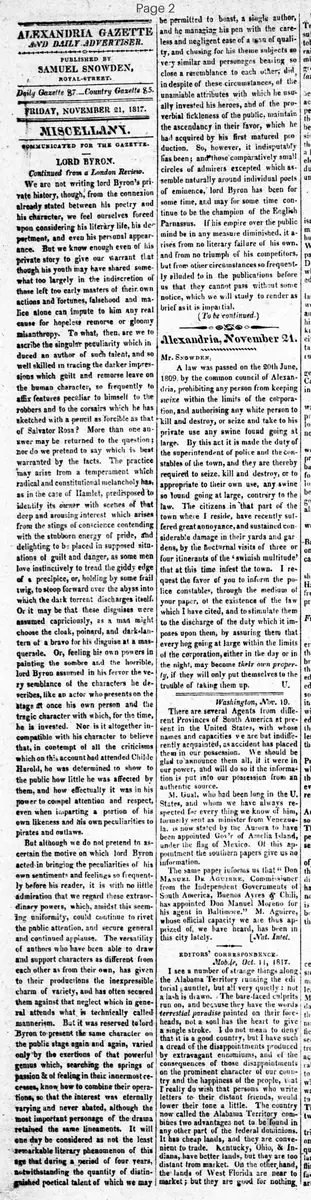
We are not writing lord Byron's private history, though, from the connexion already stated between his poetry and his character, we feel ourselves forced upon considering his literary life, his deportment, and even his personal appearance. But we know enough even of his private story to give our warrant that though his youth may have shared somewhat too largely in the indiscretion of those left too early masters of their own actions and fortunes, falsehood and malice alone can impute to him any real cause for hopeless remorse or gloomy misanthropy. To what, then, are we to ascribe the singular peculiarity which induced an author of such talent, and so well skilled in tracing the darker impressions which guilt and remorse leave on the human character, so frequently to affix features peculiar to himself to the robbers and to the corsairs which he has sketched with a pencil as forcible as that of Salvator Rosa? More than one answer may be returned to the question; nor do we pretend to say which is best warranted by the facts. The practice may arise from a temperament which radical and constitutional melancholy has, as in the case of Hamlet, predisposed to identify its owner with scenes of that deep and arousing interest which arises from the stings of conscience contending with the stubborn energy of pride, and delighting to be placed in supposed situations of guilt and danger, as some men love instinctively to tread the giddy edge of a precipice, or, holding by some frail twig, to stoop forward over the abyss into which the dark torrent discharges itself. Or it may be that these disguises were assumed capriciously, as a man might choose the cloak, poniard, and dark-lantern of a bravo for his disguise at a masquerade. Or, feeling his own powers in painting the sombre and the horrible, lord Byron assumed in his fervor the very semblance of the characters he describes, like an actor who presents on the stage at once his own person and the tragic character with which, for the time, he is invested. Nor is it altogether incompatible with his character to believe that, in contempt of all the criticisms which on this account had attended Childe Harold, he was determined to show to the public how little he was affected by them, and how effectually it was in his power to compel attention and respect, even when imparting a portion of his own likeness and his own peculiarities to pirates and outlaws. But although we do not pretend to ascertain the motive on which lord Byron acted in bringing the peculiarities of his own sentiments and feelings so frequently before his reader, it is with no little admiration that we regard these extraordinary powers, which, amidst this seeming uniformity, could continue to rivet the public attention, and secure general and continued applause. The versatility of authors who have been able to draw and support characters as different from each other as from their own, has given to their productions the inexpressible charm of variety, and has often secured them against that neglect which in general attends what is technically called mannerism. But it was reserved to lord Byron to present the same character on the public stage again and again, varied only by the exertions of that powerful genius which, searching the springs of passion and of feeling in their innermost recesses, knew how to combine their operations, so that the interest was eternally varying and never abated, although the most important personage of the drama retained the same lineaments. It will one day be considered as not the least remarkable literary phenomenon of this age that during a period of four years, notwithstanding the quantity of distinguished poetical talent of which we may be permitted to boast, a single author, and he managing his pen with the careless and negligent ease of a man of quality, and choosing for his theme subjects so very similar and personages bearing so close a resemblance to each other, did in despite of these circumstances, of the unamiable attributes with which he usually invested his heroes, and of the proverbial fickleness of the public, maintain the ascendancy in their favor, which he had acquired by his first matured production. So, however, it indisputably has been; and those comparatively small circles of admirers excepted which assemble naturally around individual poets of eminence, lord Byron has been for some time, and may for some time continue to be the champion of the English Parnassus. If his empire over the public mind be in any measure diminished, it arises from no literary failure of his own, and from no triumph of his competitors, but from other circumstances so frequently alluded to in the publications before us that they cannot pass without some notice, which we will study to render as brief as it is impartial.
(To be continued.)
COMMUNICATED FOR THE GAZETTE.
LORD BYRON.
Continued from a London Review.
We are not writing lord Byron's private history, though, from the connexion already stated between his poetry and his character, we feel ourselves forced upon considering his literary life, his deportment, and even his personal appearance. But we know enough even of his private story to give our warrant that though his youth may have shared somewhat too largely in the indiscretion of those left too early masters of their own actions and fortunes, falsehood and malice alone can impute to him any real cause for hopeless remorse or gloomy misanthropy. To what, then, are we to ascribe the singular peculiarity which induced an author of such talent, and so well skilled in tracing the darker impressions which guilt and remorse leave on the human character, so frequently to affix features peculiar to himself to the robbers and to the corsairs which he has sketched with a pencil as forcible as that of Salvator Rosa? More than one answer may be returned to the question; nor do we pretend to say which is best warranted by the facts. The practice may arise from a temperament which radical and constitutional melancholy has, as in the case of Hamlet, predisposed to identify its owner with scenes of that deep and arousing interest which arises from the stings of conscience contending with the stubborn energy of pride, and delighting to be placed in supposed situations of guilt and danger, as some men love instinctively to tread the giddy edge of a precipice, or, holding by some frail twig, to stoop forward over the abyss into which the dark torrent discharges itself. Or it may be that these disguises were assumed capriciously, as a man might choose the cloak, poniard, and dark-lantern of a bravo for his disguise at a masquerade. Or, feeling his own powers in painting the sombre and the horrible, lord Byron assumed in his fervor the very semblance of the characters he describes, like an actor who presents on the stage at once his own person and the tragic character with which, for the time, he is invested. Nor is it altogether incompatible with his character to believe that, in contempt of all the criticisms which on this account had attended Childe Harold, he was determined to show to the public how little he was affected by them, and how effectually it was in his power to compel attention and respect, even when imparting a portion of his own likeness and his own peculiarities to pirates and outlaws. But although we do not pretend to ascertain the motive on which lord Byron acted in bringing the peculiarities of his own sentiments and feelings so frequently before his reader, it is with no little admiration that we regard these extraordinary powers, which, amidst this seeming uniformity, could continue to rivet the public attention, and secure general and continued applause. The versatility of authors who have been able to draw and support characters as different from each other as from their own, has given to their productions the inexpressible charm of variety, and has often secured them against that neglect which in general attends what is technically called mannerism. But it was reserved to lord Byron to present the same character on the public stage again and again, varied only by the exertions of that powerful genius which, searching the springs of passion and of feeling in their innermost recesses, knew how to combine their operations, so that the interest was eternally varying and never abated, although the most important personage of the drama retained the same lineaments. It will one day be considered as not the least remarkable literary phenomenon of this age that during a period of four years, notwithstanding the quantity of distinguished poetical talent of which we may be permitted to boast, a single author, and he managing his pen with the careless and negligent ease of a man of quality, and choosing for his theme subjects so very similar and personages bearing so close a resemblance to each other, did in despite of these circumstances, of the unamiable attributes with which he usually invested his heroes, and of the proverbial fickleness of the public, maintain the ascendancy in their favor, which he had acquired by his first matured production. So, however, it indisputably has been; and those comparatively small circles of admirers excepted which assemble naturally around individual poets of eminence, lord Byron has been for some time, and may for some time continue to be the champion of the English Parnassus. If his empire over the public mind be in any measure diminished, it arises from no literary failure of his own, and from no triumph of his competitors, but from other circumstances so frequently alluded to in the publications before us that they cannot pass without some notice, which we will study to render as brief as it is impartial.
(To be continued.)
What sub-type of article is it?
Essay
What themes does it cover?
Moral Virtue
What keywords are associated?
Lord Byron
Poetry
Melancholy
Guilt
Remorse
Literary Criticism
Childe Harold
Corsairs
Public Ascendancy
Literary Details
Title
Lord Byron
Subject
Continued From A London Review
Form / Style
Critical Essay In Prose
Key Lines
To What, Then, Are We To Ascribe The Singular Peculiarity Which Induced An Author Of Such Talent... So Frequently To Affix Features Peculiar To Himself To The Robbers And To The Corsairs Which He Has Sketched With A Pencil As Forcible As That Of Salvator Rosa?
The Practice May Arise From A Temperament Which Radical And Constitutional Melancholy Has, As In The Case Of Hamlet, Predisposed To Identify Its Owner With Scenes Of That Deep And Arousing Interest Which Arises From The Stings Of Conscience Contending With The Stubborn Energy Of Pride...
But It Was Reserved To Lord Byron To Present The Same Character On The Public Stage Again And Again, Varied Only By The Exertions Of That Powerful Genius Which... Knew How To Combine Their Operations, So That The Interest Was Eternally Varying And Never Abated...
It Will One Day Be Considered As Not The Least Remarkable Literary Phenomenon Of This Age That During A Period Of Four Years... A Single Author... Did In Despite Of These Circumstances... Maintain The Ascendancy In Their Favor...