Thank you for visiting SNEWPapers!
Sign up free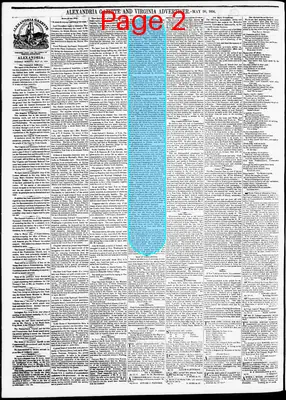
Story
May 20, 1856
Alexandria Gazette
Alexandria, Alexandria County, District Of Columbia
What is this article about?
Frontier settlers in the wilderness mount a desperate all-night battle against a massive forest fire advancing toward settlements, using trenches, back-fires, and a cleared road to eventually stop its destructive path after exhausting efforts amid intense heat and smoke.
Clipping

OCR Quality
98%
Excellent
Full Text
Fire Fighters.
Every spring we dwellers in the wilderness expect a fire campaign. A few days ago, a horseman dashed into our clearing and reported that a line of fire, two or three miles long, was sweeping rapidly down towards some distant settlements, jeopardizing the safety of property, etc. The "fire summons" must not be discarded. Mutual protection is backwoods law in every contingency. The fiery cross of the Highland chieftain was not more imperative. The withered foliage of the last season, and the branches torn down by the tempests of winter, annually supply sufficient substance for a hazardous fire; but when the wastes of three or four years accumulate, the conflagration is fearful. The devastating lines of fire sweep through the woods, tumbling many an old forest monarch from his pedestal, on which he has bid the storms of centuries defiance. Preceding fires had scorched and withered its body, as the tempests of passion sap the energies of the human texture, till the whole is prostrated by sweeping calamity, and mingled its ashes with those beneath. It is a theory well supported by reason, that the prairies of the West were once forest lands, the timber of which has been destroyed by oft-recurring fires.
Seizing our hoes and rakes—the most formidable weapons for the contest—we struck out for the scene of war. The first movement is to make a trench some rods in advance of the fire, extending the whole length of the line; then we set back-fires to widen it, and as the main element comes raging down, station ourselves along the trench to prevent its crossing, or to extinguish any wandering spark which reaches the disputed ground by an aerial flight.
Then comes the tug of the strife. Raging before the wind, crackling and seething in its onset, down come the billows of fire, driving before them heavy clouds of blinding smoke that roll murkily through the wild, while the grim sentinel is prostrated in the trench to escape the suffocating gases; yet watching with an eagle eye the advancing fire, lest it get beyond him and the long trench be made in vain. But it is quite probable that it will get over—the bark of some lifeless tree will be blown all blazing from its burning branches off through the smoke beyond the sentinel's ken, passing high above his head, and in a minute or two he is surrounded by fire, but with a little scorching in his transit he escapes the hot environs, and the fire getting a new foothold sweeps on till checked again.
Fighting fire is the most fatiguing work that we are obliged to do on the frontier. An Indian skirmish is not near so tedious. The intense heat and strong exertion brings out the perspiration in rivulets, and the thick smoke blinds and suffocates.
All night we labored on—trench after trench was opened without the desired effect, although we maintained a desperate conflict with our withering foe at every one; but our most strenuous exertions only arrested its progress for a brief moment, when it swept forward again with untiring vigor. It had driven us nearly five miles when we abandoned all hope of stopping it in the usual way. All hands were called off and marched to a road that lay through the forest a half-mile ahead of the fire, running at right angles with the direction it was advancing. Here all rubbish was carefully removed, the leaves raked back on each side, and back-fires set on the windward, and vigilantly watched.
Things looked well—after paying our devoirs to an ancient demijohn, things looked better. Our men dispersed along the road stationed themselves at intervals and awaited the charge. The fire was descending the opposite hill-side, burning fiercely, and reminded me of how the heroes of Fingal "swept on to battle like a ridge of fire," although I could not precisely appreciate the similarity of advancing squadrons and burning brush. Soon it was close on to our last defence, for if it crossed the road all hope of checking it would be lost, and thousands of acres of timber land badly damaged.
Far back as the eye could reach on the destroyer's path were scattered, here and there, trees blazing to the top, casting a fitful glare over the dreary desolate waste, revealing its blackened and smouldering ruins, while occasionally in the distance we could hear an old tree tumble from its charred stem, and a cloud of sparks rising above the woods told how it fell. "For days after a fire the old trees are hourly falling, some burning down in an hour and others requiring a week's time."
The fire came down upon us with a rush, but we pitched into the typical semblance of heroes so effectually and "fought" it so obstinately, that we triumphed, and belligerents on a bloodier field were never more willing to forego a contest than we. After placing sentinels to guard against an outbreak, we left the contested ground. Every fire kills more or less of the forest trees in proportion to its intensity, and in a few years these become seasoned and very readily burn down. Undoubtedly the "oak openings" of the West were formed in this manner.—Western Corr.
Every spring we dwellers in the wilderness expect a fire campaign. A few days ago, a horseman dashed into our clearing and reported that a line of fire, two or three miles long, was sweeping rapidly down towards some distant settlements, jeopardizing the safety of property, etc. The "fire summons" must not be discarded. Mutual protection is backwoods law in every contingency. The fiery cross of the Highland chieftain was not more imperative. The withered foliage of the last season, and the branches torn down by the tempests of winter, annually supply sufficient substance for a hazardous fire; but when the wastes of three or four years accumulate, the conflagration is fearful. The devastating lines of fire sweep through the woods, tumbling many an old forest monarch from his pedestal, on which he has bid the storms of centuries defiance. Preceding fires had scorched and withered its body, as the tempests of passion sap the energies of the human texture, till the whole is prostrated by sweeping calamity, and mingled its ashes with those beneath. It is a theory well supported by reason, that the prairies of the West were once forest lands, the timber of which has been destroyed by oft-recurring fires.
Seizing our hoes and rakes—the most formidable weapons for the contest—we struck out for the scene of war. The first movement is to make a trench some rods in advance of the fire, extending the whole length of the line; then we set back-fires to widen it, and as the main element comes raging down, station ourselves along the trench to prevent its crossing, or to extinguish any wandering spark which reaches the disputed ground by an aerial flight.
Then comes the tug of the strife. Raging before the wind, crackling and seething in its onset, down come the billows of fire, driving before them heavy clouds of blinding smoke that roll murkily through the wild, while the grim sentinel is prostrated in the trench to escape the suffocating gases; yet watching with an eagle eye the advancing fire, lest it get beyond him and the long trench be made in vain. But it is quite probable that it will get over—the bark of some lifeless tree will be blown all blazing from its burning branches off through the smoke beyond the sentinel's ken, passing high above his head, and in a minute or two he is surrounded by fire, but with a little scorching in his transit he escapes the hot environs, and the fire getting a new foothold sweeps on till checked again.
Fighting fire is the most fatiguing work that we are obliged to do on the frontier. An Indian skirmish is not near so tedious. The intense heat and strong exertion brings out the perspiration in rivulets, and the thick smoke blinds and suffocates.
All night we labored on—trench after trench was opened without the desired effect, although we maintained a desperate conflict with our withering foe at every one; but our most strenuous exertions only arrested its progress for a brief moment, when it swept forward again with untiring vigor. It had driven us nearly five miles when we abandoned all hope of stopping it in the usual way. All hands were called off and marched to a road that lay through the forest a half-mile ahead of the fire, running at right angles with the direction it was advancing. Here all rubbish was carefully removed, the leaves raked back on each side, and back-fires set on the windward, and vigilantly watched.
Things looked well—after paying our devoirs to an ancient demijohn, things looked better. Our men dispersed along the road stationed themselves at intervals and awaited the charge. The fire was descending the opposite hill-side, burning fiercely, and reminded me of how the heroes of Fingal "swept on to battle like a ridge of fire," although I could not precisely appreciate the similarity of advancing squadrons and burning brush. Soon it was close on to our last defence, for if it crossed the road all hope of checking it would be lost, and thousands of acres of timber land badly damaged.
Far back as the eye could reach on the destroyer's path were scattered, here and there, trees blazing to the top, casting a fitful glare over the dreary desolate waste, revealing its blackened and smouldering ruins, while occasionally in the distance we could hear an old tree tumble from its charred stem, and a cloud of sparks rising above the woods told how it fell. "For days after a fire the old trees are hourly falling, some burning down in an hour and others requiring a week's time."
The fire came down upon us with a rush, but we pitched into the typical semblance of heroes so effectually and "fought" it so obstinately, that we triumphed, and belligerents on a bloodier field were never more willing to forego a contest than we. After placing sentinels to guard against an outbreak, we left the contested ground. Every fire kills more or less of the forest trees in proportion to its intensity, and in a few years these become seasoned and very readily burn down. Undoubtedly the "oak openings" of the West were formed in this manner.—Western Corr.
What sub-type of article is it?
Disaster
Survival
Heroic Act
What themes does it cover?
Catastrophe
Bravery Heroism
Survival
What keywords are associated?
Forest Fire
Wilderness Firefighting
Back Fires
Frontier Life
Prairies Formation
Tree Destruction
Where did it happen?
Wilderness Of The West
Story Details
Location
Wilderness Of The West
Event Date
Spring
Story Details
Dwellers in the wilderness respond to a report of a rapidly advancing forest fire threatening settlements by digging trenches, setting back-fires, and enduring intense labor through the night; after multiple failures, they successfully halt the fire along a cleared road, preventing widespread damage.