Thank you for visiting SNEWPapers!
Sign up free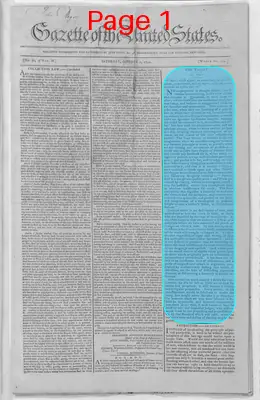
Literary
October 2, 1790
Gazette Of The United States
New York, New York County, New York
What is this article about?
This essay from The Tablet No. CXLV reflects on how personal investment leads people to overvalue their professions and cherished principles, often turning debate into quixotic obsession. It critiques polemic skill in religion and politics, urging pursuit of truth over theory and warning against indifference to moral distinctions.
Clipping
OCR Quality
98%
Excellent
Full Text
THE TABLET.
No. CXLV.
"Every object assumes an importance, in our estimation, proportioned, in some degree, to the labor and attention we bestow upon it."
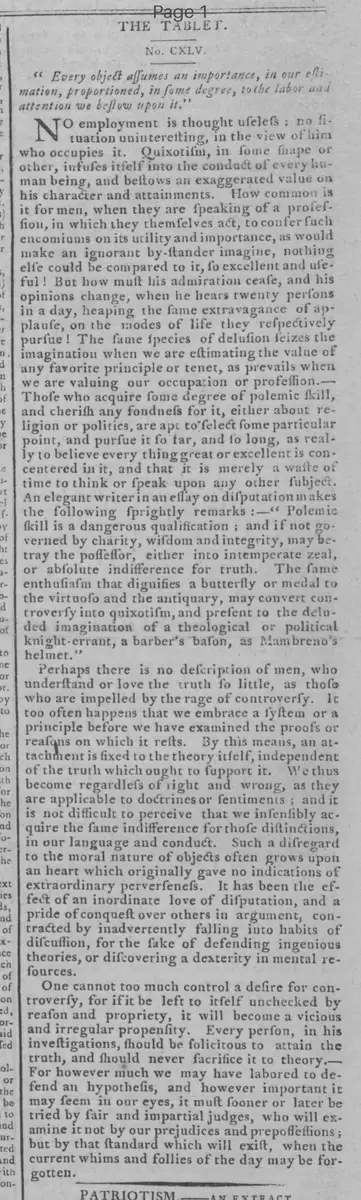
No employment is thought useless; no situation uninteresting, in the view of him who occupies it. Quixotism, in some shape or other, infuses itself into the conduct of every human being, and bestows an exaggerated value on his character and attainments. How common is it for men, when they are speaking of a profession, in which they themselves act, to confer such encomiums on its utility and importance, as would make an ignorant by-stander imagine, nothing else could be compared to it, so excellent and useful! But how must his admiration cease, and his opinions change, when he hears twenty persons in a day, heaping the same extravagance of applause, on the modes of life they respectively pursue! The same species of delusion seizes the imagination when we are estimating the value of any favorite principle or tenet, as prevails when we are valuing our occupation or profession. Those who acquire some degree of polemic skill, and cherish any fondness for it, either about religion or politics, are apt to select some particular point, and pursue it so far, and so long, as really to believe every thing great or excellent is concentrated in it, and that it is merely a waste of time to think or speak upon any other subject.
An elegant writer in an essay on disputation makes the following sprightly remarks: - "Polemic skill is a dangerous qualification; and if not governed by charity, wisdom and integrity, may betray the possessor, either into intemperate zeal, or absolute indifference for truth. The same enthusiasm that dignifies a butterfly or medal to the virtuoso and the antiquary, may convert controversy into quixotism, and present to the deluded imagination of a theological or political knight-errant, a barber's basin, as Mambrino's helmet."
Perhaps there is no description of men, who understand or love the truth so little, as those who are impelled by the rage of controversy. It too often happens that we embrace a system or a principle before we have examined the proofs or reasons on which it rests. By this means, an attachment is fixed to the theory itself, independent of the truth which ought to support it. We thus become regardless of right and wrong, as they are applicable to doctrines or sentiments; and it is not difficult to perceive that we insensibly acquire the same indifference for those distinctions, in our language and conduct. Such a disregard to the moral nature of objects often grows upon an heart which originally gave no indications of extraordinary perverseness. It has been the effect of an inordinate love of disputation, and a pride of conquest over others in argument, contracted by inadvertently falling into habits of discussion, for the sake of defending ingenious theories, or discovering a dexterity in mental resources.
One cannot too much control a desire for controversy, for if it be left to itself unchecked by reason and propriety, it will become a vicious and irregular propensity. Every person, in his investigations, should be solicitous to attain the truth, and should never sacrifice it to theory. For however much we may have labored to defend an hypothesis, and however important it may seem in our eyes, it must sooner or later be tried by fair and impartial judges, who will examine it not by our prejudices and prepossessions; but by that standard which will exist, when the current whims and follies of the day may be forgotten.
No. CXLV.
"Every object assumes an importance, in our estimation, proportioned, in some degree, to the labor and attention we bestow upon it."
No employment is thought useless; no situation uninteresting, in the view of him who occupies it. Quixotism, in some shape or other, infuses itself into the conduct of every human being, and bestows an exaggerated value on his character and attainments. How common is it for men, when they are speaking of a profession, in which they themselves act, to confer such encomiums on its utility and importance, as would make an ignorant by-stander imagine, nothing else could be compared to it, so excellent and useful! But how must his admiration cease, and his opinions change, when he hears twenty persons in a day, heaping the same extravagance of applause, on the modes of life they respectively pursue! The same species of delusion seizes the imagination when we are estimating the value of any favorite principle or tenet, as prevails when we are valuing our occupation or profession. Those who acquire some degree of polemic skill, and cherish any fondness for it, either about religion or politics, are apt to select some particular point, and pursue it so far, and so long, as really to believe every thing great or excellent is concentrated in it, and that it is merely a waste of time to think or speak upon any other subject.
An elegant writer in an essay on disputation makes the following sprightly remarks: - "Polemic skill is a dangerous qualification; and if not governed by charity, wisdom and integrity, may betray the possessor, either into intemperate zeal, or absolute indifference for truth. The same enthusiasm that dignifies a butterfly or medal to the virtuoso and the antiquary, may convert controversy into quixotism, and present to the deluded imagination of a theological or political knight-errant, a barber's basin, as Mambrino's helmet."
Perhaps there is no description of men, who understand or love the truth so little, as those who are impelled by the rage of controversy. It too often happens that we embrace a system or a principle before we have examined the proofs or reasons on which it rests. By this means, an attachment is fixed to the theory itself, independent of the truth which ought to support it. We thus become regardless of right and wrong, as they are applicable to doctrines or sentiments; and it is not difficult to perceive that we insensibly acquire the same indifference for those distinctions, in our language and conduct. Such a disregard to the moral nature of objects often grows upon an heart which originally gave no indications of extraordinary perverseness. It has been the effect of an inordinate love of disputation, and a pride of conquest over others in argument, contracted by inadvertently falling into habits of discussion, for the sake of defending ingenious theories, or discovering a dexterity in mental resources.
One cannot too much control a desire for controversy, for if it be left to itself unchecked by reason and propriety, it will become a vicious and irregular propensity. Every person, in his investigations, should be solicitous to attain the truth, and should never sacrifice it to theory. For however much we may have labored to defend an hypothesis, and however important it may seem in our eyes, it must sooner or later be tried by fair and impartial judges, who will examine it not by our prejudices and prepossessions; but by that standard which will exist, when the current whims and follies of the day may be forgotten.
What sub-type of article is it?
Essay
What themes does it cover?
Moral Virtue
Political
Religious
What keywords are associated?
Controversy
Polemic
Quixotism
Truth
Disputation
Moral Indifference
Theory Vs Truth
Literary Details
Title
The Tablet. No. Cxlv.
Subject
On Disputation And The Pursuit Of Truth
Form / Style
Prose Reflection On Controversy
Key Lines
"Polemic Skill Is A Dangerous Qualification; And If Not Governed By Charity, Wisdom And Integrity, May Betray The Possessor, Either Into Intemperate Zeal, Or Absolute Indifference For Truth."
"The Same Enthusiasm That Dignifies A Butterfly Or Medal To The Virtuoso And The Antiquary, May Convert Controversy Into Quixotism, And Present To The Deluded Imagination Of A Theological Or Political Knight Errant, A Barber's Basin, As Mambrino's Helmet."
Every Person, In His Investigations, Should Be Solicitous To Attain The Truth, And Should Never Sacrifice It To Theory.