Thank you for visiting SNEWPapers!
Sign up free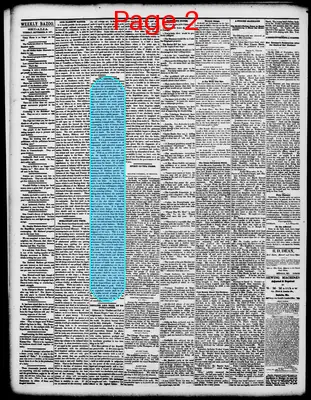
Editorial
September 25, 1877
The Sedalia Weekly Bazoo
Sedalia, Pettis County, Missouri
What is this article about?
Editorial opposes government intervention for protectionists and workingmen, labeling labor demands as beggary and robbery. Advocates patience, economy, and individual industry amid economic depression post-Civil War, criticizing organized labor as a threat to society.
Clipping

OCR Quality
95%
Excellent
Full Text
CLASS LEGISLATION.
There are two classes in this country who desire government intervention. These are the protectionists, whether manufacturers or workingmen.
Both are opposed to the genius of Democracy and neither should receive any aid or comfort from it. An industry that is not able to protect itself in legitimate trade is not worth preserving.
A laborer who wants government intervention to give him more wages than he earns, is simply a beggar, and is deserving of no more consideration than a public pauper. The tenderness with which the newspapers are dealing with the workingmen's organization is simple folly. They are encouraging a class of hornets which would sting, if they had the power, not only the republic but civilization itself to death. The hard times are no more oppressive to labor than it is to capital. All classes and conditions feel it. It is a prevalent and periodic depression which is common to all commercial and industrial communities.
It is especially an incident of such great convulsions as our civil war.
With us, as with all other people, the remedy is in patience and economy. In this country, there is no good reason why any class of people should want for bread. If one industry ceases to be remunerative, another can be sought, and back of all lies a continent of limitless prairies and teeming forests waiting for the husbandman and inviting settlement. It requires no capital but industry - no genius but labor. As long as these exist in such boundless profusion, the exactions of the workingmen, stripped of the surplusage of cant, is nothing but a menacing robbery. It is simply asking that the farmer, the merchant, the lawyer, the banker, the capitalist - every class of industry except that of the day laborer - shall be taxed to give them higher wages than their industry earns. It is demanding that every farmer who ships a bushel of wheat shall pay a cent more for its transportation than the freight is worth, so as to keep up the wages of the railroad laborer. It never occurs to the railroad man that he should go into some other business. He likes railroading, and he wants the community to give him a gratuity for the indulgence of his taste. This is a fair and legitimate analysis of the demands of the working men who are organizing for the purpose of menacing the government into making laws for them as a class.
They want to make industry a pensioner and labor a beggar - They seek to become the stipendiaries of economy and thrift, and demand that the toiling farmer and the hard worked merchant - the men whose genius and industry has webbed the iron avenues of trade and commerce and whose accumulations are the result of an obedience to that homely maxim which bids all to live within their income - shall be taxed for the benefit of a class who only wish to work eight hours a day, while being paid for twelve. They make a virtue of their improvidence and ask that thrift shall make it good. Until organized labor which is degenerating into organized tumult shall be told plain truths, instead of being petted by the press of the country, its unreasoning fanaticism will be the bane of constituted society.
There are two classes in this country who desire government intervention. These are the protectionists, whether manufacturers or workingmen.
Both are opposed to the genius of Democracy and neither should receive any aid or comfort from it. An industry that is not able to protect itself in legitimate trade is not worth preserving.
A laborer who wants government intervention to give him more wages than he earns, is simply a beggar, and is deserving of no more consideration than a public pauper. The tenderness with which the newspapers are dealing with the workingmen's organization is simple folly. They are encouraging a class of hornets which would sting, if they had the power, not only the republic but civilization itself to death. The hard times are no more oppressive to labor than it is to capital. All classes and conditions feel it. It is a prevalent and periodic depression which is common to all commercial and industrial communities.
It is especially an incident of such great convulsions as our civil war.
With us, as with all other people, the remedy is in patience and economy. In this country, there is no good reason why any class of people should want for bread. If one industry ceases to be remunerative, another can be sought, and back of all lies a continent of limitless prairies and teeming forests waiting for the husbandman and inviting settlement. It requires no capital but industry - no genius but labor. As long as these exist in such boundless profusion, the exactions of the workingmen, stripped of the surplusage of cant, is nothing but a menacing robbery. It is simply asking that the farmer, the merchant, the lawyer, the banker, the capitalist - every class of industry except that of the day laborer - shall be taxed to give them higher wages than their industry earns. It is demanding that every farmer who ships a bushel of wheat shall pay a cent more for its transportation than the freight is worth, so as to keep up the wages of the railroad laborer. It never occurs to the railroad man that he should go into some other business. He likes railroading, and he wants the community to give him a gratuity for the indulgence of his taste. This is a fair and legitimate analysis of the demands of the working men who are organizing for the purpose of menacing the government into making laws for them as a class.
They want to make industry a pensioner and labor a beggar - They seek to become the stipendiaries of economy and thrift, and demand that the toiling farmer and the hard worked merchant - the men whose genius and industry has webbed the iron avenues of trade and commerce and whose accumulations are the result of an obedience to that homely maxim which bids all to live within their income - shall be taxed for the benefit of a class who only wish to work eight hours a day, while being paid for twelve. They make a virtue of their improvidence and ask that thrift shall make it good. Until organized labor which is degenerating into organized tumult shall be told plain truths, instead of being petted by the press of the country, its unreasoning fanaticism will be the bane of constituted society.
What sub-type of article is it?
Labor
Economic Policy
What keywords are associated?
Class Legislation
Government Intervention
Protectionists
Workingmen
Labor Organizations
Hard Times
Economic Depression
Civil War
Patience And Economy
Organized Labor
What entities or persons were involved?
Protectionists
Workingmen
Manufacturers
Laborers
Farmers
Merchants
Capitalists
Newspapers
Editorial Details
Primary Topic
Opposition To Class Legislation Favoring Protectionists And Workingmen
Stance / Tone
Strongly Anti Labor Organization And Anti Protectionism
Key Figures
Protectionists
Workingmen
Manufacturers
Laborers
Farmers
Merchants
Capitalists
Newspapers
Key Arguments
Protectionists And Workingmen Oppose Democratic Principles And Should Receive No Government Aid
Industries Unable To Compete In Free Trade Are Not Worth Saving
Laborers Demanding Higher Wages Via Government Are Beggars Undeserving Of Consideration
Newspapers Foolishly Encourage Dangerous Workingmen's Organizations
Hard Times Affect All Classes Equally; Remedy Is Patience And Economy
Abundant Land Opportunities Exist For Those Willing To Work
Labor Demands Amount To Taxing Other Classes For Unearned Wages
Examples Include Higher Freight Costs To Subsidize Railroad Workers
Organized Labor Seeks To Make Industry A Pensioner And Live Off Thrift
Press Should Tell Plain Truths To Curb Labor's Fanaticism