Thank you for visiting SNEWPapers!
Sign up free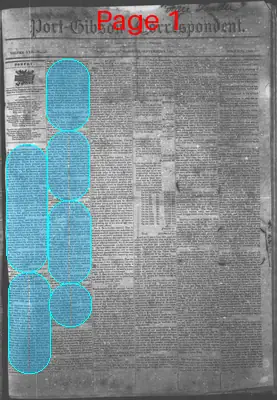
Literary
September 9, 1843
The Port Gibson Correspondent
Port Gibson, Claiborne County, Mississippi
What is this article about?
In ancient Saxon times during a war with the Danes, Duke Adelbero vows escalating sacrifices, culminating in his wife and child, to the gods for victory. After triumph, he prepares the act but a divine thunderbolt melts his sword, saving them and annulling the vow.
Clipping
OCR Quality
95%
Excellent
Full Text
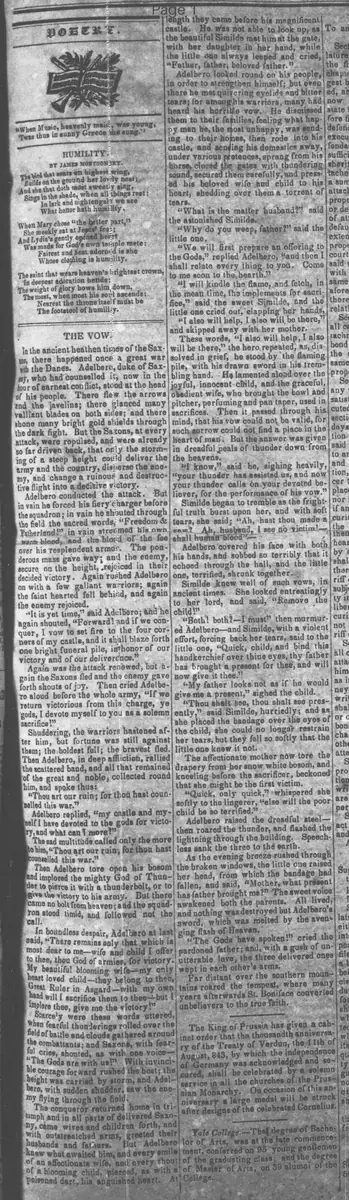
THE VOW
In the ancient heathen times of the Saxons, there happened once a great war with the Danes. Adelbero duke of Saxony, who had counselled it, now in the hour of earnest conflict, stood at the head of his people. There flew the arrows and the javelins; there clashed many valiant blades on both sides; and there shone many bright gold shields through the dark fight. But the Saxons, at every attack, were repulsed, and were already so far driven back, that only the storming of a steep height could deliver the army and the country, disperse the enemy, and change a ruinous and destructive flight into a decisive victory.
Adelbero conducted the attack. But in vain he forced his fiery charger before the squadron; in vain he shouted through the field the sacred words, "Freedom & Fatherland!" in vain streamed his own warm blood, and the blood of the foe over his resplendent armor. The ponderous mass gave way; and the enemy, secure on the height, rejoiced in their decided victory. Again rushed Adelbero on with a few gallant warriors; again the faint hearted fell behind, and again the enemy rejoiced.
"It is yet time," said Adelbero; and he again shouted, "Forward! and if we conquer, I vow to set fire to the four corners of my castle, and it shall blaze forth one bright funeral pile, in honor of our victory and of our deliverance."
Again was the attack renewed, but again the Saxons fled and the enemy gave forth shouts of joy. Then cried Adelbero aloud before the whole army, "If we return victorious from this charge, ye gods, I devote myself to you as a solemn sacrifice!"
Shuddering, the warriors hastened after him, but fortune was still against them: the boldest fell: the bravest fled. Then Adelbero, in deep affliction, rallied the scattered band, and all that remained of the great and noble, collected round him, and spoke thus:
"Thou art our ruin: for thou hast counselled this war."
Adelbero replied, "my castle and myself I have devoted to the gods for victory, and what can I more?"
The sad multitude called only the more to him, "Thou art our ruin for thou hast counselled this war."
Then Adelbero tore open his bosom and implored the mighty God of Thunder to pierce it with a thunderbolt, or to give the victory to his army. But there came no bolt from heaven; and the squadron stood timid, and followed not the call.
In boundless despair, Adelbero at last said, "There remains only that which is most dear to me—wife and child I offer to thee, thou God of armies, for victory. My beautiful blooming wife—my only heart loved child—they belong to thee, Great Ruler in Asgard—with my own hand will I sacrifice them to thee but I implore thee, give me the victory!"
Scarcely were these words uttered, when fearful thunderings rolled over the field of battle and clouds gathered around the combatants; and Saxons, with fearful cries, shouted, as with one voice—“The Gods are with us!” With invincible courage forward rushed the host; the height was carried by storm, and Adelbero, with sudden shudder, saw the enemy flying through the field.
The conqueror returned home in triumph and in all parts of delivered Saxony, came wives and children forth, and with outstretched arms, greeted their husbands and fathers. But Adelbero knew what awaited him, and every smile of an affectionate wife, and every shout of a blooming child, pierced, as with a poisoned dart, his anguished heart. At length they came before his magnificent castle. He was not able to look up, as the beautiful Similde met him at the gate, with her daughter in her hand, while the little one always leaped and cried, "Father, father, beloved father."
Adelbero looked round on his people, in order to strengthen himself; but even there he met quivering eyelids and bitter tears; for among his warriors, many had heard his horrible vow. He dismissed them to their families, feeling what happy men he, the most unhappy, was sending to their homes, then rode into his castle, and sending his domestics away, under various pretences, sprang from his horse, closed the gates with thundering sound, secured them carefully, and pressed his beloved wife and child to his heart, shedding over them a torrent of tears.
"What is the matter husband?" said the astonished Similde.
"Why do you weep, father?" said the little one.
"We will first prepare an offering to the Gods," replied Adelbero, "and then I shall relate every thing to you. Come to me soon to the hearth."
"I will kindle the flame, and fetch, in the mean time, the implements of sacrifice," said the sweet Similde, and the little one cried out, clapping her hands, "I also will help, I also will be there," and skipped away with her mother.
These words, "I also will help, I also will be there," the hero repeated, as, dissolved in grief, he stood by the flaming pile, with his drawn sword in his trembling hand. He lamented aloud over the joyful, innocent child, and the graceful, obedient wife, who brought the bowl and pitcher, perfuming and palm taper, used in sacrifices. Then it passed through his mind, that his vow could not be valid, for such sorrow could not find a place in the heart of man. But the answer was given in dreadful peals of thunder down from the heavens.
"I know," said he, sighing heavily, "your thunder has assisted us, and now your thunder calls on your devoted believer, for the performance of his vow."
Similde began to tremble as the frightful truth burst upon her, and with soft tears, she said; "Ah, hast thou made a vow? Ah, husband, I see no victim! shall human blood"
Adelbero covered his face with both his hands, and sobbed so terribly that it echoed through the hall, and the little one, terrified, shrunk together.
Similde knew well of such vows, in ancient times. She looked entreatingly to her lord, and said, "Remove the child!"
"Both! both!—I must" then murmured Adelbero—and Similde, with a violent effort, forcing back her tears, said to the little one, "Quick, child, and bind this handkerchief over thine eyes, thy father has brought a present for thee, and will now give it thee."
"My father looks not as if he would give me a present," sighed the child.
"Thou shalt see, thou shalt see presently." said Similde, hurriedly; and as she placed the bandage over the eyes of the child, she could no longer restrain her tears, but they fell so softly that the little one knew it not.
The affectionate mother now tore the drapery from her snow white bosom, and kneeling before the sacrificer, beckoned that she might be the first victim.
"Quick, only quick," whispered she softly to the lingerer, "else will the poor child be so terrified."
Adelbero raised the dreadful steel—then roared the thunder, and flashed the lightning through the building. Speechless sank the three to the earth.
As the evening breeze rushed through the broken windows, the little one raised her head, from which the bandage had fallen, and said, "Mother, what present has father brought me?" The sweet voice awakened both the parents. All lived. The sword, which was melted by the avenging flash of Heaven, and nothing was destroyed but Adelbero's vow.
"The Gods have spoken!" cried the pardoned father; and, with a gush of unutterable love, the three delivered ones wept in each other's arms.
Far distant over the southern mountains roared the tempest, where many years afterwards St. Boniface converted unbelievers to the true faith.
In the ancient heathen times of the Saxons, there happened once a great war with the Danes. Adelbero duke of Saxony, who had counselled it, now in the hour of earnest conflict, stood at the head of his people. There flew the arrows and the javelins; there clashed many valiant blades on both sides; and there shone many bright gold shields through the dark fight. But the Saxons, at every attack, were repulsed, and were already so far driven back, that only the storming of a steep height could deliver the army and the country, disperse the enemy, and change a ruinous and destructive flight into a decisive victory.
Adelbero conducted the attack. But in vain he forced his fiery charger before the squadron; in vain he shouted through the field the sacred words, "Freedom & Fatherland!" in vain streamed his own warm blood, and the blood of the foe over his resplendent armor. The ponderous mass gave way; and the enemy, secure on the height, rejoiced in their decided victory. Again rushed Adelbero on with a few gallant warriors; again the faint hearted fell behind, and again the enemy rejoiced.
"It is yet time," said Adelbero; and he again shouted, "Forward! and if we conquer, I vow to set fire to the four corners of my castle, and it shall blaze forth one bright funeral pile, in honor of our victory and of our deliverance."
Again was the attack renewed, but again the Saxons fled and the enemy gave forth shouts of joy. Then cried Adelbero aloud before the whole army, "If we return victorious from this charge, ye gods, I devote myself to you as a solemn sacrifice!"
Shuddering, the warriors hastened after him, but fortune was still against them: the boldest fell: the bravest fled. Then Adelbero, in deep affliction, rallied the scattered band, and all that remained of the great and noble, collected round him, and spoke thus:
"Thou art our ruin: for thou hast counselled this war."
Adelbero replied, "my castle and myself I have devoted to the gods for victory, and what can I more?"
The sad multitude called only the more to him, "Thou art our ruin for thou hast counselled this war."
Then Adelbero tore open his bosom and implored the mighty God of Thunder to pierce it with a thunderbolt, or to give the victory to his army. But there came no bolt from heaven; and the squadron stood timid, and followed not the call.
In boundless despair, Adelbero at last said, "There remains only that which is most dear to me—wife and child I offer to thee, thou God of armies, for victory. My beautiful blooming wife—my only heart loved child—they belong to thee, Great Ruler in Asgard—with my own hand will I sacrifice them to thee but I implore thee, give me the victory!"
Scarcely were these words uttered, when fearful thunderings rolled over the field of battle and clouds gathered around the combatants; and Saxons, with fearful cries, shouted, as with one voice—“The Gods are with us!” With invincible courage forward rushed the host; the height was carried by storm, and Adelbero, with sudden shudder, saw the enemy flying through the field.
The conqueror returned home in triumph and in all parts of delivered Saxony, came wives and children forth, and with outstretched arms, greeted their husbands and fathers. But Adelbero knew what awaited him, and every smile of an affectionate wife, and every shout of a blooming child, pierced, as with a poisoned dart, his anguished heart. At length they came before his magnificent castle. He was not able to look up, as the beautiful Similde met him at the gate, with her daughter in her hand, while the little one always leaped and cried, "Father, father, beloved father."
Adelbero looked round on his people, in order to strengthen himself; but even there he met quivering eyelids and bitter tears; for among his warriors, many had heard his horrible vow. He dismissed them to their families, feeling what happy men he, the most unhappy, was sending to their homes, then rode into his castle, and sending his domestics away, under various pretences, sprang from his horse, closed the gates with thundering sound, secured them carefully, and pressed his beloved wife and child to his heart, shedding over them a torrent of tears.
"What is the matter husband?" said the astonished Similde.
"Why do you weep, father?" said the little one.
"We will first prepare an offering to the Gods," replied Adelbero, "and then I shall relate every thing to you. Come to me soon to the hearth."
"I will kindle the flame, and fetch, in the mean time, the implements of sacrifice," said the sweet Similde, and the little one cried out, clapping her hands, "I also will help, I also will be there," and skipped away with her mother.
These words, "I also will help, I also will be there," the hero repeated, as, dissolved in grief, he stood by the flaming pile, with his drawn sword in his trembling hand. He lamented aloud over the joyful, innocent child, and the graceful, obedient wife, who brought the bowl and pitcher, perfuming and palm taper, used in sacrifices. Then it passed through his mind, that his vow could not be valid, for such sorrow could not find a place in the heart of man. But the answer was given in dreadful peals of thunder down from the heavens.
"I know," said he, sighing heavily, "your thunder has assisted us, and now your thunder calls on your devoted believer, for the performance of his vow."
Similde began to tremble as the frightful truth burst upon her, and with soft tears, she said; "Ah, hast thou made a vow? Ah, husband, I see no victim! shall human blood"
Adelbero covered his face with both his hands, and sobbed so terribly that it echoed through the hall, and the little one, terrified, shrunk together.
Similde knew well of such vows, in ancient times. She looked entreatingly to her lord, and said, "Remove the child!"
"Both! both!—I must" then murmured Adelbero—and Similde, with a violent effort, forcing back her tears, said to the little one, "Quick, child, and bind this handkerchief over thine eyes, thy father has brought a present for thee, and will now give it thee."
"My father looks not as if he would give me a present," sighed the child.
"Thou shalt see, thou shalt see presently." said Similde, hurriedly; and as she placed the bandage over the eyes of the child, she could no longer restrain her tears, but they fell so softly that the little one knew it not.
The affectionate mother now tore the drapery from her snow white bosom, and kneeling before the sacrificer, beckoned that she might be the first victim.
"Quick, only quick," whispered she softly to the lingerer, "else will the poor child be so terrified."
Adelbero raised the dreadful steel—then roared the thunder, and flashed the lightning through the building. Speechless sank the three to the earth.
As the evening breeze rushed through the broken windows, the little one raised her head, from which the bandage had fallen, and said, "Mother, what present has father brought me?" The sweet voice awakened both the parents. All lived. The sword, which was melted by the avenging flash of Heaven, and nothing was destroyed but Adelbero's vow.
"The Gods have spoken!" cried the pardoned father; and, with a gush of unutterable love, the three delivered ones wept in each other's arms.
Far distant over the southern mountains roared the tempest, where many years afterwards St. Boniface converted unbelievers to the true faith.
What sub-type of article is it?
Prose Fiction
What themes does it cover?
War Peace
Religious
Moral Virtue
What keywords are associated?
Saxon War
Danish Invasion
Duke Adelbero
Human Sacrifice
Divine Intervention
Family Vow
Thunder God
Literary Details
Title
The Vow
Key Lines
"Forward! And If We Conquer, I Vow To Set Fire To The Four Corners Of My Castle, And It Shall Blaze Forth One Bright Funeral Pile, In Honor Of Our Victory And Of Our Deliverance."
"If We Return Victorious From This Charge, Ye Gods, I Devote Myself To You As A Solemn Sacrifice!"
"There Remains Only That Which Is Most Dear To Me—Wife And Child I Offer To Thee, Thou God Of Armies, For Victory. My Beautiful Blooming Wife—My Only Heart Loved Child—They Belong To Thee, Great Ruler In Asgard—With My Own Hand Will I Sacrifice Them To Thee But I Implore Thee, Give Me The Victory!"
"The Gods Have Spoken!" Cried The Pardoned Father; And, With A Gush Of Unutterable Love, The Three Delivered Ones Wept In Each Other's Arms.