Thank you for visiting SNEWPapers!
Sign up free
The Cecil Whig
Elkton, Cecil County, Maryland
What is this article about?
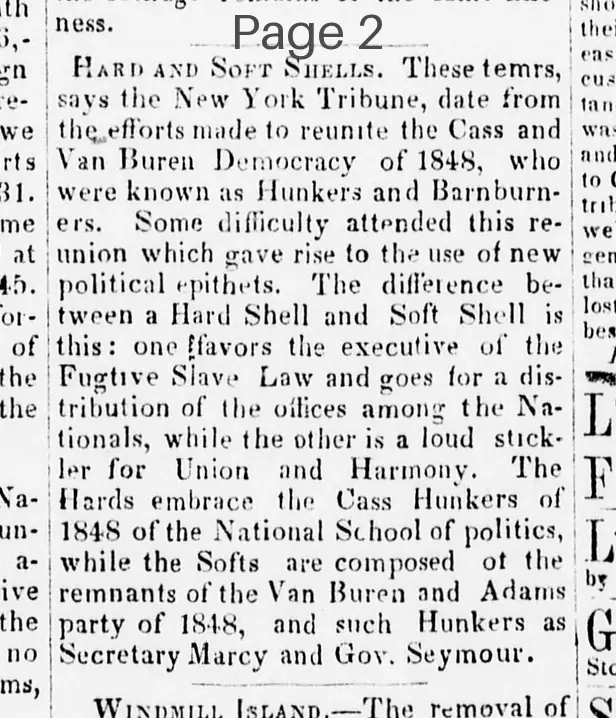
The New York Tribune explains the origins of 'Hard Shell' and 'Soft Shell' political terms from the 1848 reunion efforts between Cass and Van Buren Democrats, known as Hunkers and Barnburners. Hards support Fugitive Slave Law execution and national office distribution; Softs emphasize Union and Harmony, comprising Van Buren-Adams remnants and some Hunkers like Marcy and Seymour.
Clipping
OCR Quality
Full Text
What sub-type of article is it?
What keywords are associated?
What entities or persons were involved?
Domestic News Details
Event Date
1848
Key Persons
Event Details
Terms 'Hard Shell' and 'Soft Shell' originated from 1848 reunion efforts of Cass and Van Buren Democrats (Hunkers and Barnburners). Hards favor Fugitive Slave Law execution and national office distribution; Softs prioritize Union and Harmony, including Van Buren-Adams remnants and Hunkers like Marcy and Seymour.