Thank you for visiting SNEWPapers!
Sign up free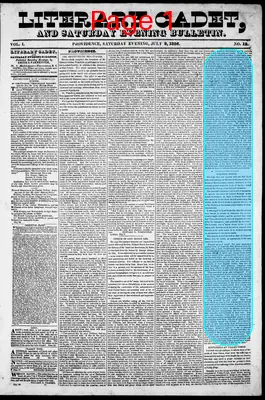
Literary
July 8, 1826
Literary Cadet, And Saturday Evening Bulletin
Providence, Providence County, Rhode Island
What is this article about?
Introduction to Colonel Barre's vehement speech in British Parliament, replying to Lord Granville's bill allowing quartering of soldiers in colonial homes. Barre defends colonists, refuting claims that England planted, nourished, and protected them, attributing their success to fleeing tyranny and self-reliance.
Clipping

OCR Quality
95%
Excellent
Full Text
COLONEL BARRE.
We trust that our readers will not find fault with us for placing on the face of this paper, the effusions of Revolutionary orators, delivered at that eventful period when the trials of the day called forth all the feelings of patriots and statesmen.
The annexed vehement—not to call it impassioned—speech, was made by Colonel Barre, in the British Parliament, in reply to George Granville who ventured to introduce his bill authorizing the officers of the British Army to quarter the soldiers of His Majesty, in the houses of the citizens of these then colonies.
It was urged by Lord Granville, that the colonies were bound to submit to whatever the mother country might dictate; and he avowed that they had "been planted by the cares of England, nourished by her indulgence, and protected by her arms."
The Colonel, was a warm friend to the United States, and determined in his zeal to support their interest, so far as he could do it, without abjuring his attachment to his native realm.
This speech, as well as that of General Henry Lee, we insert, as appropriate to the incidents of the week.
Planted by your cares? No! your oppression planted them in America; they fled from your tyranny, into a then uncultivated land, where they were exposed to almost all the hardships to which human nature is liable, and among others, to the savage cruelty of the enemy of the country, a people the most subtle, and, I take upon me to say, the most truly terrible, of any people that ever inhabited any part of God's earth; and yet, actuated by principles of true English liberty, they met all these hardships with pleasure, compared with those they suffered in their own country, from the hands of those that should have been their friends.
"They nourished up by your indulgence? They grew by your neglect: as soon as you began to care about them, that care was exercised in sending persons to rule over them, in one department and another, who were perhaps, the deputies of the deputies of some members of this house, sent to spy out their liberty, to misrepresent their actions, and to prey upon them; men, whose behavior, on many occasions, has caused the blood of these sons of liberty to recoil within them; men, promoted to the highest seats of justice, some of whom, to my knowledge, were glad, by going to foreign countries, to escape the vengeance of the laws in their own.
"They protected by your arms? They have nobly taken up arms in your defence, have exerted their valor amidst their constant and laborious industry, for the defence of a country, whose frontiers, while drenched in blood, its interior parts have yielded for your enlargement, the little savings of their frugality, and the fruits of their toils. And believe me, remember, I this day told you so, that the same spirit which actuated that people at first, will continue with them still; but prudence forbids me to explain myself any further. God knows, I do not, at this time, speak from motives of party heat; what I assert proceeds from the sentiments of my heart. However superior to me in general knowledge and experience, any one here may be, yet I claim to know more of America, having seen, and been more conversant in that country. The king has; but a people jealous of their liberties, and who will vindicate them, if they should be violated: but the subject is delicate; I will say no more."
We trust that our readers will not find fault with us for placing on the face of this paper, the effusions of Revolutionary orators, delivered at that eventful period when the trials of the day called forth all the feelings of patriots and statesmen.
The annexed vehement—not to call it impassioned—speech, was made by Colonel Barre, in the British Parliament, in reply to George Granville who ventured to introduce his bill authorizing the officers of the British Army to quarter the soldiers of His Majesty, in the houses of the citizens of these then colonies.
It was urged by Lord Granville, that the colonies were bound to submit to whatever the mother country might dictate; and he avowed that they had "been planted by the cares of England, nourished by her indulgence, and protected by her arms."
The Colonel, was a warm friend to the United States, and determined in his zeal to support their interest, so far as he could do it, without abjuring his attachment to his native realm.
This speech, as well as that of General Henry Lee, we insert, as appropriate to the incidents of the week.
Planted by your cares? No! your oppression planted them in America; they fled from your tyranny, into a then uncultivated land, where they were exposed to almost all the hardships to which human nature is liable, and among others, to the savage cruelty of the enemy of the country, a people the most subtle, and, I take upon me to say, the most truly terrible, of any people that ever inhabited any part of God's earth; and yet, actuated by principles of true English liberty, they met all these hardships with pleasure, compared with those they suffered in their own country, from the hands of those that should have been their friends.
"They nourished up by your indulgence? They grew by your neglect: as soon as you began to care about them, that care was exercised in sending persons to rule over them, in one department and another, who were perhaps, the deputies of the deputies of some members of this house, sent to spy out their liberty, to misrepresent their actions, and to prey upon them; men, whose behavior, on many occasions, has caused the blood of these sons of liberty to recoil within them; men, promoted to the highest seats of justice, some of whom, to my knowledge, were glad, by going to foreign countries, to escape the vengeance of the laws in their own.
"They protected by your arms? They have nobly taken up arms in your defence, have exerted their valor amidst their constant and laborious industry, for the defence of a country, whose frontiers, while drenched in blood, its interior parts have yielded for your enlargement, the little savings of their frugality, and the fruits of their toils. And believe me, remember, I this day told you so, that the same spirit which actuated that people at first, will continue with them still; but prudence forbids me to explain myself any further. God knows, I do not, at this time, speak from motives of party heat; what I assert proceeds from the sentiments of my heart. However superior to me in general knowledge and experience, any one here may be, yet I claim to know more of America, having seen, and been more conversant in that country. The king has; but a people jealous of their liberties, and who will vindicate them, if they should be violated: but the subject is delicate; I will say no more."
What sub-type of article is it?
Soliloquy
Dialogue
What themes does it cover?
Liberty Freedom
Political
Taxation Oppression
What keywords are associated?
Colonel Barre
British Parliament
American Colonies
Liberty
Tyranny
Quartering
Oppression
Revolutionary Orators
What entities or persons were involved?
Colonel Barre
Literary Details
Author
Colonel Barre
Subject
Reply To Lord Granville's Bill Authorizing Quartering Of British Soldiers In Colonial Homes
Form / Style
Vehement Parliamentary Speech
Key Lines
Planted By Your Cares? No! Your Oppression Planted Them In America; They Fled From Your Tyranny, Into A Then Uncultivated Land...
They Nourished Up By Your Indulgence? They Grew By Your Neglect...
They Protected By Your Arms? They Have Nobly Taken Up Arms In Your Defence...
The Same Spirit Which Actuated That People At First, Will Continue With Them Still; But Prudence Forbids Me To Explain Myself Any Further.
A People Jealous Of Their Liberties, And Who Will Vindicate Them, If They Should Be Violated