Thank you for visiting SNEWPapers!
Sign up free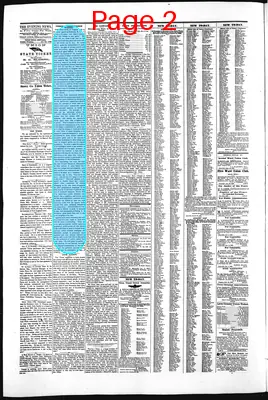
Editorial
October 22, 1866
Gold Hill Daily News
Gold Hill, Storey County, Nevada
What is this article about?
Editorial advocates for voters' personal independence from party control, citing John Minor Botts' speech and a New York Republican primary incident, arguing against party thraldom to ensure judgments on merits and public good over partisan aims.
Clipping

OCR Quality
98%
Excellent
Full Text
PERSONAL INDEPENDENCE
WANTED
John Minor Botts, of Virginia, said in
his recent speech at Patterson, N. J.: "I
belong to no party; and what is more, I
never will belong to any party." Mr.
Botts did not mean to say that he has
never acted with any party and never will,
for this would not be true. He meant
only to assert his independence of party
control; his right of private opinion and
action as a citizen, against the arrogant
dictation of party leaders. It would be
well for the interests of the country if a
larger number of voters would thus assert
their independence. An attempt has just
been made in New York city, and with
success in some of the wards, to exclude
from the Republican primary meetings all
who will not say that no State should
have representation in Congress that will
not adopt the pending Constitutional
Amendment. For this narrow and absurd
intolerance the Republican party should
not be held responsible; it is the act of a
few self-constituted leaders, and the new
test thus applied is one that Congress itself
is very likely to yield at its next session.
We allude to this small attempt at party
intolerance only to illustrate the necessity
for a re-assertion of personal independence
by the citizen.
The New York Commercial Advertiser
proposes that the people emancipate them.
selves from party thraldom by abandoning
the old parties and organizing a people's
party, the principle of which shall be to
sustain every sound measure and oppose
every unsound measure, no matter by
whom proposed. The principle is the
right one for individual action, but
it cannot become the basis of a party.
because men will always differ as to
measures, and parties are necessarily
rallied upon some idea or definite line
of policy. What is needed in these times
is such general independence of the voter
as will make it impossible for party lead-
ers to drag the masses of voters after them
by mere force of party discipline to the
support of measures designed to promote
the interests of those leaders instead of
the public good, and in the election of
unworthy candidates for office whose only
claim to support grows out of a regular
nomination. In order to gain the support
of the intelligent voters to any measure or
any candidate let it be made necessary to
show that the measure is right and the
candidate a fit man for the place, and we
shall secure at the same time more free-
dom and more purity in parties and in the
administration of the Government.
It is humiliating, but none the less a
fact, that we have become so demoralized
by false notions of party fealty, that a
man who judges men and measures upon
their merits is not understood and is very
likely to be taken as a "trimmer." The
politicians say to him, "You are on the
fence; why do you not jump to one side
or the other?" The loyal partisan is ex-
pected to declare fraud and robbery
honest when committed by officials
belonging to his own party, to applaud
the most preposterous assertions of his
party oracles as the acme of political wis-
dom, to commend measures that he feels
to be unjust and hurtful whenever they
are put into a platform, and to vote men
into the most responsible positions whom
he would not believe on oath nor trust
alone in a room with his spoons, solely
because they have intrigued themselves
into nomination. And this false and nar-
row idea of fidelity to party is accepted
by men and newspapers professing to be
devoted to great moral ideas and to lead
in the progress of the race.
Against such party ownership and serf-
dom every true man ought to unite with
John M. Botts in protesting. There can
be no genuine popular verdict upon any
measure of public policy till this slavery
of the individual to party is broken down,
until the citizen becomes intelligent and
self-reliant enough to pronounce upon
measures and men without reference to
parties, and to act with this or that party
for the promotion of public rather than
party aims. No new party is needed, or
could promote the end desired, but suffi-
ient personal independence in the voters
to compel the parties to just and liberal
measures and the nomination of men of
integrity.
WANTED
John Minor Botts, of Virginia, said in
his recent speech at Patterson, N. J.: "I
belong to no party; and what is more, I
never will belong to any party." Mr.
Botts did not mean to say that he has
never acted with any party and never will,
for this would not be true. He meant
only to assert his independence of party
control; his right of private opinion and
action as a citizen, against the arrogant
dictation of party leaders. It would be
well for the interests of the country if a
larger number of voters would thus assert
their independence. An attempt has just
been made in New York city, and with
success in some of the wards, to exclude
from the Republican primary meetings all
who will not say that no State should
have representation in Congress that will
not adopt the pending Constitutional
Amendment. For this narrow and absurd
intolerance the Republican party should
not be held responsible; it is the act of a
few self-constituted leaders, and the new
test thus applied is one that Congress itself
is very likely to yield at its next session.
We allude to this small attempt at party
intolerance only to illustrate the necessity
for a re-assertion of personal independence
by the citizen.
The New York Commercial Advertiser
proposes that the people emancipate them.
selves from party thraldom by abandoning
the old parties and organizing a people's
party, the principle of which shall be to
sustain every sound measure and oppose
every unsound measure, no matter by
whom proposed. The principle is the
right one for individual action, but
it cannot become the basis of a party.
because men will always differ as to
measures, and parties are necessarily
rallied upon some idea or definite line
of policy. What is needed in these times
is such general independence of the voter
as will make it impossible for party lead-
ers to drag the masses of voters after them
by mere force of party discipline to the
support of measures designed to promote
the interests of those leaders instead of
the public good, and in the election of
unworthy candidates for office whose only
claim to support grows out of a regular
nomination. In order to gain the support
of the intelligent voters to any measure or
any candidate let it be made necessary to
show that the measure is right and the
candidate a fit man for the place, and we
shall secure at the same time more free-
dom and more purity in parties and in the
administration of the Government.
It is humiliating, but none the less a
fact, that we have become so demoralized
by false notions of party fealty, that a
man who judges men and measures upon
their merits is not understood and is very
likely to be taken as a "trimmer." The
politicians say to him, "You are on the
fence; why do you not jump to one side
or the other?" The loyal partisan is ex-
pected to declare fraud and robbery
honest when committed by officials
belonging to his own party, to applaud
the most preposterous assertions of his
party oracles as the acme of political wis-
dom, to commend measures that he feels
to be unjust and hurtful whenever they
are put into a platform, and to vote men
into the most responsible positions whom
he would not believe on oath nor trust
alone in a room with his spoons, solely
because they have intrigued themselves
into nomination. And this false and nar-
row idea of fidelity to party is accepted
by men and newspapers professing to be
devoted to great moral ideas and to lead
in the progress of the race.
Against such party ownership and serf-
dom every true man ought to unite with
John M. Botts in protesting. There can
be no genuine popular verdict upon any
measure of public policy till this slavery
of the individual to party is broken down,
until the citizen becomes intelligent and
self-reliant enough to pronounce upon
measures and men without reference to
parties, and to act with this or that party
for the promotion of public rather than
party aims. No new party is needed, or
could promote the end desired, but suffi-
ient personal independence in the voters
to compel the parties to just and liberal
measures and the nomination of men of
integrity.
What sub-type of article is it?
Partisan Politics
What keywords are associated?
Personal Independence
Party Control
Voter Autonomy
Political Intolerance
Party Fealty
What entities or persons were involved?
John Minor Botts
Republican Party
New York Commercial Advertiser
Editorial Details
Primary Topic
Personal Independence From Party Control
Stance / Tone
Advocacy For Voter Independence And Against Party Thraldom
Key Figures
John Minor Botts
Republican Party
New York Commercial Advertiser
Key Arguments
Voters Should Assert Independence From Party Dictation To Promote Public Good
Party Leaders Impose Arrogant Control And Nominate Unworthy Candidates
Personal Independence Is Needed To Ensure Measures And Candidates Are Judged On Merits
False Party Fealty Leads To Excusing Fraud And Supporting Unjust Measures
No New Party Needed, But Sufficient Voter Independence To Compel Just Policies