Thank you for visiting SNEWPapers!
Sign up free
Story
February 13, 1894
The Portland Daily Press
Portland, Cumberland County, Maine
What is this article about?
An article praising stamp collecting for its affordability, enjoyment, and educational benefits, especially in recording modern historical events like Spanish and Dutch royal changes through issued stamps, suggesting future appreciation as historical teachers.
Clipping
OCR Quality
98%
Excellent
Full Text
Stamp-Collecting.
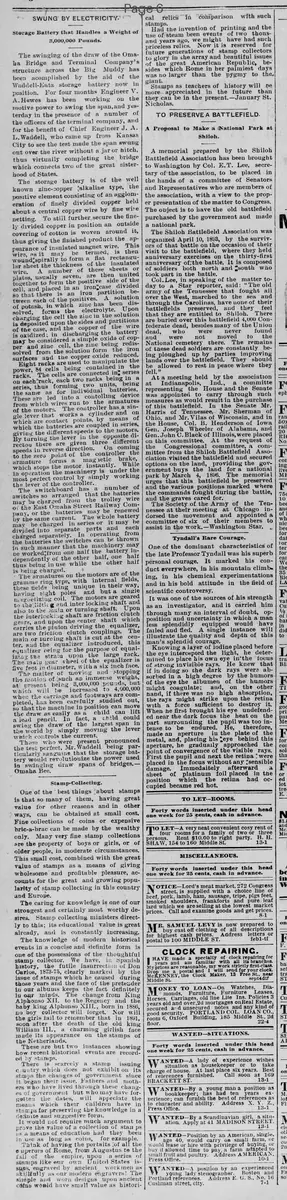
One of the best things about stamps is that so many of them, having great value for other reasons and in other ways, can be obtained at small cost. Fine collections of coins or expensive bric-a-brac can be made by the wealthy only. Many very fine stamp collections are the property of boys or girls, or of older people, in moderate circumstances. This small cost, combined with the great value of stamps as a means of giving wholesome and profitable pleasure, accounts for the great and growing popularity of stamp collecting in this country and Europe.
The craving for knowledge is one of our strongest and certainly most worthy desires. Stamp collecting ministers directly to this; its educational value is great already, and is constantly increasing. The knowledge of modern historical events in a concise and definite form is one of the possessions of the thoughtful stamp collector. We have, in Spanish history, the futile insurrection of Don Carlos, 1873-75, clearly marked by the issue of stamps which he caused during those years and the face of the pretender in our album keeps the fact definitely in our minds. The change from King Alphonso XII. to the Regency and the baby king Alphonso XIII., born in 1886, no boy collector will forget. Nor will the girls fail to remember that in 1891, soon after the death of the old king William III., a charming girlish face made its appearance on the stamps of the Netherlands.
These are but two instances showing how recent historical events are recorded by stamps. There is scarcely a stamp issuing country which does not exhibit on its stamps the changes of government since it began their issue. Fathers and mothers who have lived through these changes of government but who may have forgotten the dates, will appreciate the means which their children have in stamps for preserving the knowledge in a definite and suggestive form.
It would not require much argument to prove the value of a collection of stamps as a means of education had they been in use as long as coins, for example. Think of having the portraits of all the emperors of Rome, from Augustus to the fall of the empire, upon a series of stamps like our own United States issues, engraved by ancient workmen as skillfully as our modern engravers! The simple and worn designs upon ancient coins would have small value as historical relics in comparison with such stamps.
Had the invention of printing and the use of steam been events of two thousand and years ago, we might have had such priceless relics. Now it is reserved for future generations of stamp collectors to glory in the array and beautiful issues of the great American Republic, besides which Rome in her palmiest days was no larger than the pygmy to the giant.
Stamps as teachers of history will be more appreciated in the future than they can be in the present.-January St. Nicholas.
One of the best things about stamps is that so many of them, having great value for other reasons and in other ways, can be obtained at small cost. Fine collections of coins or expensive bric-a-brac can be made by the wealthy only. Many very fine stamp collections are the property of boys or girls, or of older people, in moderate circumstances. This small cost, combined with the great value of stamps as a means of giving wholesome and profitable pleasure, accounts for the great and growing popularity of stamp collecting in this country and Europe.
The craving for knowledge is one of our strongest and certainly most worthy desires. Stamp collecting ministers directly to this; its educational value is great already, and is constantly increasing. The knowledge of modern historical events in a concise and definite form is one of the possessions of the thoughtful stamp collector. We have, in Spanish history, the futile insurrection of Don Carlos, 1873-75, clearly marked by the issue of stamps which he caused during those years and the face of the pretender in our album keeps the fact definitely in our minds. The change from King Alphonso XII. to the Regency and the baby king Alphonso XIII., born in 1886, no boy collector will forget. Nor will the girls fail to remember that in 1891, soon after the death of the old king William III., a charming girlish face made its appearance on the stamps of the Netherlands.
These are but two instances showing how recent historical events are recorded by stamps. There is scarcely a stamp issuing country which does not exhibit on its stamps the changes of government since it began their issue. Fathers and mothers who have lived through these changes of government but who may have forgotten the dates, will appreciate the means which their children have in stamps for preserving the knowledge in a definite and suggestive form.
It would not require much argument to prove the value of a collection of stamps as a means of education had they been in use as long as coins, for example. Think of having the portraits of all the emperors of Rome, from Augustus to the fall of the empire, upon a series of stamps like our own United States issues, engraved by ancient workmen as skillfully as our modern engravers! The simple and worn designs upon ancient coins would have small value as historical relics in comparison with such stamps.
Had the invention of printing and the use of steam been events of two thousand and years ago, we might have had such priceless relics. Now it is reserved for future generations of stamp collectors to glory in the array and beautiful issues of the great American Republic, besides which Rome in her palmiest days was no larger than the pygmy to the giant.
Stamps as teachers of history will be more appreciated in the future than they can be in the present.-January St. Nicholas.
What sub-type of article is it?
Curiosity
Historical Event
What themes does it cover?
Moral Virtue
Triumph
What keywords are associated?
Stamp Collecting
Philately
Education
History
Affordability
Historical Events
What entities or persons were involved?
Don Carlos
Alphonso Xii
Alphonso Xiii
William Iii
Story Details
Key Persons
Don Carlos
Alphonso Xii
Alphonso Xiii
William Iii
Story Details
Stamp collecting is affordable and educational, recording historical events like the Don Carlos insurrection (1873-75), Spanish royal changes (1886), and Dutch queen's appearance (1891) on stamps, aiding memory of government shifts and promising greater future historical value.