Thank you for visiting SNEWPapers!
Sign up free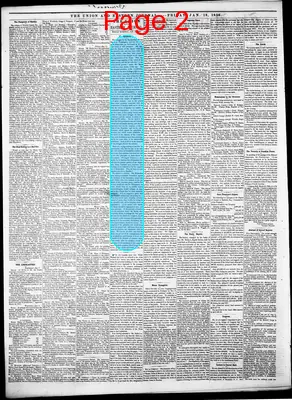
Editorial
January 18, 1856
The Union And Eastern Journal
Biddeford, York County, Maine
What is this article about?
Editorial on the prolonged House Speakership contest in Washington, highlighting deadlock caused by constitutional slave representation favoring Southern states. Advocates plurality rule to elect Banks, representing freedom principles, over Richardson (slavery) or Fuller (American party), emphasizing stakes for national policy on liberty vs. slavery.
Clipping

OCR Quality
98%
Excellent
Full Text
The Speakership.
The struggle for the Speakership still continues at Washington, and not the most distant idea can be formed as to the time when it will terminate. Six times have the friends of Mr. Banks voted for the plurality rule, and they have voted for every motion, come from what source it would, which it was thought would hasten the organization of the House. They represent a large majority of the voters of the whole nation, and did the rule that "a majority should govern," apply, Mr. Banks would have been chosen weeks ago. But the unequal provision in the Constitution, which gives the slave holders a right to vote for their slaves, counting five slaves as equal to three white men, thus giving the Slave States near twenty members in the House of Representatives, enables them to keep things at a dead lock. The Speakership of the House, as such, is comparatively of little importance, but when it is known that the Speaker appoints all the committees, and that the business of legislation is mainly done by those committees, it being impossible for the whole body of the members to understand every subject of legislation, it is of great moment. And at the present time, when questions connected with the preservation of freedom itself are to be settled, the choice of Speaker is a matter of incalculable importance. It is not a struggle for a man, or for a party, but an antagonism of ideas, and a struggle for their ascendency—and the success of either is to shape public policy. On one hand is the idea that this government was not formed to extend and nationalize slavery, and the fact that such were not the doctrines of the fathers of the Republic; and on the other, doctrines which ignore the principles of freedom, and which would substitute for the views of the framers of the Constitution, such doctrines as have been promulgated by the most ultra of the slaveholding politicians. Such is felt to be the character of the struggle all over the country. There are, saying nothing of the few impracticables, who, like the dog in the manger, will neither act themselves or allow others to act, three parties—but there are really but two principles at issue those before named. We regard Fuller as a more deadly foe to freedom than Richardson himself, and the greater portion of his supporters, being Southern men, entertain such doctrines as are believed in by the supporters of Richardson. Why do they not come together and elect a Speaker?
The answer is obvious. The Richardson men, having committed themselves against the doctrines of the Americans, cannot support Fuller, who, it is claimed, is the candidate of the American party; and the Fuller men would not vote for Richardson, because, should they do so, twelfth section knownothingism would collapse at once, and in the collapse they be, most certainly, destroyed. It is to support a party that these twelfth section men vote as they do.—Were they intent upon elevating principle instead of party, they would, by voting for the plurality rule, aid in bringing about an organization. As the matter now stands, the House should be organized at once, and upon principle. If the principle of freedom is in the ascendant there, Mr. Banks, who everybody allows, is perhaps the best qualified man for the station in Congress, should be elected; on the contrary, if the principle of slavery is in the ascendant, Richardson, who is its representative, should be elected. The adoption of the plurality rule would bring about the proper test; and hence those who resist its adoption, are chargeable with the delay. We can see no other way that the House can get out of its entanglement, but by its adoption—and it seems to be as conformable to the dictates of common sense, as the result, after its adoption, would be indicative of the sentiment of the members upon the great question which is uppermost in the public mind, and beside which all others fade into insignificance.
The struggle for the Speakership still continues at Washington, and not the most distant idea can be formed as to the time when it will terminate. Six times have the friends of Mr. Banks voted for the plurality rule, and they have voted for every motion, come from what source it would, which it was thought would hasten the organization of the House. They represent a large majority of the voters of the whole nation, and did the rule that "a majority should govern," apply, Mr. Banks would have been chosen weeks ago. But the unequal provision in the Constitution, which gives the slave holders a right to vote for their slaves, counting five slaves as equal to three white men, thus giving the Slave States near twenty members in the House of Representatives, enables them to keep things at a dead lock. The Speakership of the House, as such, is comparatively of little importance, but when it is known that the Speaker appoints all the committees, and that the business of legislation is mainly done by those committees, it being impossible for the whole body of the members to understand every subject of legislation, it is of great moment. And at the present time, when questions connected with the preservation of freedom itself are to be settled, the choice of Speaker is a matter of incalculable importance. It is not a struggle for a man, or for a party, but an antagonism of ideas, and a struggle for their ascendency—and the success of either is to shape public policy. On one hand is the idea that this government was not formed to extend and nationalize slavery, and the fact that such were not the doctrines of the fathers of the Republic; and on the other, doctrines which ignore the principles of freedom, and which would substitute for the views of the framers of the Constitution, such doctrines as have been promulgated by the most ultra of the slaveholding politicians. Such is felt to be the character of the struggle all over the country. There are, saying nothing of the few impracticables, who, like the dog in the manger, will neither act themselves or allow others to act, three parties—but there are really but two principles at issue those before named. We regard Fuller as a more deadly foe to freedom than Richardson himself, and the greater portion of his supporters, being Southern men, entertain such doctrines as are believed in by the supporters of Richardson. Why do they not come together and elect a Speaker?
The answer is obvious. The Richardson men, having committed themselves against the doctrines of the Americans, cannot support Fuller, who, it is claimed, is the candidate of the American party; and the Fuller men would not vote for Richardson, because, should they do so, twelfth section knownothingism would collapse at once, and in the collapse they be, most certainly, destroyed. It is to support a party that these twelfth section men vote as they do.—Were they intent upon elevating principle instead of party, they would, by voting for the plurality rule, aid in bringing about an organization. As the matter now stands, the House should be organized at once, and upon principle. If the principle of freedom is in the ascendant there, Mr. Banks, who everybody allows, is perhaps the best qualified man for the station in Congress, should be elected; on the contrary, if the principle of slavery is in the ascendant, Richardson, who is its representative, should be elected. The adoption of the plurality rule would bring about the proper test; and hence those who resist its adoption, are chargeable with the delay. We can see no other way that the House can get out of its entanglement, but by its adoption—and it seems to be as conformable to the dictates of common sense, as the result, after its adoption, would be indicative of the sentiment of the members upon the great question which is uppermost in the public mind, and beside which all others fade into insignificance.
What sub-type of article is it?
Partisan Politics
Slavery Abolition
Constitutional
What keywords are associated?
Speakership Election
Nathaniel Banks
Slavery Representation
Plurality Rule
American Party
House Organization
Freedom Principles
What entities or persons were involved?
Mr. Banks
Mr. Richardson
Mr. Fuller
Slave States
American Party
House Of Representatives
Editorial Details
Primary Topic
Struggle For House Speakership Amid Freedom Vs Slavery Principles
Stance / Tone
Strongly Pro Freedom And Anti Slavery, Advocating Plurality Rule For Banks
Key Figures
Mr. Banks
Mr. Richardson
Mr. Fuller
Slave States
American Party
House Of Representatives
Key Arguments
Friends Of Mr. Banks Represent National Majority But Blocked By Constitutional Slave Representation
Speakership Crucial For Appointing Committees That Shape Legislation On Freedom
Struggle Pits Anti Slavery Principles Of Republic's Founders Against Pro Slavery Doctrines
Fuller Seen As Foe To Freedom Due To Southern Support Aligning With Richardson
Richardson And Fuller Supporters Divided By Party Commitments, Preventing Unity
Plurality Rule Would Test True Sentiments And Enable Organization On Principle