Thank you for visiting SNEWPapers!
Sign up free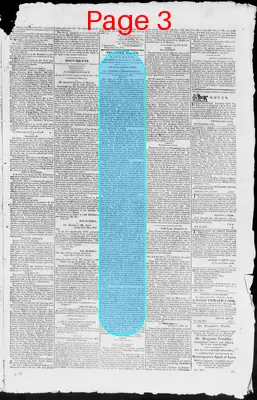
Editorial
December 26, 1811
Virginia Argus
Richmond, Virginia
What is this article about?
This editorial, part II, critically analyzes Col. Monroe's correspondence on US foreign policy, arguing the British Rule of 1756 initiated trade violations against neutral US commerce, leading to retaliatory edicts by Britain and France. It critiques negotiation errors and British bad faith in dealings with envoys like Erskine and Jackson.
Clipping

OCR Quality
98%
Excellent
Full Text
VIRGINIA ARGUS.
RICHMOND.
THURSDAY. DECEMBER 26, 1811.
FOR THE ARGUS.
CRITICAL OBSERVATIONS
ON
COL. MONROE'S CORRESPONDENCE,
Communicated to Congress by the President on the 5th November, 1811.
NO. II.
The Rule of '56 was very ably contested by Mr. Madison, who, whilst Secretary of State, in a pamphlet, written especially for that purpose, demonstrated that the rule was an innovation on the established law of nations; and that not only according to that law, but agreeably to right reason and common sense, the citizens of the United States, being neutral, were justified in trading in the produce of any colony to the ports of which they might be admitted, provided such produce was their own property purchased with their own capital. The arguments of Mr. Madison were unanswerable, and never have been answered. Mr. Monroe's treaty with England, which Mr. Jefferson rejected, went mainly to settle this point of dispute: But at the moment the articles of it were committed to paper, Bonaparte retaliated on the Rule by the Berlin decree, and the British, resolving not to be outdone in the career of injustice, tacked to the treaty that fatal rider, which bound us to her fortunes or rendered the treaty a nullity.
The Rule of '56, then, was the original wrong, which has been followed, in succession, by all the other wrongs of the two leading belligerent powers; and, in the negotiations between the United States and Great Britain, the American diplomatic writers ought never to have lost sight of that original wrong. As soon as the orders in council were issued, however, the opposition party in America, aided by the British ministry, very adroitly started a question of priority in issuing the anti-neutral edicts; and the presses of the country, on either side, labored incessantly, to establish that France or Great Britain was the first offender.
The American government, although it would not permit itself to enter, formally, into this question of priority, yet, nevertheless, did enter into it virtually, compelled thereto in some measure by the course the discussions took in the body of the community. And here we may mark the first error of policy in our statesmen; for, abandoning the contestation of the wrong itself, they went, indirectly, into a controversy about a mode of the wrong. All the orders in council and the French decrees, operating against American commerce, and which have been issued since the British set up the Rule of '56, are nothing more than modes of that original wrong, and ought so to have been considered.
The American administration did not suffer itself to continue long in this error; and putting out of view altogether the question of who began first, presented a friendly alternative to the belligerent power that would quit first. This alternative, which England was the first to embrace, through Mr. Erskine, she was also the first to relinquish by disavowing that minister; and finding that our non-intercourse laws were feebly enforced, preferred braving our resentment and enjoying a clandestine trade with our citizens, to an honorable adjustment of differences and an open commerce. It is, notwithstanding, certain that Great Britain had no intention of pressing the United States to actual war; for she exerted herself with great energy to conquer the colonies of France, and had actually conquered the whole of them in the West-Indies when Mr. Jackson was sent hither on his mission. This minister, who, to considerable talents united much effrontery, made use of that circumstance to justify his own government in opposing the American claim to a free commerce in colonial articles, thinking thereby to dissipate our complaints on that score : but he was successfully parried by the executive, who asserted with great force and truth that an inability to pursue the trade practically did not impair the right of pursuing it. In relation to the traffic in our own productions altho' the hindrances to it were attempted to be concealed under the plea of retaliation, Mr. Jackson partly lifted the veil which had before in some degree concealed the doctrine of maritime supremacy which Great Britain in substance but not form maintained. But he muffled the doctrine, also, in an attempt to confuse the subject of the rupture of Mr. Erskine's arrangement, which brought on a misunderstanding (intentional on his part) that drove him from the country.
The United States, not dispirited by the bad faith of Great Britain in the case of Mr. Erskine's convention, still offered the alternative to the belligerent power that would first quit its obnoxious Edicts in favor of the United States. France, next, accepted the proposition, annulled her decrees as far as they affected neutral trade, and claimed from the United States the fulfilment of the condition to which they had pledged themselves. The United States, true to their plighted faith, did fulfil it : and Great Britain, who, to cover her real designs, had held out the appearance of a willingness to recall her orders when France should relinquish her decrees, falsified her promise, and in the face of accumulating facts, attempted to justify herself under the pretext that Bonaparte had not, bona fide, repealed his decrees. Affairs were in this situation when Mr. Foster arrived from London. We shall soon see how this minister acquitted himself of his charge.
An Occasional Writer.
RICHMOND.
THURSDAY. DECEMBER 26, 1811.
FOR THE ARGUS.
CRITICAL OBSERVATIONS
ON
COL. MONROE'S CORRESPONDENCE,
Communicated to Congress by the President on the 5th November, 1811.
NO. II.
The Rule of '56 was very ably contested by Mr. Madison, who, whilst Secretary of State, in a pamphlet, written especially for that purpose, demonstrated that the rule was an innovation on the established law of nations; and that not only according to that law, but agreeably to right reason and common sense, the citizens of the United States, being neutral, were justified in trading in the produce of any colony to the ports of which they might be admitted, provided such produce was their own property purchased with their own capital. The arguments of Mr. Madison were unanswerable, and never have been answered. Mr. Monroe's treaty with England, which Mr. Jefferson rejected, went mainly to settle this point of dispute: But at the moment the articles of it were committed to paper, Bonaparte retaliated on the Rule by the Berlin decree, and the British, resolving not to be outdone in the career of injustice, tacked to the treaty that fatal rider, which bound us to her fortunes or rendered the treaty a nullity.
The Rule of '56, then, was the original wrong, which has been followed, in succession, by all the other wrongs of the two leading belligerent powers; and, in the negotiations between the United States and Great Britain, the American diplomatic writers ought never to have lost sight of that original wrong. As soon as the orders in council were issued, however, the opposition party in America, aided by the British ministry, very adroitly started a question of priority in issuing the anti-neutral edicts; and the presses of the country, on either side, labored incessantly, to establish that France or Great Britain was the first offender.
The American government, although it would not permit itself to enter, formally, into this question of priority, yet, nevertheless, did enter into it virtually, compelled thereto in some measure by the course the discussions took in the body of the community. And here we may mark the first error of policy in our statesmen; for, abandoning the contestation of the wrong itself, they went, indirectly, into a controversy about a mode of the wrong. All the orders in council and the French decrees, operating against American commerce, and which have been issued since the British set up the Rule of '56, are nothing more than modes of that original wrong, and ought so to have been considered.
The American administration did not suffer itself to continue long in this error; and putting out of view altogether the question of who began first, presented a friendly alternative to the belligerent power that would quit first. This alternative, which England was the first to embrace, through Mr. Erskine, she was also the first to relinquish by disavowing that minister; and finding that our non-intercourse laws were feebly enforced, preferred braving our resentment and enjoying a clandestine trade with our citizens, to an honorable adjustment of differences and an open commerce. It is, notwithstanding, certain that Great Britain had no intention of pressing the United States to actual war; for she exerted herself with great energy to conquer the colonies of France, and had actually conquered the whole of them in the West-Indies when Mr. Jackson was sent hither on his mission. This minister, who, to considerable talents united much effrontery, made use of that circumstance to justify his own government in opposing the American claim to a free commerce in colonial articles, thinking thereby to dissipate our complaints on that score : but he was successfully parried by the executive, who asserted with great force and truth that an inability to pursue the trade practically did not impair the right of pursuing it. In relation to the traffic in our own productions altho' the hindrances to it were attempted to be concealed under the plea of retaliation, Mr. Jackson partly lifted the veil which had before in some degree concealed the doctrine of maritime supremacy which Great Britain in substance but not form maintained. But he muffled the doctrine, also, in an attempt to confuse the subject of the rupture of Mr. Erskine's arrangement, which brought on a misunderstanding (intentional on his part) that drove him from the country.
The United States, not dispirited by the bad faith of Great Britain in the case of Mr. Erskine's convention, still offered the alternative to the belligerent power that would first quit its obnoxious Edicts in favor of the United States. France, next, accepted the proposition, annulled her decrees as far as they affected neutral trade, and claimed from the United States the fulfilment of the condition to which they had pledged themselves. The United States, true to their plighted faith, did fulfil it : and Great Britain, who, to cover her real designs, had held out the appearance of a willingness to recall her orders when France should relinquish her decrees, falsified her promise, and in the face of accumulating facts, attempted to justify herself under the pretext that Bonaparte had not, bona fide, repealed his decrees. Affairs were in this situation when Mr. Foster arrived from London. We shall soon see how this minister acquitted himself of his charge.
An Occasional Writer.
What sub-type of article is it?
Foreign Affairs
Trade Or Commerce
Economic Policy
What keywords are associated?
Rule Of 1756
Neutral Trade
British Orders In Council
Monroe Correspondence
Erskine Convention
Jackson Mission
Berlin Decree
Non Intercourse Laws
What entities or persons were involved?
Col. Monroe
Mr. Madison
Mr. Jefferson
Bonaparte
Mr. Erskine
Mr. Jackson
Mr. Foster
Great Britain
France
United States
Editorial Details
Primary Topic
Critical Observations On Col. Monroe's Correspondence Regarding The Rule Of 1756 And Us Neutral Trade Rights
Stance / Tone
Analytical Critique Of British Policy And Us Negotiation Errors
Key Figures
Col. Monroe
Mr. Madison
Mr. Jefferson
Bonaparte
Mr. Erskine
Mr. Jackson
Mr. Foster
Great Britain
France
United States
Key Arguments
The Rule Of 1756 Was An Innovation On The Law Of Nations, Justifying Us Neutral Trade In Colonial Produce.
Mr. Madison's Arguments Against The Rule Were Unanswerable.
Monroe's Rejected Treaty With England Was Undermined By The Berlin Decree And British Additions.
The Rule Of 1756 Was The Original Wrong Leading To Subsequent Edicts By Belligerents.
Us Statesmen Erred By Debating Priority Of Edicts Instead Of The Wrong Itself.
Us Offered Alternative To First Quitting Power; Britain Accepted Then Reneged Via Erskine.
Britain Conquered French West Indies Colonies But Opposed Us Colonial Trade Claims.
France Annulled Decrees Affecting Neutrals; Us Fulfilled Pledge, But Britain Falsified Promise.