Thank you for visiting SNEWPapers!
Sign up free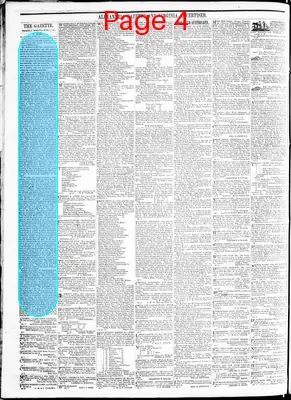
Story
June 7, 1849
Alexandria Gazette
Alexandria, Alexandria County, District Of Columbia
What is this article about?
Sermon by Rev. Henry W. Bellows, preached May 13, 1849, in New York, addressing the recent riot. It condemns the mob's violence without cause, upholds law enforcement, and distinguishes true liberty under law from licentiousness. Excerpts emphasize moral lessons on order and authority.
Clipping

OCR Quality
95%
Excellent
Full Text
A SERMON
Occasioned by the late riot in New York, preached in the Church of the Divine Unity, on Sunday morning, May 13, 1849, by Henry W. Bellows, Pastor of the Church: New York, C. S. Francis, 252 Broadway.
Mr. Bellows is a bold and conscientious, as well as an accomplished and able preacher: and on the Sunday morning immediately following the riots, when a few spirited words seemed wanting, to turn the hesitating current of public opinion into the right channel, he preached in his own pulpit the discourse which has since been published, under the above title. It is a clear, manly and forcible exposition of the nature of Liberty, both civil and spiritual. We extract the concluding paragraphs:--
Ah! what a lesson have the events of this week been giving us! Within the last three days we have been passing through a civil and social war in the city of New York, the most horrible form of calamity that can befall a community. The very foundations of society have been threatened with ruin. Caprice and brute force have undertaken to rule over us. We have seen the whims and prejudices of a few ignorant and passionate boys, or brutal and desperate men, first assuming the form of a disgusting insolence, and then, taking on the shape of open violence, attacking with stones and clubs the lovers of law and order, and determined upon having their wicked way at all hazards. And what has been the provocation? Has any popular principle been attacked? Has any honest or innocent prejudice been wantonly wounded? No! There never was a mob that had less reason for its folly and wickedness.- Nothing but pure wilfulness; nothing but a riot in brute force: nothing but a depraved and diabolical desire to put forth a tyrannical power, and to make the better portion of the community feel its force, has occasioned this outbreak. A secret hatred of property and property-holders has been the main-spring of riot, If ever there was a proper occasion to use the whole power of the State, and to fall back upon the last resorts of civil order, it was then when the most wilful, least justified and most atrocious mob ever gathered since the abolition riots-with no cause of irritation, no shadow of excuse for violence, in the mere insolence of reckless brute force, attempted to overthrow the laws, to bring disgrace on our community, and to defy and rout the rights of peaceful citizens. That the mere love of riot, the idle desire to back a popular actor, the mean wish to humble a respectable foreign artist, whose conduct has apparently been irreproachable should have carried a portion of our citizens to this height of madness, is indeed a dreadful intimation of the success which demagogues have had in swelling a false sense of importance or vitiating the proper notions of liberty among the ruder portion of our people, These are the fruits of political panderings to the ignorance and vanity of the people. Such is the result of making legislators of creatures like those who made the inflammatory speeches in the Park the night after the riot? We have arrived, in deed, at pretty notions of Liberty, when a few hundreds of the worst portions of our people possess the power of disgracing the whole city, braving the authorities, and defeating the rightful will of ninety-nine hundredths of the people.
Let no weak and puling sentiments of humanity, no miserable sophistry about the will of the people, allow us to falter in our support of the public authorities, even though it be necessary to fall back upon the military-the necessary final resort, of course, when the police force is insufficient. Many persons seem to forget that if the laws must be obeyed, they must be enforced, and that to enforce them, adequate power and unflinching fidelity are necessary. The Law is peaceably executed at all other times only because it is always forcibly executed when the exigency arrives. To have hesitated on a recent occasion to fire upon the mob, would have been to endanger thousands of valuable lives for the sake of saving twenty-many of which paid the just penalty of their violence and folly. There ought to be but one expression on this subject. To allow ourselves regrets or insinuations, respecting the course pursued by the public authorities, is to play directly into the hands of the rioters. And if we attempt to shift the responsibility off from the mob upon any other shoulders, we join the mob.-- Much as we may regret that the great principle of an unmolested enjoyment of our civil privileges should have been vindicated in a theatre and on a trivial occasion, yet the principle is sacred anywhere-whether in a church, an abolition meeting, or a place of public amusement. They are not to be blamed who desired that the honor and hospitality of New York towards an unoffending stranger should not be sacrificed to the caprice, ignorance and brutality of a few hundred lawless boys and men. If the occasion for vindicating the law had not arisen now it must have done so upon another occasion: and really the only thing to be deeply regretted is that the flight of the object of popular violence and prejudice should seem to leave any appearance of victory with the rioters. Though he had been the meanest of his kind, he should have been protected here to the conclusion of his announced engagement, if an army of ten thousand men had been required to wait upon his movements, and a ship of war chartered to convey him to his native land. We have done something to vindicate order and law; we ought to have done more. What a lesson have we not received in regard to the nature of a popular and free government!
Brethren, let us stand by Liberty under Law -whether of the Constitution or the Gospel.-- Let us hate and shun all liberty which consists in spurning just authority. There is a spurious liberty too popular amongst us--a liberty which scorns the restraints of law and duty; which would bring all human governments into contempt, under the plea of allegiance to divine laws, and which dissipates all divine authority by making itself God." The deification of man, the exaltation of the law of inclination, the falling back upon the first principles of things, and rejecting the wisdom of all experience and the authority of all revelation---this is the principle which, as it illustrated the rule of French bigots for liberty, the most bloody tyrants the world has ever seen, so will it, should it prevail convert our freedom into licentiousness and our free institutions into ruins, to be soon remodelled into the prisons of an arbitrary government.
Let us sacredly love and maintain in the State the dominion of constitutional liberty--the sovereignty of law, while we uphold in our private hearts "the law of the spirit of life in Christ Jesus," which alone can make us "free from the law of sin and death."
Occasioned by the late riot in New York, preached in the Church of the Divine Unity, on Sunday morning, May 13, 1849, by Henry W. Bellows, Pastor of the Church: New York, C. S. Francis, 252 Broadway.
Mr. Bellows is a bold and conscientious, as well as an accomplished and able preacher: and on the Sunday morning immediately following the riots, when a few spirited words seemed wanting, to turn the hesitating current of public opinion into the right channel, he preached in his own pulpit the discourse which has since been published, under the above title. It is a clear, manly and forcible exposition of the nature of Liberty, both civil and spiritual. We extract the concluding paragraphs:--
Ah! what a lesson have the events of this week been giving us! Within the last three days we have been passing through a civil and social war in the city of New York, the most horrible form of calamity that can befall a community. The very foundations of society have been threatened with ruin. Caprice and brute force have undertaken to rule over us. We have seen the whims and prejudices of a few ignorant and passionate boys, or brutal and desperate men, first assuming the form of a disgusting insolence, and then, taking on the shape of open violence, attacking with stones and clubs the lovers of law and order, and determined upon having their wicked way at all hazards. And what has been the provocation? Has any popular principle been attacked? Has any honest or innocent prejudice been wantonly wounded? No! There never was a mob that had less reason for its folly and wickedness.- Nothing but pure wilfulness; nothing but a riot in brute force: nothing but a depraved and diabolical desire to put forth a tyrannical power, and to make the better portion of the community feel its force, has occasioned this outbreak. A secret hatred of property and property-holders has been the main-spring of riot, If ever there was a proper occasion to use the whole power of the State, and to fall back upon the last resorts of civil order, it was then when the most wilful, least justified and most atrocious mob ever gathered since the abolition riots-with no cause of irritation, no shadow of excuse for violence, in the mere insolence of reckless brute force, attempted to overthrow the laws, to bring disgrace on our community, and to defy and rout the rights of peaceful citizens. That the mere love of riot, the idle desire to back a popular actor, the mean wish to humble a respectable foreign artist, whose conduct has apparently been irreproachable should have carried a portion of our citizens to this height of madness, is indeed a dreadful intimation of the success which demagogues have had in swelling a false sense of importance or vitiating the proper notions of liberty among the ruder portion of our people, These are the fruits of political panderings to the ignorance and vanity of the people. Such is the result of making legislators of creatures like those who made the inflammatory speeches in the Park the night after the riot? We have arrived, in deed, at pretty notions of Liberty, when a few hundreds of the worst portions of our people possess the power of disgracing the whole city, braving the authorities, and defeating the rightful will of ninety-nine hundredths of the people.
Let no weak and puling sentiments of humanity, no miserable sophistry about the will of the people, allow us to falter in our support of the public authorities, even though it be necessary to fall back upon the military-the necessary final resort, of course, when the police force is insufficient. Many persons seem to forget that if the laws must be obeyed, they must be enforced, and that to enforce them, adequate power and unflinching fidelity are necessary. The Law is peaceably executed at all other times only because it is always forcibly executed when the exigency arrives. To have hesitated on a recent occasion to fire upon the mob, would have been to endanger thousands of valuable lives for the sake of saving twenty-many of which paid the just penalty of their violence and folly. There ought to be but one expression on this subject. To allow ourselves regrets or insinuations, respecting the course pursued by the public authorities, is to play directly into the hands of the rioters. And if we attempt to shift the responsibility off from the mob upon any other shoulders, we join the mob.-- Much as we may regret that the great principle of an unmolested enjoyment of our civil privileges should have been vindicated in a theatre and on a trivial occasion, yet the principle is sacred anywhere-whether in a church, an abolition meeting, or a place of public amusement. They are not to be blamed who desired that the honor and hospitality of New York towards an unoffending stranger should not be sacrificed to the caprice, ignorance and brutality of a few hundred lawless boys and men. If the occasion for vindicating the law had not arisen now it must have done so upon another occasion: and really the only thing to be deeply regretted is that the flight of the object of popular violence and prejudice should seem to leave any appearance of victory with the rioters. Though he had been the meanest of his kind, he should have been protected here to the conclusion of his announced engagement, if an army of ten thousand men had been required to wait upon his movements, and a ship of war chartered to convey him to his native land. We have done something to vindicate order and law; we ought to have done more. What a lesson have we not received in regard to the nature of a popular and free government!
Brethren, let us stand by Liberty under Law -whether of the Constitution or the Gospel.-- Let us hate and shun all liberty which consists in spurning just authority. There is a spurious liberty too popular amongst us--a liberty which scorns the restraints of law and duty; which would bring all human governments into contempt, under the plea of allegiance to divine laws, and which dissipates all divine authority by making itself God." The deification of man, the exaltation of the law of inclination, the falling back upon the first principles of things, and rejecting the wisdom of all experience and the authority of all revelation---this is the principle which, as it illustrated the rule of French bigots for liberty, the most bloody tyrants the world has ever seen, so will it, should it prevail convert our freedom into licentiousness and our free institutions into ruins, to be soon remodelled into the prisons of an arbitrary government.
Let us sacredly love and maintain in the State the dominion of constitutional liberty--the sovereignty of law, while we uphold in our private hearts "the law of the spirit of life in Christ Jesus," which alone can make us "free from the law of sin and death."
What sub-type of article is it?
Historical Event
What themes does it cover?
Moral Virtue
Justice
Misfortune
What keywords are associated?
New York Riot
Henry Bellows Sermon
Liberty Under Law
Mob Violence
Civil Order
What entities or persons were involved?
Henry W. Bellows
Where did it happen?
New York
Story Details
Key Persons
Henry W. Bellows
Location
New York
Event Date
May 13, 1849
Story Details
Sermon condemning the recent riot in New York as unjustified mob violence driven by hatred and ignorance, advocating firm enforcement of law to protect liberty and order, with biblical and constitutional references.