Thank you for visiting SNEWPapers!
Sign up free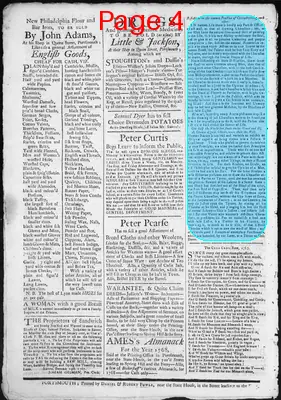
Literary
January 1, 1768
The New Hampshire Gazette And Historical Chronicle
Portsmouth, Greenland, Rockingham County, New Hampshire
What is this article about?
This essay reflects on the challenges and perils of drawing accurate character portraits of individuals, arguing that true judgment requires intimate knowledge and freedom from bias, and can only be fully achieved after death to avoid injury to individuals or society. It critiques misrepresentation through flattery or malice, and praises posthumous historical justice for patriots and tyrants.
Clipping
OCR Quality
95%
Excellent
Full Text
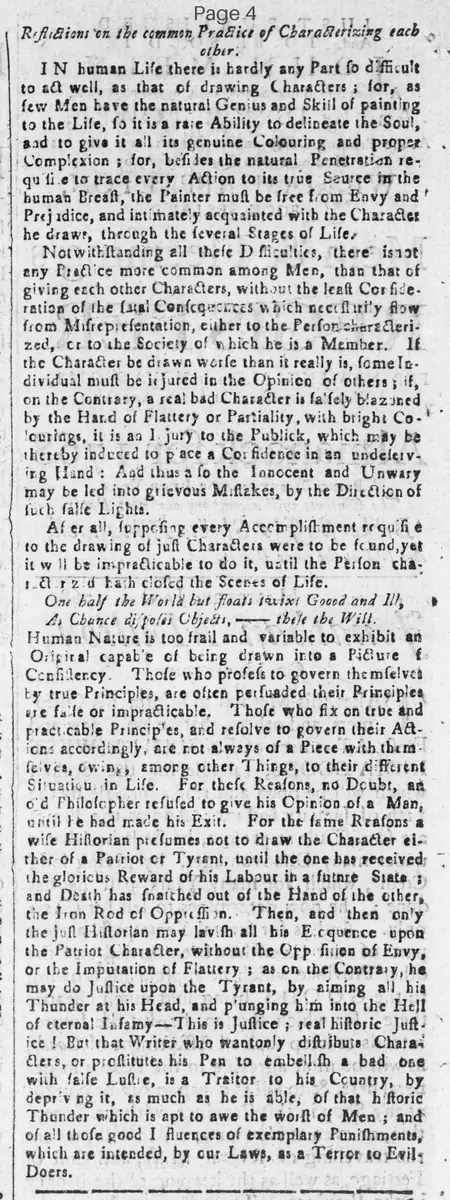
Reflections on the common Practice of Characterizing each other:
IN human Life there is hardly any Part so difficult to act well, as that of drawing Characters ; for, as few Men have the natural Genius and Skill of painting to the Life, so it is a rare Ability to delineate the Soul, and to give it all its genuine Colouring and proper Complexion ; for, besides the natural Penetration required to trace every Action to its true Source in the human Breast, the Painter must be free from Envy and Prejudices, and intimately acquainted with the Character he draws, through the several Stages of Life.
Notwithstanding all these Difficulties, there is not any Practice more common among Men, than that of giving each other Characters, without the least Consideration of the fatal Consequences which necessarily flow from Misrepresentation, either to the Person characterized, or to the Society of which he is a Member. If the Character be drawn worse than it really is, some Individual must be injured in the Opinion of others ; if, on the Contrary, a real bad Character is falsely blazoned by the Hand of Flattery or Partiality, with bright Colours, it is an Injury to the Publick, which may be thereby induced to place a Confidence in an undeserving Hand : And thus as to the Innocent and Unwary may be led into grievous Mistakes, by the Direction of such false Lights.
After all, Supposing every Accomplishment required to the drawing of just Characters were to be found, yet it will be impracticable to do it, until the Person characterized hath closed the Scenes of Life.
One half the World but floats twixt Good and Ill
As Chance disposes Objects, --in these the Will.
Human Nature is too frail and variable to exhibit an Original capable of being drawn into a Picture of Constancy. Those who profess to govern themselves by true Principles, are often persuaded their Principles are false or impracticable. Those who fix on true and practicable Principles, and resolve to govern their Actions accordingly, are not always of a Piece with themselves, Owing, among other Things, to their different Situation in Life. For these Reasons, no Doubt, an old Philosopher refused to give his Opinion of a Man, until he had made his Exit. For the same Reasons a wise Historian presumes not to draw the Character either of a Patriot or Tyrant, until the one has received the glorious Reward of his Labour in a future State ; and Death has snatched out of the Hand of the other. the Iron Rod of Oppression.. Then, and then only the just Historian may lavish all his Eloquence upon the Patriot Character, without the Opposition of Envy. or the Imputation of Flattery ; as on the Contrary, he may do Justice upon the Tyrant, by aiming all his Thunder at his Head, and plunging him into the Hell of eternal Infamy--This is Justice ; real historic Justice ! But that Writer who Wantonly distributes Characters, or prostitutes his Pen to embellish a bad one with false Lustre, is a Traitor to his Country, by depriving it, as much as he is able, of that historic Thunder which is apt to awe the worst of Men ; and of all those good Influences of exemplary Punishments, which are intended, by our Laws, as a Terror to Evil-Doers.
IN human Life there is hardly any Part so difficult to act well, as that of drawing Characters ; for, as few Men have the natural Genius and Skill of painting to the Life, so it is a rare Ability to delineate the Soul, and to give it all its genuine Colouring and proper Complexion ; for, besides the natural Penetration required to trace every Action to its true Source in the human Breast, the Painter must be free from Envy and Prejudices, and intimately acquainted with the Character he draws, through the several Stages of Life.
Notwithstanding all these Difficulties, there is not any Practice more common among Men, than that of giving each other Characters, without the least Consideration of the fatal Consequences which necessarily flow from Misrepresentation, either to the Person characterized, or to the Society of which he is a Member. If the Character be drawn worse than it really is, some Individual must be injured in the Opinion of others ; if, on the Contrary, a real bad Character is falsely blazoned by the Hand of Flattery or Partiality, with bright Colours, it is an Injury to the Publick, which may be thereby induced to place a Confidence in an undeserving Hand : And thus as to the Innocent and Unwary may be led into grievous Mistakes, by the Direction of such false Lights.
After all, Supposing every Accomplishment required to the drawing of just Characters were to be found, yet it will be impracticable to do it, until the Person characterized hath closed the Scenes of Life.
One half the World but floats twixt Good and Ill
As Chance disposes Objects, --in these the Will.
Human Nature is too frail and variable to exhibit an Original capable of being drawn into a Picture of Constancy. Those who profess to govern themselves by true Principles, are often persuaded their Principles are false or impracticable. Those who fix on true and practicable Principles, and resolve to govern their Actions accordingly, are not always of a Piece with themselves, Owing, among other Things, to their different Situation in Life. For these Reasons, no Doubt, an old Philosopher refused to give his Opinion of a Man, until he had made his Exit. For the same Reasons a wise Historian presumes not to draw the Character either of a Patriot or Tyrant, until the one has received the glorious Reward of his Labour in a future State ; and Death has snatched out of the Hand of the other. the Iron Rod of Oppression.. Then, and then only the just Historian may lavish all his Eloquence upon the Patriot Character, without the Opposition of Envy. or the Imputation of Flattery ; as on the Contrary, he may do Justice upon the Tyrant, by aiming all his Thunder at his Head, and plunging him into the Hell of eternal Infamy--This is Justice ; real historic Justice ! But that Writer who Wantonly distributes Characters, or prostitutes his Pen to embellish a bad one with false Lustre, is a Traitor to his Country, by depriving it, as much as he is able, of that historic Thunder which is apt to awe the worst of Men ; and of all those good Influences of exemplary Punishments, which are intended, by our Laws, as a Terror to Evil-Doers.
What sub-type of article is it?
Essay
What themes does it cover?
Moral Virtue
Political
Social Manners
What keywords are associated?
Character Drawing
Human Nature
Moral Judgment
Historic Justice
Flattery
Tyranny
Patriotism
Literary Details
Title
Reflections On The Common Practice Of Characterizing Each Other
Key Lines
One Half The World But Floats Twixt Good And Ill
As Chance Disposes Objects, In These The Will.
Then, And Then Only The Just Historian May Lavish All His Eloquence Upon The Patriot Character, Without The Opposition Of Envy. Or The Imputation Of Flattery ; As On The Contrary, He May Do Justice Upon The Tyrant, By Aiming All His Thunder At His Head, And Plunging Him Into The Hell Of Eternal Infamy This Is Justice ; Real Historic Justice !
But That Writer Who Wantonly Distributes Characters, Or Prostitutes His Pen To Embellish A Bad One With False Lustre, Is A Traitor To His Country, By Depriving It, As Much As He Is Able, Of That Historic Thunder Which Is Apt To Awe The Worst Of Men ; And Of All Those Good Influences Of Exemplary Punishments, Which Are Intended, By Our Laws, As A Terror To Evil Doers.