Thank you for visiting SNEWPapers!
Sign up free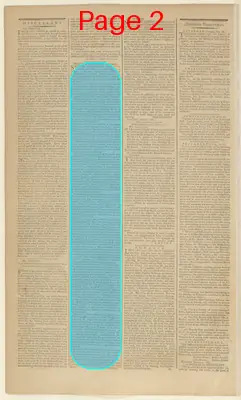
The New York Journal, And Weekly Register
New York, New York County, New York
What is this article about?
Continuation of the Treaty of Commerce between Great Britain and France, detailing exemptions on shipping duties, privateer regulations, merchant rights, neutral trade protections, non-contraband goods list, and passport requirements for wartime navigation.
Clipping

OCR Quality
Full Text
SHIPS of his Britannic Majesty, arriving in the dominions of France from Great-Britain or Ireland, or any other foreign port, not to pay freight or any similar duty. French ships are also to be exempted in the British dominions, from the duty of five shillings, or any other charge of the same kind.
Privateers, not subjects to either nation, or unfriendly to either, are not to arm their ships in the ports of either kingdom, or dispose of any property they have made prize of; nor to purchase more provisions than may be necessary for their voyage to the nearest port in the country they belong to.
Should any dispute arise between the commander of a ship and his crew, in any port of either power, no more shall be required by the magistrate, of the party accused, than his giving to the accuser a declaration (the magistrate witnessing the same) binding him to answer that matter before a proper magistrate in his own country; and this being done, it will be unlawful for the seamen to desert, or by any other means to impede the commander in the prosecution of his voyage.
Merchants may transact business, or correspond by letters, in what language they please. In case of dispute, a merchant shall not be obliged to bring all his books into court, but to expose only such parts as may be necessary to determine the matter in question; nor can the said books be taken from the hands of the owners, but in cases of bankruptcy. British subjects are not obliged to use stamped paper, except for their day-books, which, as evidence in case of a law suit, all persons trading in France are to observe, and which is to be attested or endorsed, gratis, by the judge.
All merchants, commanders of ships, and other British subjects, within the European dominions of his Most Christian Majesty, may manage their own affairs themselves, or by whom they think proper to appoint, and not be obliged to employ an interpreter or broker. Masters of ships, at Bordeaux, or any other port, may load or unload their vessels themselves, or employ whoever they please for that purpose; and not be obliged to employ persons appointed by public authority for the transaction of that business. Nor shall they be obliged to unload into other vessels, or take them into their own, or wait for their being loaded a greater length of time than they may think proper. French subjects, in the British European dominions, to enjoy, of course, the same reciprocal advantages.
Ships of either party, being laden, forced by stress of weather into the ports of the other, or otherwise coming to land, shall not be obliged to unlade their cargoes, or pay any duty, unless they do so voluntarily. They may, however (having previously obtained permission from the proper officer) dispose of such part of their cargo as may be necessary to defray the expenses of victualling or refitting; and not to pay duty for more than such part as shall actually be disposed of.
The ships of either power shall be permitted to sail to and from the ports or places of those who may be at war with the other party, without any molestation or any distinction being made who are proprietors of the merchandizes therein contained, whether such ships are bound to or from the ports of such enemy, and whether the said ships are bound from one port of the said enemy to another. Every article found on board ships belonging to the subjects of the respective powers are to be considered as free, though all or part of the lading shall belong to the enemies or the contracting parties (contraband goods excepted) and even be intended for the succour of their enemies. Persons on board free ships, though enemies to both or either party, to enjoy the same liberty, unless they are soldiers.
All merchandizes, not contraband, to enjoy the same liberty of commerce and navigation.
Cloth, manufactures woven of wool, cotton, flax, silk, or other materials, wearing apparel and clothes, with materials they are composed of, tin, lead, iron, brass, copper, coals, wheat, barley, and other kinds of corn and pulse, spices of all sorts, smoked and salted fish, tobacco, butter, and cheese, oil, wines, sugars, beer, salts of all sorts, gold coined and uncoined, and generally all things which serves for the sustenance of life, are not to be considered as prohibited. Cotton, ropes of all sorts, cables, sails, sail-cloths, hemp, tallow, pitch, tar, rosin, anchors, or any parts thereof, ship-masts, planks, boards, and beams of what wood soever, all things necessary for building and repairing ships, and all other articles not formed or prepared for the purposes of war, shall not be considered as contraband or prohibited, but may be transported or carried even to places belonging to the enemies of either party, provided such place shall not, at that time, be actually besieged.
To prevent all misunderstandings, should either of the contracting powers be at war, the ships belonging to the subjects of the other must be furnished with passports, expressive of a particular description of the ship, her master, or commander, &c. and the said passports to be made out in a form prescribed. They shall be recalled every year, in case the ship returns in that time; otherwise the same shall continue in force. Certificates are also to be provided, containing the particulars of the cargo, the place the ship sailed from, and where she is bound to, in order to ascertain whether any goods, considered by this treaty as prohibited, are on board.
Ships of the subjects of either kingdom, coming to the sea coasts of the other, but not being desirous of entering a port, or disposing of their cargoes, shall not be obliged to give an account of their lading, unless there is very sufficient ground for suspecting that they have prohibited or contraband goods on board, intended for the enemies of either party.
(To be continued.)
What sub-type of article is it?
What keywords are associated?
What entities or persons were involved?
Where did it happen?
Foreign News Details
Primary Location
France And Great Britain
Key Persons
Outcome
establishes reciprocal exemptions from shipping duties, protections for neutral trade, definitions of non-contraband goods, and requirements for passports and certificates during wartime.
Event Details
The treaty provisions exempt ships of both nations from freight duties in each other's dominions, regulate privateer activities in ports, outline dispute resolution for ship commanders and crews, grant merchants freedom in business transactions and language use without mandatory interpreters or brokers, allow self-loading/unloading of vessels, provide for handling of ships forced into ports by weather, permit neutral shipping to enemy ports without molestation (except contraband), list non-contraband goods including foodstuffs, materials, and shipbuilding supplies, and mandate passports and cargo certificates for ships during war to prevent misunderstandings.