Thank you for visiting SNEWPapers!
Sign up free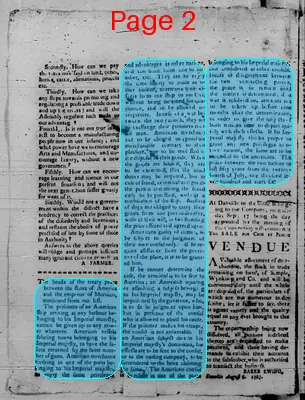
The Kentucke Gazette
Lexington, Fayette County, Kentucky
What is this article about?
Continuation of the 1786 peace treaty between the United States and the Emperor of Morocco, detailing provisions on prisoner exchanges, salutes, trade privileges, quarantine exemptions, interpreters, wartime conduct, duties, consular jurisdiction, and a 50-year duration starting July 24, 1786.
Clipping
OCR Quality
Full Text
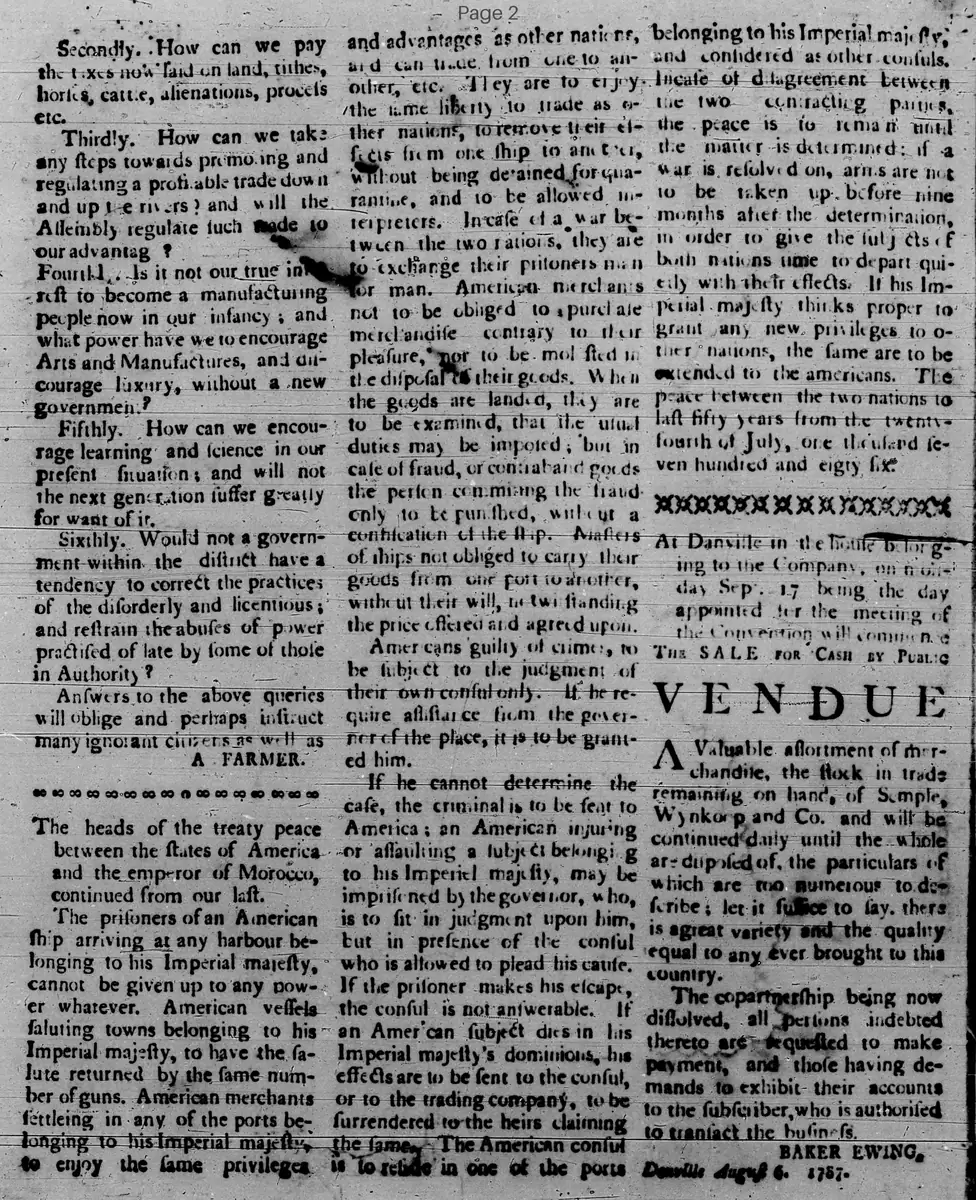
The prisoners of an American ship arriving at any harbour belonging to his Imperial majesty cannot be given up to any power whatever. American vessels saluting towns belonging to his Imperial majesty, to have the salute returned by the same number of guns. American merchants settling in any of the ports belonging to his Imperial majesty to enjoy the same privileges and advantages as other nations, and can trade from one to another, etc. They are to carry the same liberty to trade as other nations. To remove their effects from one ship to another, without being detained for quarantine. And to be allowed interpreters. In case of a war between the two nations they are to exchange their prisoners man for man. American merchants not to be obliged to purchase merchandise contrary to their pleasure, nor to be molested in the disposal of their goods. When the goods are landed, they are to be examined; that the usual duties may be imposed; but in case of fraud, or contraband goods the person committing the fraud only to be punished, without a confiscation of the ship. Masters of ships not obliged to carry their goods from one port to another, without their will, to the trading landing the price cleared and agreed upon. Americans guilty of crimes, to be subject to the judgment of their own consul only: require assistance from the governor of the place, it is to be granted him. If he cannot determine the case, the criminal is to be sent to America: an American injuring or assaulting a subject belonging to his Imperial majesty, may be imprisoned by the governor, who is to sit in judgment upon him, but in presence of the consul who is allowed to plead his cause. If the prisoner makes his escape, the consul is not answerable. If an American subject dies in his Imperial majesty's dominions his effects are to be sent to the consul, or to the trading company, to be surrendered to the heirs claiming the same. The American consul is to reside in one of the ports belonging to his Imperial majesty and considered as other consuls. In case of disagreement between the two contracting parties, the peace is to remain until the matter is determined: if a war is resolved on, arms are not to be taken up before nine months after the determination, in order to give the subjects of both nations time to depart quietly with their effects. If his Imperial majesty thinks proper to grant any new privileges to other nations, the same are to be extended to the americans. The peace between the two nations to last fifty years from the twenty-fourth of July, one thousand seven hundred and eighty six.
What sub-type of article is it?
What keywords are associated?
What entities or persons were involved?
Where did it happen?
Foreign News Details
Primary Location
Morocco
Event Date
From The Twenty Fourth Of July, One Thousand Seven Hundred And Eighty Six
Key Persons
Outcome
peace treaty lasting fifty years; provisions for trade privileges, prisoner exchanges, consular rights, and mutual protections without casualties.
Event Details
The treaty outlines protections for American prisoners, salutes for vessels, equal trade privileges for merchants, exemptions from quarantine, provision of interpreters, man-for-man prisoner exchanges in war, freedom from forced purchases, examination and duties on goods with punishment only for fraud, no obligation to transport goods unwillingly, consular jurisdiction over American crimes with governor assistance, handling of deceased Americans' effects, residence of American consul, maintenance of peace during disagreements with nine-month notice for war, extension of new privileges to Americans, and a fifty-year duration.