Thank you for visiting SNEWPapers!
Sign up free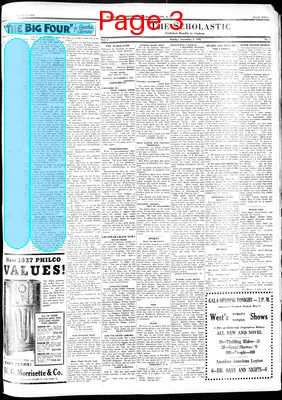
Literary
November 9, 1936
The Daily Independent
Elizabeth City, Pasquotank County, North Carolina
What is this article about?
In this excerpt from Agatha Christie's 'The Big Four,' Hercule Poirot and Captain Hastings examine a murder scene in a house, analyzing bloody footprints that implicate Robert Grant in killing old man Whalley. Poirot doubts the obvious conclusion and rejects the idea that the old woman Betsy Andrews could be the culprit due to her lack of connection to the Big Four.
Merged-components note: Continuous text from Agatha Christie story; merged for complete literary component despite OCR errors.
Clipping
OCR Quality
65%
Fair
Full Text
THE BIG FOUR
by
Agatha Christie
World-famous chorus girl Ethel Willard, known as 'the Siren', had not come to the house though altering the arrangements is the French destroyer with and his out.
Clamoring Howell tosses the inmate.
'Monique' fun 'Keeper' call to the stor. Poirot!
In spite of the river an affair.
Weible nid harbor.
Poynot a milley, of hm w out the Big gossips.
Moppaton.
A local Robert an wrvant.
His on his o's of oth h the hap-
II Inekes w. I to Ithe Pot- than mon- Jough Four vou is no very- man.
Why of the he an nfess likely.
Mon ir to not mur- auice. ,ec- the itead and quite ves: I nd has (lls, He m has mn'e order from door day we feet ints: m care- neting. f the
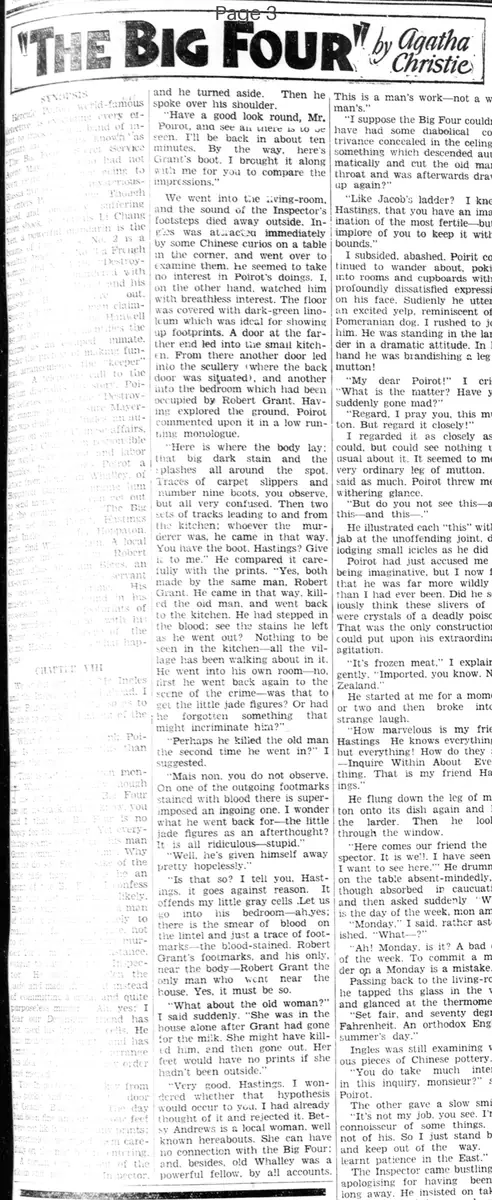
and he turned aside. Then he spoke over his shoulder.
"Have a good look round, Mr. Poirot, and see if there is to be seen. I'll be back in about ten minutes. By the way, here's Grant's boot. I brought it along with me for you to compare the impressions."
We went into the living-room, and the sound of the Inspector's footsteps died away outside. Ingles was attracted immediately by some Chinese curios on a table in the corner, and went over to examine them. He seemed to take no interest in Poirot's doings. I, on the other hand, watched him with breathless interest. The floor was covered with dark-green linoleum which was ideal for showing up footprints. A door at the farther end led into the small kitchen. From there another door led into the scullery (where the back door was situated), and another into the bedroom which had been occupied by Robert Grant. Having explored the ground, Poirot commented upon it in a low running monologue.
"Here is where the body lay: that big dark stain and the splashes all around the spot. Traces of carpet slippers and number nine boots, you observe. But all very confused. Then two sets of tracks leading to and from the kitchen: whoever the murderer was, he came in that way. You have the boot, Hastings? Give it to me." He compared it carefully with the prints, "Yes, both made by the same man. Robert Grant. He came in that way, killed the old man, and went back to the kitchen. He had stepped in the blood; see the stains he left as he went out? Nothing to be seen in the kitchen-all the village has been walking about in it. He went into his own room-no. First he went back again to the scene of the crime-was that to get the little jade figures? Or had he forgotten something that might incriminate him?"
"Perhaps he killed the old man the second time he went in?" I suggested.
"Mais non. You do not observe. On one of the outgoing footmarks stained with blood there is superimposed an ingoing one. I wonder what he went back for-the little jade figures as an afterthought? It is all ridiculous-stupid."
"Well, he's given himself away pretty hopelessly."
"Is that so? I tell you, Hastings, it goes against reason. It offends my little gray cells. Let us go into his bedroom-ah, yes; there is the smear of blood on the lintel and just a trace of footmarks--the blood-stained. Robert Grant's footmarks, and his only, near the body-Robert Grant the only man who went near the house. Yes, it must be so."
"What about the old woman?" I said suddenly. "She was in the house alone after Grant had gone for the milk. She might have killed him, and then gone out. Her feet would have no prints if she hadn't been outside."
"Very good, Hastings. I wondered whether that hypothesis would occur to you. I had already thought of it and rejected it. Betsy Andrews is a local woman, well known hereabouts. She can have no connection with the Big Four; and, besides, old Whalley was a powerful fellow, by all accounts.
by
Agatha Christie
World-famous chorus girl Ethel Willard, known as 'the Siren', had not come to the house though altering the arrangements is the French destroyer with and his out.
Clamoring Howell tosses the inmate.
'Monique' fun 'Keeper' call to the stor. Poirot!
In spite of the river an affair.
Weible nid harbor.
Poynot a milley, of hm w out the Big gossips.
Moppaton.
A local Robert an wrvant.
His on his o's of oth h the hap-
II Inekes w. I to Ithe Pot- than mon- Jough Four vou is no very- man.
Why of the he an nfess likely.
Mon ir to not mur- auice. ,ec- the itead and quite ves: I nd has (lls, He m has mn'e order from door day we feet ints: m care- neting. f the
and he turned aside. Then he spoke over his shoulder.
"Have a good look round, Mr. Poirot, and see if there is to be seen. I'll be back in about ten minutes. By the way, here's Grant's boot. I brought it along with me for you to compare the impressions."
We went into the living-room, and the sound of the Inspector's footsteps died away outside. Ingles was attracted immediately by some Chinese curios on a table in the corner, and went over to examine them. He seemed to take no interest in Poirot's doings. I, on the other hand, watched him with breathless interest. The floor was covered with dark-green linoleum which was ideal for showing up footprints. A door at the farther end led into the small kitchen. From there another door led into the scullery (where the back door was situated), and another into the bedroom which had been occupied by Robert Grant. Having explored the ground, Poirot commented upon it in a low running monologue.
"Here is where the body lay: that big dark stain and the splashes all around the spot. Traces of carpet slippers and number nine boots, you observe. But all very confused. Then two sets of tracks leading to and from the kitchen: whoever the murderer was, he came in that way. You have the boot, Hastings? Give it to me." He compared it carefully with the prints, "Yes, both made by the same man. Robert Grant. He came in that way, killed the old man, and went back to the kitchen. He had stepped in the blood; see the stains he left as he went out? Nothing to be seen in the kitchen-all the village has been walking about in it. He went into his own room-no. First he went back again to the scene of the crime-was that to get the little jade figures? Or had he forgotten something that might incriminate him?"
"Perhaps he killed the old man the second time he went in?" I suggested.
"Mais non. You do not observe. On one of the outgoing footmarks stained with blood there is superimposed an ingoing one. I wonder what he went back for-the little jade figures as an afterthought? It is all ridiculous-stupid."
"Well, he's given himself away pretty hopelessly."
"Is that so? I tell you, Hastings, it goes against reason. It offends my little gray cells. Let us go into his bedroom-ah, yes; there is the smear of blood on the lintel and just a trace of footmarks--the blood-stained. Robert Grant's footmarks, and his only, near the body-Robert Grant the only man who went near the house. Yes, it must be so."
"What about the old woman?" I said suddenly. "She was in the house alone after Grant had gone for the milk. She might have killed him, and then gone out. Her feet would have no prints if she hadn't been outside."
"Very good, Hastings. I wondered whether that hypothesis would occur to you. I had already thought of it and rejected it. Betsy Andrews is a local woman, well known hereabouts. She can have no connection with the Big Four; and, besides, old Whalley was a powerful fellow, by all accounts.
What sub-type of article is it?
Prose Fiction
What themes does it cover?
Death Mortality
Political
What keywords are associated?
Murder Investigation
Poirot
Footprints
Robert Grant
Big Four
Hastings
Crime Scene
What entities or persons were involved?
By Agatha Christie
Literary Details
Title
The Big Four
Author
By Agatha Christie
Key Lines
"Have A Good Look Round, Mr. Poirot, And See If There Is To Be Seen. I'll Be Back In About Ten Minutes. By The Way, Here's Grant's Boot. I Brought It Along With Me For You To Compare The Impressions."
"Here Is Where The Body Lay: That Big Dark Stain And The Splashes All Around The Spot. Traces Of Carpet Slippers And Number Nine Boots, You Observe. But All Very Confused."
"Yes, Both Made By The Same Man. Robert Grant. He Came In That Way, Killed The Old Man, And Went Back To The Kitchen."
"Is That So? I Tell You, Hastings, It Goes Against Reason. It Offends My Little Gray Cells."
"Betsy Andrews Is A Local Woman, Well Known Hereabouts. She Can Have No Connection With The Big Four; And, Besides, Old Whalley Was A Powerful Fellow, By All Accounts."