Thank you for visiting SNEWPapers!
Sign up free
Literary
April 13, 1873
The Cairo Bulletin
Cairo, Alexander County, Illinois
What is this article about?
Historical essay on the first English daily newspaper, the Courant, published March 11, 1702, in London by a shrewd printer. It featured foreign news, grew successful, and pioneered daily journalism despite initial contempt and limitations like slow news delivery.
Clipping
OCR Quality
95%
Excellent
Full Text
THE FIRST DAILY NEWS PAPER.
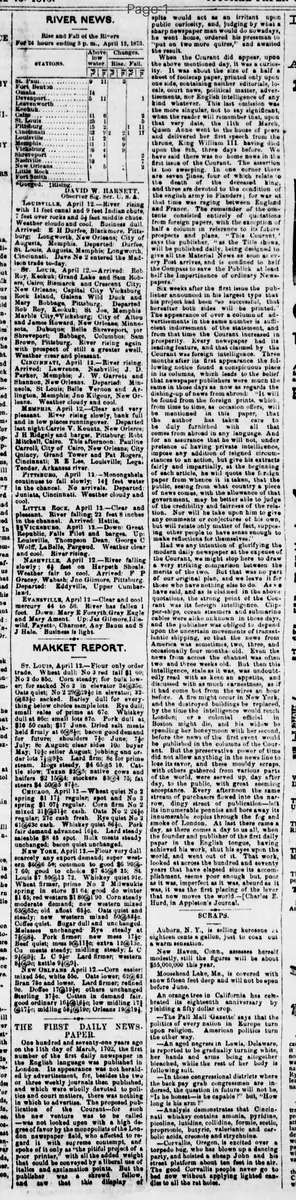
One hundred and seventy-one years ago on the 11th day of March, 1702, the first number of the first daily newspaper in the English language was published in London. Its appearance was not heralded by advertisement, for, besides the two or three weekly journals then published, and which were wholly devoted to politics and court matters, there was nothing in which to advertise. The proposed publication of the Courant—for such was the new venture to be called—was not looked upon with a high degree of favor by the monopolists of the London newspaper field, who affected to regard it with supreme contempt, and spoke of it only as "the pitiful project of a poor printer," with all the added weight that could be conveyed by a liberal use of italics and exclamation points. But the publisher was a shrewd fellow and saw that despite would act as an irritant upon public curiosity, and, judging by what a sharp newspaper man would do nowadays, he went home, ordered his pressman to "put on two more quires," and awaited the result.
When the Courant did appear, upon the above mentioned day, it was a curiosity. It was about the size of half a sheet of foolscap paper, printed only upon one side, containing neither editorials, locals, court news, political matter, advertisements, nor English intelligence of any kind whatever. This last omission was the more singular, not to say significant, when the reader will remember that, upon that very date, the 11th of March, Queen Anne went to the house of peers and delivered her first speech from the throne, King William III. having died upon the 8th, three days before. We have said there was no home news in the first issue of the Courant. The assertion is too sweeping. In one corner there are seven lines, four of which relate to the death of the deceased king, and three are devoted to the condition of the English army in Flanders; for war at that time was raging between England and France. The remainder of the contents consisted entirely of quotations from foreign papers, with the exception of half a column in reference to its future prospects and plans. "This Courant," says the publisher, "as the Title shows, will be published daily, being designed to give all the Material News as soon as every Post arrives, and is confined to half the Compass to save the Publick at least half the Impertinence of ordinary News-papers."
Six weeks after the first issue the publisher announced in his largest type that his project had been "so successful, that hereafter both sides will be printed." The appearance of over a column of advertisements in the same number is sufficient indorsement of the statement, and from that time the Courant increased in prosperity. Every newspaper had its leading feature, and that claimed by the Courant was foreign intelligence. Three months after its first appearance the following notice found a conspicuous place in its columns, which leads to the belief that newspaper publishers were much the same in those days as now as regards the dish-ing-up of news from abroad: "It will be found from the foreign prints, which, from time to time, as occasion offers, will be mentioned in this paper, that the author has taken care to be duly furnished with all that comes from abroad in any language. And for an assurance that he will not, under pretence of having private intelligence, impose any addition of feigned circumstances to an action, but give his extracts fairly and impartially, at the beginning of each article, he will quote the foreign paper from whence it is taken, that the public, seeing from what country a piece of news comes, with the allowance of that government, may be better able to judge of the credibility and fairness of the relation. Nor will he take upon him to give any comments or conjectures of his own, but will relate only matter of fact, supposing other people to have sense enough to make reflections for themselves."
Had we any intention of glorifying the modern daily newspaper at the expense of the Courant, we might stop here to draw a very striking comparison between the merits of the two. But that was no part of our original plan, and we leave it for those who have nothing else to do. As we have said, and as is claimed in the above quotations, the strong point of the Courant was its foreign intelligence. Clipper-ships, ocean steamers and submarine cables were alike unknown in those days, and the publisher was obliged to depend upon the uncertain movements of transatlantic shipping, so that the news from America was sometimes two, three, and occasionally four months old. Even the news from across the channel was often two and three weeks old. But then this intelligence, stale as it was, was undoubtedly read with as keen an appetite, and discussed with as much earnestness, as if it had come hot from the wires an hour before. A fire might occur in New York, and the destroyed buildings be replaced, by the time the intelligence would reach London; or a colonial official in Boston might die, and his widow be spending her honeymoon with her second, before the news of the first event would be published in the columns of the Courant. But the preservative power of time did not allow anything in the news line to lose its savor, and these mouldy scraps, with others gathered from various parts of the world, were served up, day after day, to the public, with great seeming acceptance. Every afternoon the same stream of purchasers flowed into the narrow dingy street of publication—left its innumerable pennies and bore away its innumerable copies through the fog and smoke of London. At last there came a day, as there comes a day to us all, when the founder and publisher of the first daily paper in the English tongue, having achieved his work, shut his eyes upon the world, and went out of it. That work, looked at across the hundred and seventy years that have elapsed since its accomplishment, seems poor enough but, poor as it was, imperfect as it was, absurd as it was, it was the first placing of the lever that now moves the world.—[Charles E. Hurd, in Appleton's Journal.
One hundred and seventy-one years ago on the 11th day of March, 1702, the first number of the first daily newspaper in the English language was published in London. Its appearance was not heralded by advertisement, for, besides the two or three weekly journals then published, and which were wholly devoted to politics and court matters, there was nothing in which to advertise. The proposed publication of the Courant—for such was the new venture to be called—was not looked upon with a high degree of favor by the monopolists of the London newspaper field, who affected to regard it with supreme contempt, and spoke of it only as "the pitiful project of a poor printer," with all the added weight that could be conveyed by a liberal use of italics and exclamation points. But the publisher was a shrewd fellow and saw that despite would act as an irritant upon public curiosity, and, judging by what a sharp newspaper man would do nowadays, he went home, ordered his pressman to "put on two more quires," and awaited the result.
When the Courant did appear, upon the above mentioned day, it was a curiosity. It was about the size of half a sheet of foolscap paper, printed only upon one side, containing neither editorials, locals, court news, political matter, advertisements, nor English intelligence of any kind whatever. This last omission was the more singular, not to say significant, when the reader will remember that, upon that very date, the 11th of March, Queen Anne went to the house of peers and delivered her first speech from the throne, King William III. having died upon the 8th, three days before. We have said there was no home news in the first issue of the Courant. The assertion is too sweeping. In one corner there are seven lines, four of which relate to the death of the deceased king, and three are devoted to the condition of the English army in Flanders; for war at that time was raging between England and France. The remainder of the contents consisted entirely of quotations from foreign papers, with the exception of half a column in reference to its future prospects and plans. "This Courant," says the publisher, "as the Title shows, will be published daily, being designed to give all the Material News as soon as every Post arrives, and is confined to half the Compass to save the Publick at least half the Impertinence of ordinary News-papers."
Six weeks after the first issue the publisher announced in his largest type that his project had been "so successful, that hereafter both sides will be printed." The appearance of over a column of advertisements in the same number is sufficient indorsement of the statement, and from that time the Courant increased in prosperity. Every newspaper had its leading feature, and that claimed by the Courant was foreign intelligence. Three months after its first appearance the following notice found a conspicuous place in its columns, which leads to the belief that newspaper publishers were much the same in those days as now as regards the dish-ing-up of news from abroad: "It will be found from the foreign prints, which, from time to time, as occasion offers, will be mentioned in this paper, that the author has taken care to be duly furnished with all that comes from abroad in any language. And for an assurance that he will not, under pretence of having private intelligence, impose any addition of feigned circumstances to an action, but give his extracts fairly and impartially, at the beginning of each article, he will quote the foreign paper from whence it is taken, that the public, seeing from what country a piece of news comes, with the allowance of that government, may be better able to judge of the credibility and fairness of the relation. Nor will he take upon him to give any comments or conjectures of his own, but will relate only matter of fact, supposing other people to have sense enough to make reflections for themselves."
Had we any intention of glorifying the modern daily newspaper at the expense of the Courant, we might stop here to draw a very striking comparison between the merits of the two. But that was no part of our original plan, and we leave it for those who have nothing else to do. As we have said, and as is claimed in the above quotations, the strong point of the Courant was its foreign intelligence. Clipper-ships, ocean steamers and submarine cables were alike unknown in those days, and the publisher was obliged to depend upon the uncertain movements of transatlantic shipping, so that the news from America was sometimes two, three, and occasionally four months old. Even the news from across the channel was often two and three weeks old. But then this intelligence, stale as it was, was undoubtedly read with as keen an appetite, and discussed with as much earnestness, as if it had come hot from the wires an hour before. A fire might occur in New York, and the destroyed buildings be replaced, by the time the intelligence would reach London; or a colonial official in Boston might die, and his widow be spending her honeymoon with her second, before the news of the first event would be published in the columns of the Courant. But the preservative power of time did not allow anything in the news line to lose its savor, and these mouldy scraps, with others gathered from various parts of the world, were served up, day after day, to the public, with great seeming acceptance. Every afternoon the same stream of purchasers flowed into the narrow dingy street of publication—left its innumerable pennies and bore away its innumerable copies through the fog and smoke of London. At last there came a day, as there comes a day to us all, when the founder and publisher of the first daily paper in the English tongue, having achieved his work, shut his eyes upon the world, and went out of it. That work, looked at across the hundred and seventy years that have elapsed since its accomplishment, seems poor enough but, poor as it was, imperfect as it was, absurd as it was, it was the first placing of the lever that now moves the world.—[Charles E. Hurd, in Appleton's Journal.
What sub-type of article is it?
Essay
What themes does it cover?
Political
War Peace
What keywords are associated?
Daily Newspaper
Courant
London 1702
Foreign Intelligence
Queen Anne
King William Iii
English Press
What entities or persons were involved?
Charles E. Hurd, In Appleton's Journal
Literary Details
Title
The First Daily News Paper.
Author
Charles E. Hurd, In Appleton's Journal
Subject
The First Daily Newspaper In English, The Courant
Form / Style
Historical Prose Reflection
Key Lines
"This Courant," Says The Publisher, "As The Title Shows, Will Be Published Daily, Being Designed To Give All The Material News As Soon As Every Post Arrives, And Is Confined To Half The Compass To Save The Publick At Least Half The Impertinence Of Ordinary News Papers."
"It Will Be Found From The Foreign Prints, Which, From Time To Time, As Occasion Offers, Will Be Mentioned In This Paper, That The Author Has Taken Care To Be Duly Furnished With All That Comes From Abroad In Any Language."
That Work, Looked At Across The Hundred And Seventy Years That Have Elapsed Since Its Accomplishment, Seems Poor Enough But, Poor As It Was, Imperfect As It Was, Absurd As It Was, It Was The First Placing Of The Lever That Now Moves The World.