Thank you for visiting SNEWPapers!
Sign up free
Story
February 10, 1950
The Poplar Standard
Poplar, Roosevelt County, Montana
What is this article about?
U.S. Department of Agriculture scientists explain the destructive power of raindrop splash erosion, which can lift significant soil layers, and highlight efforts to protect land with cover crops against such forces.
Clipping
OCR Quality
95%
Excellent
Full Text
Soil Loss From Rain
Costly to Acreage
This Type of Erosion
Studied by Government
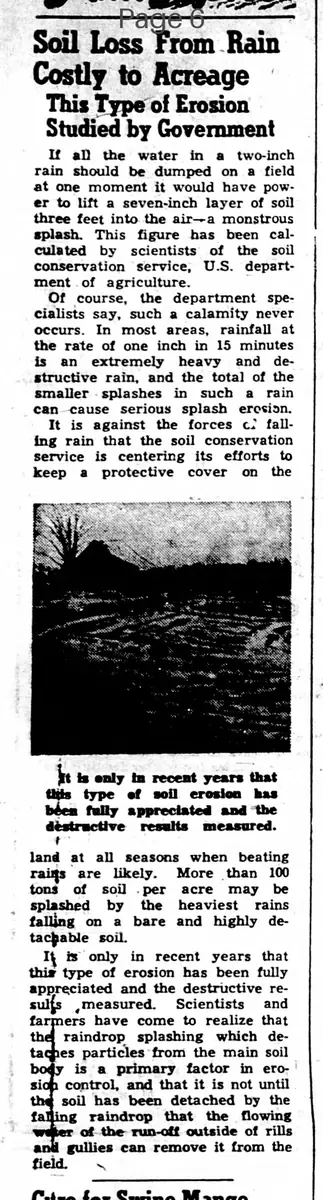
If all the water in a two-inch rain should be dumped on a field at one moment it would have power to lift a seven-inch layer of soil three feet into the air—a monstrous splash. This figure has been calculated by scientists of the soil conservation service, U.S. department of agriculture.
Of course, the department specialists say, such a calamity never occurs. In most areas, rainfall at the rate of one inch in 15 minutes is an extremely heavy and destructive rain. and the total of the smaller splashes in such a rain can cause serious splash erosion.
It is against the forces of falling rain that the soil conservation service is centering its efforts to keep a protective cover on the land at all seasons when beating rains are likely. More than 100 tons of soil per acre may be splashed by the heaviest rains falling on a bare and highly detachable soil.
It is only in recent years that this type of erosion has been fully appreciated and the destructive results measured. Scientists and farmers have come to realize that the raindrop splashing which detaches particles from the main soil body is a primary factor in erosion such control, and that it is not until the soil has been detached by the falling raindrop that the flowing water of the run-off outside of rills and gullies can remove it from the field.
Costly to Acreage
This Type of Erosion
Studied by Government
If all the water in a two-inch rain should be dumped on a field at one moment it would have power to lift a seven-inch layer of soil three feet into the air—a monstrous splash. This figure has been calculated by scientists of the soil conservation service, U.S. department of agriculture.
Of course, the department specialists say, such a calamity never occurs. In most areas, rainfall at the rate of one inch in 15 minutes is an extremely heavy and destructive rain. and the total of the smaller splashes in such a rain can cause serious splash erosion.
It is against the forces of falling rain that the soil conservation service is centering its efforts to keep a protective cover on the land at all seasons when beating rains are likely. More than 100 tons of soil per acre may be splashed by the heaviest rains falling on a bare and highly detachable soil.
It is only in recent years that this type of erosion has been fully appreciated and the destructive results measured. Scientists and farmers have come to realize that the raindrop splashing which detaches particles from the main soil body is a primary factor in erosion such control, and that it is not until the soil has been detached by the falling raindrop that the flowing water of the run-off outside of rills and gullies can remove it from the field.
What sub-type of article is it?
Curiosity
What themes does it cover?
Nature
Catastrophe
Misfortune
What keywords are associated?
Soil Erosion
Raindrop Splashing
Splash Erosion
Soil Conservation
Rain Damage
Story Details
Event Date
Recent Years
Story Details
Scientists calculate the erosive power of raindrops, explaining how splash erosion detaches soil particles, leading to broader erosion issues, and emphasize the need for protective land cover.