Thank you for visiting SNEWPapers!
Sign up free
Rural Retreat Times
Rural Retreat, Wythe County, Virginia
What is this article about?
Article from Woman's Home Companion contrasts domestic standards of modern young married women with those of past middle-class women, who managed without help by living simply, avoiding elaborate styles, and keeping basic routines like weekly child baths and single-course meals.
Clipping
OCR Quality
Full Text
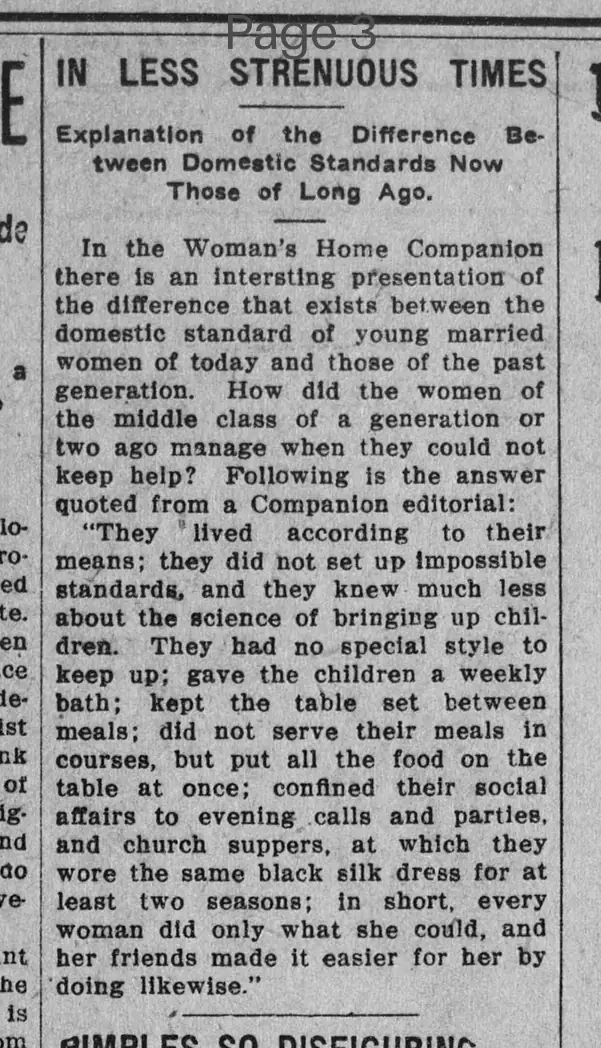
Explanation of the Difference Between Domestic Standards Now Those of Long Ago.
In the Woman's Home Companion there is an interesting presentation of the difference that exists between the domestic standard of young married women of today and those of the past generation. How did the women of the middle class of a generation or two ago manage when they could not keep help? Following is the answer quoted from a Companion editorial:
"They lived according to their means; they did not set up impossible standards, and they knew much less about the science of bringing up children. They had no special style to keep up; gave the children a weekly bath; kept the table set between meals; did not serve their meals in courses, but put all the food on the table at once; confined their social affairs to evening calls and parties, and church suppers, at which they wore the same black silk dress for at least two seasons; in short, every woman did only what she could, and her friends made it easier for her by doing likewise."
What sub-type of article is it?
What keywords are associated?
Domestic News Details
Event Details
In the Woman's Home Companion there is an interesting presentation of the difference that exists between the domestic standard of young married women of today and those of the past generation. How did the women of the middle class of a generation or two ago manage when they could not keep help? Following is the answer quoted from a Companion editorial: 'They lived according to their means; they did not set up impossible standards, and they knew much less about the science of bringing up children. They had no special style to keep up; gave the children a weekly bath; kept the table set between meals; did not serve their meals in courses, but put all the food on the table at once; confined their social affairs to evening calls and parties, and church suppers, at which they wore the same black silk dress for at least two seasons; in short, every woman did only what she could, and her friends made it easier for her by doing likewise.'