Thank you for visiting SNEWPapers!
Sign up free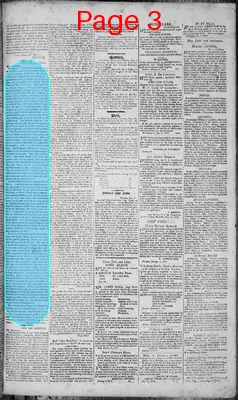
Letter to Editor
January 8, 1810
Portland Gazette, And Maine Advertiser
Portland, Cumberland County, Maine
What is this article about?
A letter to Mr. Shirley defends Britain's disavowal of the Erskine arrangement as fair, notes mutual trade benefits to the US and UK, criticizes the US administration's embargo policies, one-sided publications, and refusal to negotiate with the new British envoy, signed Impartiality.
Clipping

OCR Quality
98%
Excellent
Full Text
FOR THE GAZETTE.
MR. SHIRLEY,
Mr. Secretary Smith insists much on another circumstance respecting the effect of the arrangement made with Mr. Erskine, which upon examination will, perhaps, appear less a matter of complaint against England, and operating as favorably to the interests of the United States. His statement is, that G. Britain, having derived great benefits from the arrangement, as to supplies from and trade with this country, it ceased to be so highly concerned for the ratification of the articles agreed to by Mr. Erskine; and after having enjoyed the advantages of the convention, refused to perform its part of the arrangement. That England was not bound in justice to fulfill promises and conditions, which she never authorised her agent to propose, has before been shewn, and must be evident to all candid men. But further, was not this country, were not the merchants and people of the U. States as much benefitted by the arrangement as England could possibly be? We know it has been popular to represent G. Britain as starving and sinking for want of trade with the U. States. But we doubt the truth of the representation. That nation is, indeed, benefitted by trade with this country. And so is this country with that. And England suffered in some instances by the prohibition of commercial intercourse on our part. But who suffered most? And what would have been the present state of our nation, had not the shackles been taken off from Commerce in May last? Many, very many of our citizens had been bankrupts long before this. The Treasury would not have received millions which have now been deposited in it—and the people had wholly withdrawn all confidence from the administration.
All this must have been foreseen by our Rulers. And they made an arrangement—not agreeably to the instructions given the British Minister by his government—but according to terms of their own proposing. And thus the fulfillment of, and the readiness to carry into effect the convention made, on the part of our Rulers may justly be considered as arising from a wish to do away the odium to which they were exposed for the Embargo, Non-intercourse, &c. For it is admitted by candid Democrats, that the President was not fully authorised by Congress to do what was done by his proclamation. Is it then proper to complain of the disavowal on the part of England, as tho' it were done after receiving all the advantages from the arrangement, which it was calculated to afford?
There is still another act of our administration for which we do not see that they can be possibly justified, calculated to embitter and provoke G. Britain. We ask, if it be not very improper, if it be not unfair, if it be not a novel proceeding, after refusing to hear further from the English Minister, to publish a long statement and representation of the dispute, (as is done in the letter from Mr. Smith to Mr. Pinkney) when no one can reply to that statement, and when we are forbid to hear what may be said on the other side. This, in truth, is a one-sided representation, in which there is much of mistake, of incorrectness and of sophistry, with a view, it is feared, to excite the prejudices and passions of the people, and to prejudge this important case, on which are suspended the peace and prosperity of the country. This letter, no doubt, our Cabinet had a right to address through their agent to the British government. But it is not fair or manly to send forth this document, at a time, when the person who was authorised to reply to it, is excluded from the privilege of being heard:
But whether these charges of impropriety fasten on our administration, or not; of this we feel assured, that all candid men, all who love their country's welfare will not approve of the late conduct of our Rulers in refusing to negotiate with the new British Envoy.
IMPARTIALITY.
MR. SHIRLEY,
Mr. Secretary Smith insists much on another circumstance respecting the effect of the arrangement made with Mr. Erskine, which upon examination will, perhaps, appear less a matter of complaint against England, and operating as favorably to the interests of the United States. His statement is, that G. Britain, having derived great benefits from the arrangement, as to supplies from and trade with this country, it ceased to be so highly concerned for the ratification of the articles agreed to by Mr. Erskine; and after having enjoyed the advantages of the convention, refused to perform its part of the arrangement. That England was not bound in justice to fulfill promises and conditions, which she never authorised her agent to propose, has before been shewn, and must be evident to all candid men. But further, was not this country, were not the merchants and people of the U. States as much benefitted by the arrangement as England could possibly be? We know it has been popular to represent G. Britain as starving and sinking for want of trade with the U. States. But we doubt the truth of the representation. That nation is, indeed, benefitted by trade with this country. And so is this country with that. And England suffered in some instances by the prohibition of commercial intercourse on our part. But who suffered most? And what would have been the present state of our nation, had not the shackles been taken off from Commerce in May last? Many, very many of our citizens had been bankrupts long before this. The Treasury would not have received millions which have now been deposited in it—and the people had wholly withdrawn all confidence from the administration.
All this must have been foreseen by our Rulers. And they made an arrangement—not agreeably to the instructions given the British Minister by his government—but according to terms of their own proposing. And thus the fulfillment of, and the readiness to carry into effect the convention made, on the part of our Rulers may justly be considered as arising from a wish to do away the odium to which they were exposed for the Embargo, Non-intercourse, &c. For it is admitted by candid Democrats, that the President was not fully authorised by Congress to do what was done by his proclamation. Is it then proper to complain of the disavowal on the part of England, as tho' it were done after receiving all the advantages from the arrangement, which it was calculated to afford?
There is still another act of our administration for which we do not see that they can be possibly justified, calculated to embitter and provoke G. Britain. We ask, if it be not very improper, if it be not unfair, if it be not a novel proceeding, after refusing to hear further from the English Minister, to publish a long statement and representation of the dispute, (as is done in the letter from Mr. Smith to Mr. Pinkney) when no one can reply to that statement, and when we are forbid to hear what may be said on the other side. This, in truth, is a one-sided representation, in which there is much of mistake, of incorrectness and of sophistry, with a view, it is feared, to excite the prejudices and passions of the people, and to prejudge this important case, on which are suspended the peace and prosperity of the country. This letter, no doubt, our Cabinet had a right to address through their agent to the British government. But it is not fair or manly to send forth this document, at a time, when the person who was authorised to reply to it, is excluded from the privilege of being heard:
But whether these charges of impropriety fasten on our administration, or not; of this we feel assured, that all candid men, all who love their country's welfare will not approve of the late conduct of our Rulers in refusing to negotiate with the new British Envoy.
IMPARTIALITY.
What sub-type of article is it?
Persuasive
Political
Provocative
What themes does it cover?
Politics
Commerce Trade
Economic Policy
What keywords are associated?
Erskine Arrangement
British Trade
Us Administration
Embargo Policy
Non Intercourse
Diplomatic Refusal
One Sided Representation
What entities or persons were involved?
Impartiality.
Mr. Shirley,
Letter to Editor Details
Author
Impartiality.
Recipient
Mr. Shirley,
Main Argument
britain's disavowal of the erskine arrangement is justified as it was unauthorized, and the us benefited equally from trade; the us administration is criticized for embargo policies, publishing one-sided statements, and refusing to negotiate with the new british envoy.
Notable Details
Mr. Secretary Smith
Mr. Erskine Arrangement
Embargo
Non Intercourse
Letter From Mr. Smith To Mr. Pinkney
New British Envoy