Thank you for visiting SNEWPapers!
Sign up free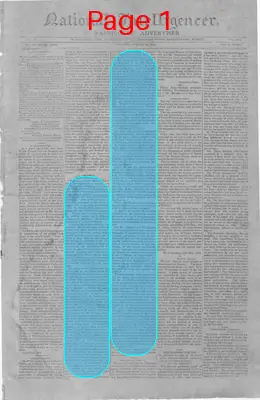
Editorial
August 14, 1809
The National Intelligencer And Washington Advertiser
Washington, District Of Columbia
What is this article about?
Editorial from the Aurora defends President Madison against British claims that he offered concessions harming US interests in negotiations with Erskine. Accuses British ministry of forgery to undermine US unity and confidence in government, urges public support for Madison and demands for justice on commerce and impressment.
Clipping
OCR Quality
98%
Excellent
Full Text
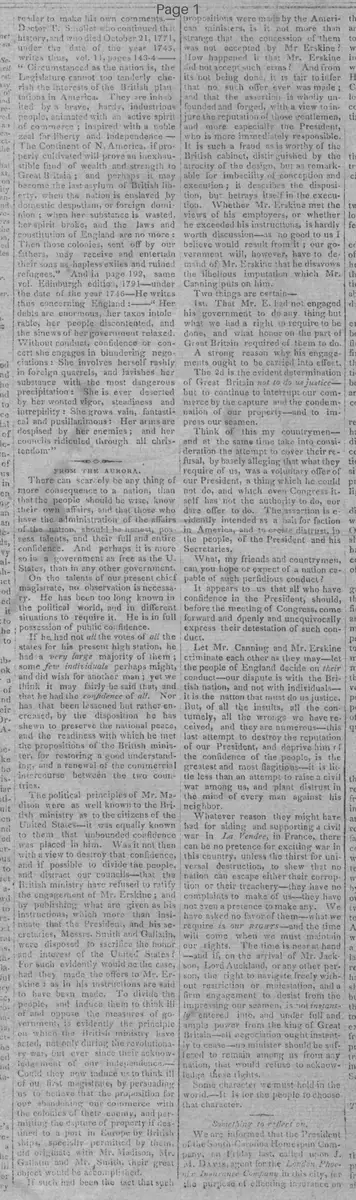
FROM THE AURORA.
There can scarcely be any thing of more consequence to a nation, than that the people should be wise, know their own affairs, and that those who have the administration of the affairs of the nation, should be honest, possess talents, and their full and entire confidence. And perhaps it is more so in a government as free as the U. States, than in any other government.
On the talents of our present chief magistrate, no observation is necessary. He has been too long known in the political world, and in different situations to require it. He is in full possession of public confidence. If he had not all the votes of all the states for his present high station, he had a very large majority of them; some few individuals perhaps might, and did wish for another man; yet we think it may fairly be said that, and that he had the confidence of all. Nor has that been lessened but rather increased, by the disposition he has shewn to preserve the national peace, and the readiness with which he met the propositions of the British minister, for restoring a good understanding, and a renewal of the commercial intercourse between the two countries.
The political principles of Mr. Madison were as well known to the British ministry as to the citizens of the United States--it was equally known to them that unbounded confidence was placed in him. Was it not then with a view to destroy that confidence, and if possible to divide the people, and distract our councils--that the British ministry have refused to ratify the engagement of Mr. Erskine; and by publishing what are given as his instructions, which more than insinuate that the President, and his secretaries, Messrs. Smith and Gallatin, were disposed to sacrifice the honor and interest of the United States? For such evidently would be the case, had they made the offers to Mr. Erskine: as in his instructions are said to have been made. To divide the people, and induce them to think ill of and oppose the measures of government, is evidently the principle on which the British ministry have acted, not only during the revolutionary war, but ever since their acknowledgement of our independence.
Could they now induce us to think ill of our first magistrate, by persuading us to believe that the proposition for our abandoning our commerce with the colonies of their enemy, and permitting the capture of property if destined to a port in Europe by British ships, specially permitted by them, did originate with Mr. Madison, Mr. Gallatin and Mr. Smith, their great object would be accomplished.
If such had been the fact that such propositions were made by the American ministers, is it not more than strange that the concession of them was not accepted by Mr. Erskine? How happened it that Mr. Erskine did not accept such terms? And from its not being done, it is fair to infer that no such offer ever was made; and that the assertion is wholly unfounded and forged, with a view to injure the reputation of those gentlemen, and more especially the President, who is more immediately responsible. It is such a fraud as is worthy of the British cabinet, distinguished by the atrocity of the design, but as remarkable for imbecility of conception and execution; it describes the disposition, but betrays itself in the execution. Whether Mr. Erskine met the views of his employers, or whether he exceeded his instructions, is hardly worth discussion--as no good to us I believe would result from it; our government will, however, have to demand of Mr. Erskine that he disavows the libellous imputation which Mr. Canning puts on him.
Two things are certain--
1st. That Mr. E. had not engaged his government to do any thing but what we had a right to require to be done, and what honor on the part of Great Britain required of them to do. A strong reason why his engagements ought to be carried into effect.
The 2d is the evident determination of Great Britain not to do us justice but to continue to interrupt our commerce by the capture and the condemnation of our property--and to impress our seamen.
Think of this my countrymen-- and at the same time take into consideration the attempt to cover their refusal, by basely alleging that what they require of us, was a voluntary offer of our President, a thing which he could not do, and which even Congress itself has not the authority to do, nor dare offer to do. The assertion is evidently intended as a bait or faction in America, and to create distrust, in the people, of the President and his Secretaries.
What, my friends and countrymen, can you hope or expect of a nation capable of such perfidious conduct?
It appears to us that all who have confidence in the President, should, before the meeting of Congress, come forward and openly and unequivocally express their detestation of such conduct.
Let Mr. Canning and Mr. Erskine criminate each other as they may--let the people of England decide on their conduct--our dispute is with the British nation, and not with individuals-- it is the nation that must do us justice.
But, of all the insults, all the contumely, all the wrongs we have received, and they are numerous--this last attempt to destroy the reputation of our President, and deprive him of the confidence of the people, is the greatest and most flagitious--it is little less than an attempt to raise a civil war among us, and plant distrust in the mind of every man against his neighbor.
Whatever reason they might have had for aiding and supporting a civil war in La Vendee, in France, there can be no pretence for exciting war in this country, unless the thirst for universal destruction, to shew that no nation can escape either their corruption or their treachery--they have no complaints to make of us--they have not even a pretence to make any. We have asked no favor of them--what we require is our rights--and the time will come when we must maintain our rights. The time is near at hand --and if, on the arrival of Mr. Jackson, Lord Auckland, or any other person, the right to navigate freely without restriction or molestation, and a firm engagement to desist from the impressing our seamen, is not instantly entered into, and under full and ample power from the king of Great Britain--all negotiation ought instantly to cease--no minister should be suffered to remain among us from any nation, that would refuse to acknowledge these rights.
Some character we must hold in the world.--It is for the people to choose that character.
Something to reflect on.
There can scarcely be any thing of more consequence to a nation, than that the people should be wise, know their own affairs, and that those who have the administration of the affairs of the nation, should be honest, possess talents, and their full and entire confidence. And perhaps it is more so in a government as free as the U. States, than in any other government.
On the talents of our present chief magistrate, no observation is necessary. He has been too long known in the political world, and in different situations to require it. He is in full possession of public confidence. If he had not all the votes of all the states for his present high station, he had a very large majority of them; some few individuals perhaps might, and did wish for another man; yet we think it may fairly be said that, and that he had the confidence of all. Nor has that been lessened but rather increased, by the disposition he has shewn to preserve the national peace, and the readiness with which he met the propositions of the British minister, for restoring a good understanding, and a renewal of the commercial intercourse between the two countries.
The political principles of Mr. Madison were as well known to the British ministry as to the citizens of the United States--it was equally known to them that unbounded confidence was placed in him. Was it not then with a view to destroy that confidence, and if possible to divide the people, and distract our councils--that the British ministry have refused to ratify the engagement of Mr. Erskine; and by publishing what are given as his instructions, which more than insinuate that the President, and his secretaries, Messrs. Smith and Gallatin, were disposed to sacrifice the honor and interest of the United States? For such evidently would be the case, had they made the offers to Mr. Erskine: as in his instructions are said to have been made. To divide the people, and induce them to think ill of and oppose the measures of government, is evidently the principle on which the British ministry have acted, not only during the revolutionary war, but ever since their acknowledgement of our independence.
Could they now induce us to think ill of our first magistrate, by persuading us to believe that the proposition for our abandoning our commerce with the colonies of their enemy, and permitting the capture of property if destined to a port in Europe by British ships, specially permitted by them, did originate with Mr. Madison, Mr. Gallatin and Mr. Smith, their great object would be accomplished.
If such had been the fact that such propositions were made by the American ministers, is it not more than strange that the concession of them was not accepted by Mr. Erskine? How happened it that Mr. Erskine did not accept such terms? And from its not being done, it is fair to infer that no such offer ever was made; and that the assertion is wholly unfounded and forged, with a view to injure the reputation of those gentlemen, and more especially the President, who is more immediately responsible. It is such a fraud as is worthy of the British cabinet, distinguished by the atrocity of the design, but as remarkable for imbecility of conception and execution; it describes the disposition, but betrays itself in the execution. Whether Mr. Erskine met the views of his employers, or whether he exceeded his instructions, is hardly worth discussion--as no good to us I believe would result from it; our government will, however, have to demand of Mr. Erskine that he disavows the libellous imputation which Mr. Canning puts on him.
Two things are certain--
1st. That Mr. E. had not engaged his government to do any thing but what we had a right to require to be done, and what honor on the part of Great Britain required of them to do. A strong reason why his engagements ought to be carried into effect.
The 2d is the evident determination of Great Britain not to do us justice but to continue to interrupt our commerce by the capture and the condemnation of our property--and to impress our seamen.
Think of this my countrymen-- and at the same time take into consideration the attempt to cover their refusal, by basely alleging that what they require of us, was a voluntary offer of our President, a thing which he could not do, and which even Congress itself has not the authority to do, nor dare offer to do. The assertion is evidently intended as a bait or faction in America, and to create distrust, in the people, of the President and his Secretaries.
What, my friends and countrymen, can you hope or expect of a nation capable of such perfidious conduct?
It appears to us that all who have confidence in the President, should, before the meeting of Congress, come forward and openly and unequivocally express their detestation of such conduct.
Let Mr. Canning and Mr. Erskine criminate each other as they may--let the people of England decide on their conduct--our dispute is with the British nation, and not with individuals-- it is the nation that must do us justice.
But, of all the insults, all the contumely, all the wrongs we have received, and they are numerous--this last attempt to destroy the reputation of our President, and deprive him of the confidence of the people, is the greatest and most flagitious--it is little less than an attempt to raise a civil war among us, and plant distrust in the mind of every man against his neighbor.
Whatever reason they might have had for aiding and supporting a civil war in La Vendee, in France, there can be no pretence for exciting war in this country, unless the thirst for universal destruction, to shew that no nation can escape either their corruption or their treachery--they have no complaints to make of us--they have not even a pretence to make any. We have asked no favor of them--what we require is our rights--and the time will come when we must maintain our rights. The time is near at hand --and if, on the arrival of Mr. Jackson, Lord Auckland, or any other person, the right to navigate freely without restriction or molestation, and a firm engagement to desist from the impressing our seamen, is not instantly entered into, and under full and ample power from the king of Great Britain--all negotiation ought instantly to cease--no minister should be suffered to remain among us from any nation, that would refuse to acknowledge these rights.
Some character we must hold in the world.--It is for the people to choose that character.
Something to reflect on.
What sub-type of article is it?
Foreign Affairs
War Or Peace
Partisan Politics
What keywords are associated?
Madison Defense
Erskine Affair
British Perfidy
Impressment
Commerce Interruption
Diplomatic Fraud
What entities or persons were involved?
President Madison
Mr. Erskine
British Ministry
Mr. Canning
Messrs. Smith And Gallatin
Editorial Details
Primary Topic
Defense Of President Madison Against British Accusations In The Erskine Affair
Stance / Tone
Strongly Supportive Of Madison And Critical Of British Perfidy
Key Figures
President Madison
Mr. Erskine
British Ministry
Mr. Canning
Messrs. Smith And Gallatin
Key Arguments
British Ministry Refused To Ratify Erskine’s Agreement To Destroy Us Confidence In Madison
Accusations That Madison Offered To Sacrifice Us Honor Are False And Forged
Erskine’s Engagements Were Honorable And Should Be Fulfilled
Britain Intends To Continue Interrupting Us Commerce And Impressing Seamen
Public Should Express Detestation Of British Conduct Before Congress Meets
Negotiation Should Cease If Britain Does Not Acknowledge Us Rights To Free Navigation And End Impressment